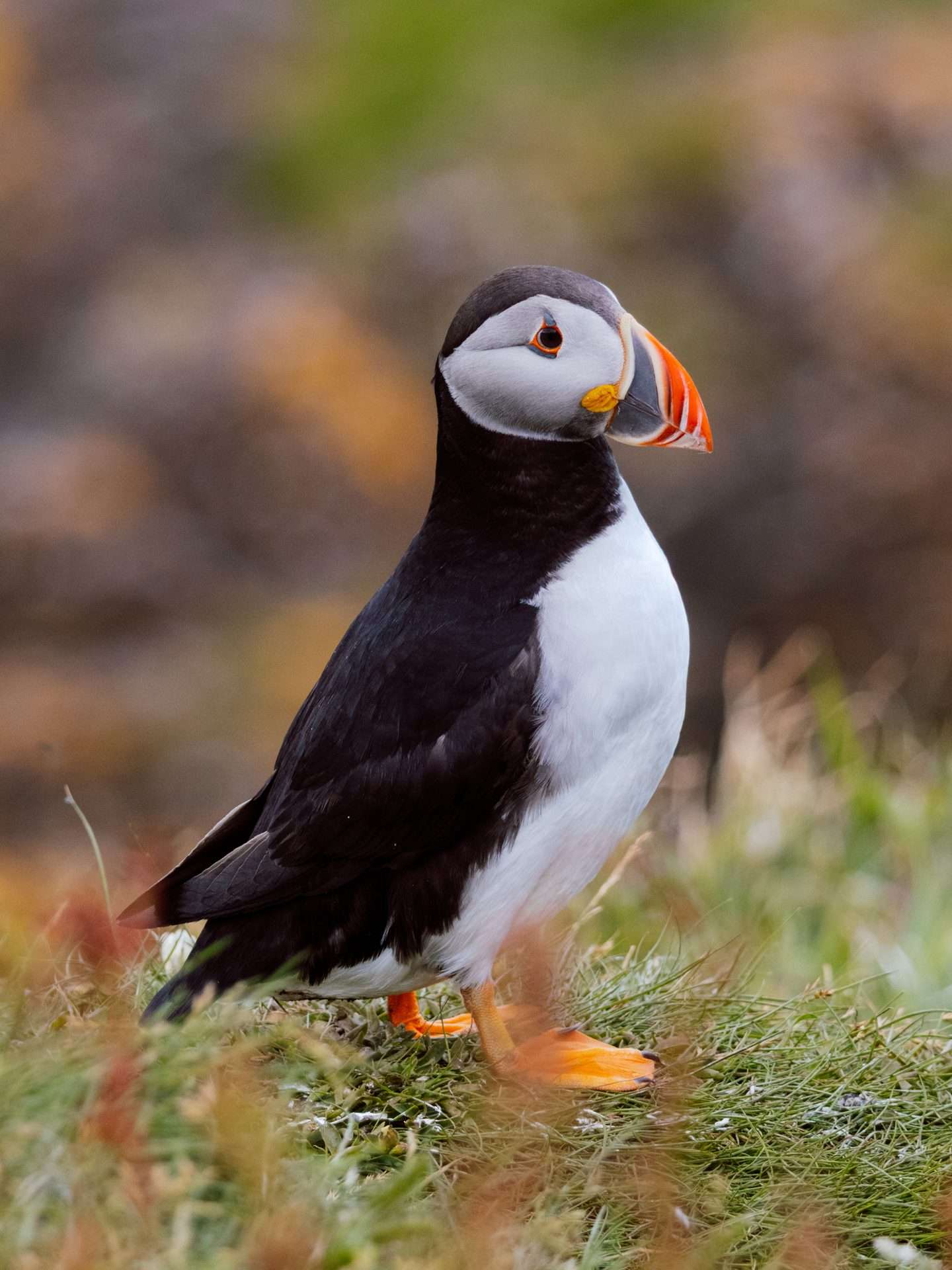
Puffins are without a doubt one of the cutest birds you can see in Scotland. With their colorful beaks, white bellies, and comical struts, they are sometimes called the clowns of the sea. But puffins are also among the most elusive birds in the world: they spend 8 months of the year out on the open sea. Seeing puffins up close in their natural habitat is therefore a truly unique experience! In this article, you’ll learn everything about how and where to see puffins on the Treshnish Isles. How to visit as a daytrip from Isle of Mull, the best time to see puffins, and more practical tips!
About the puffin
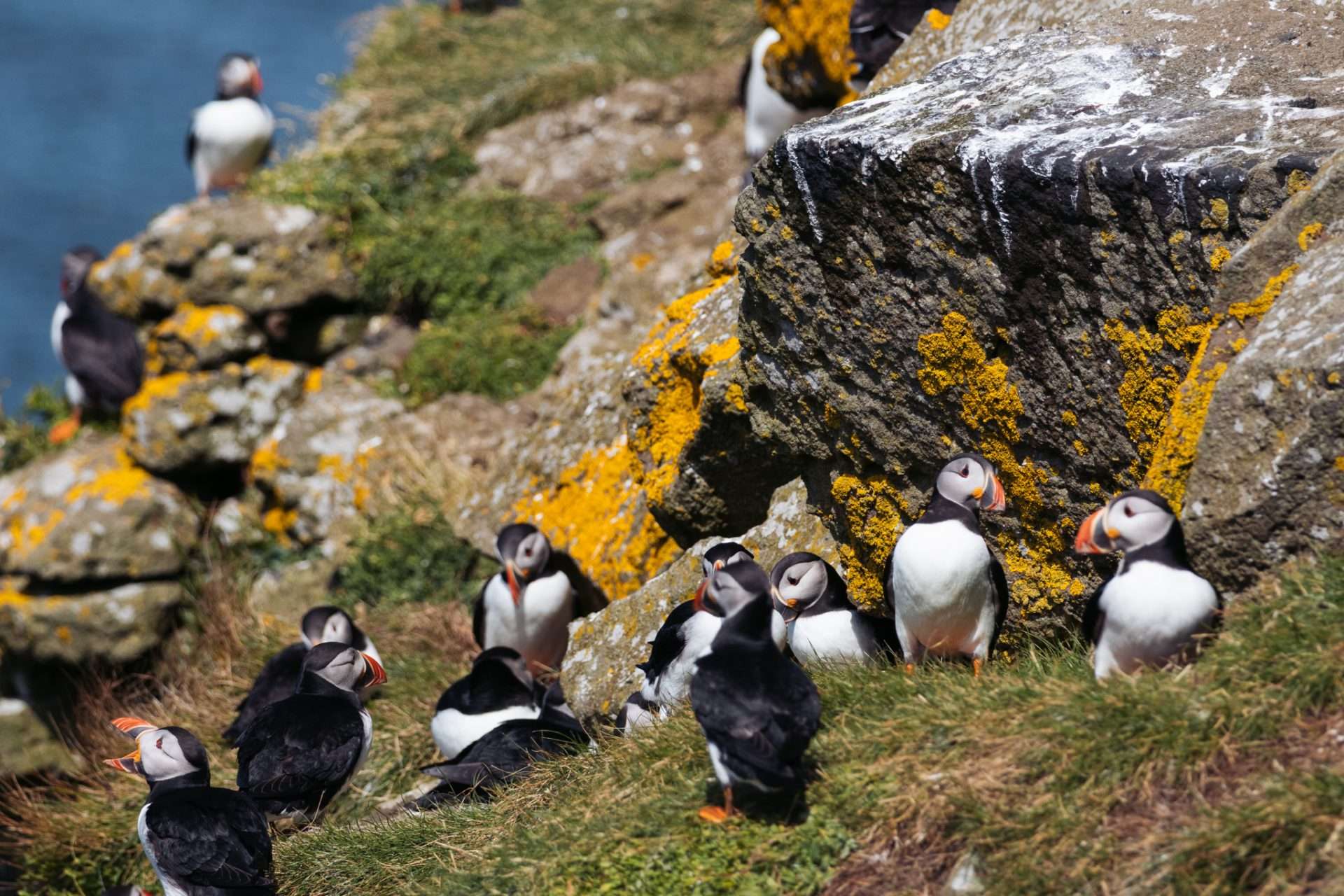
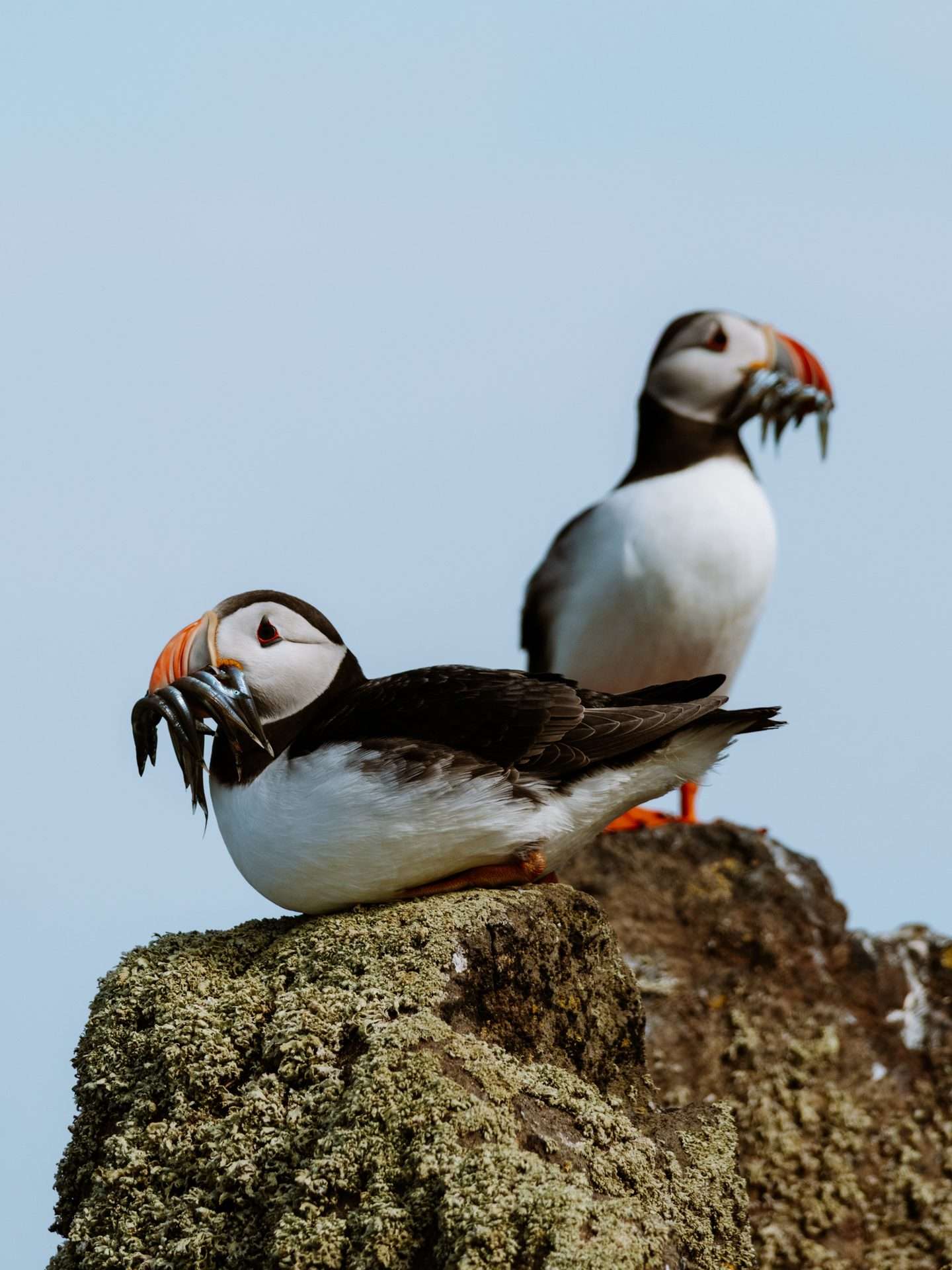
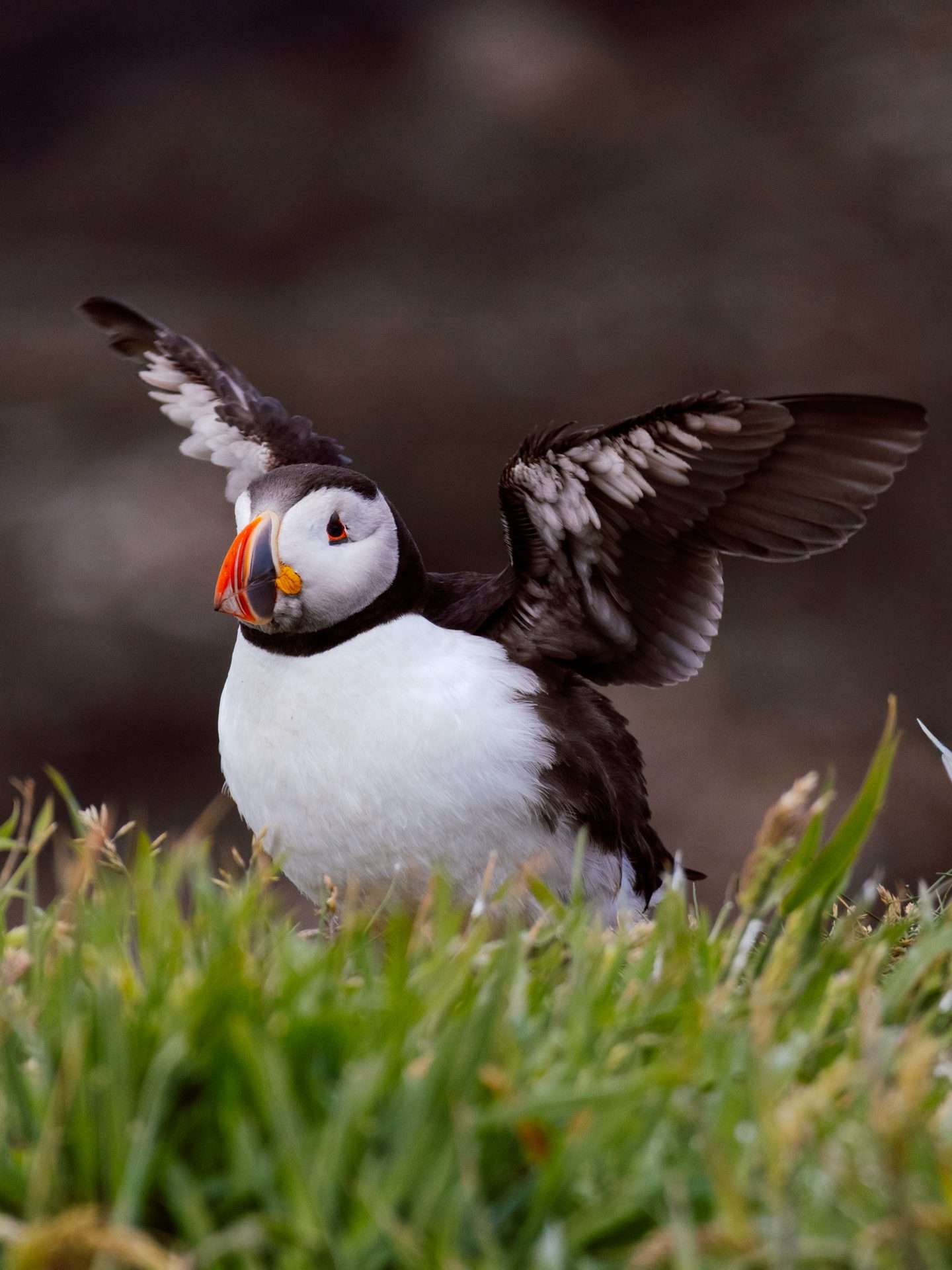
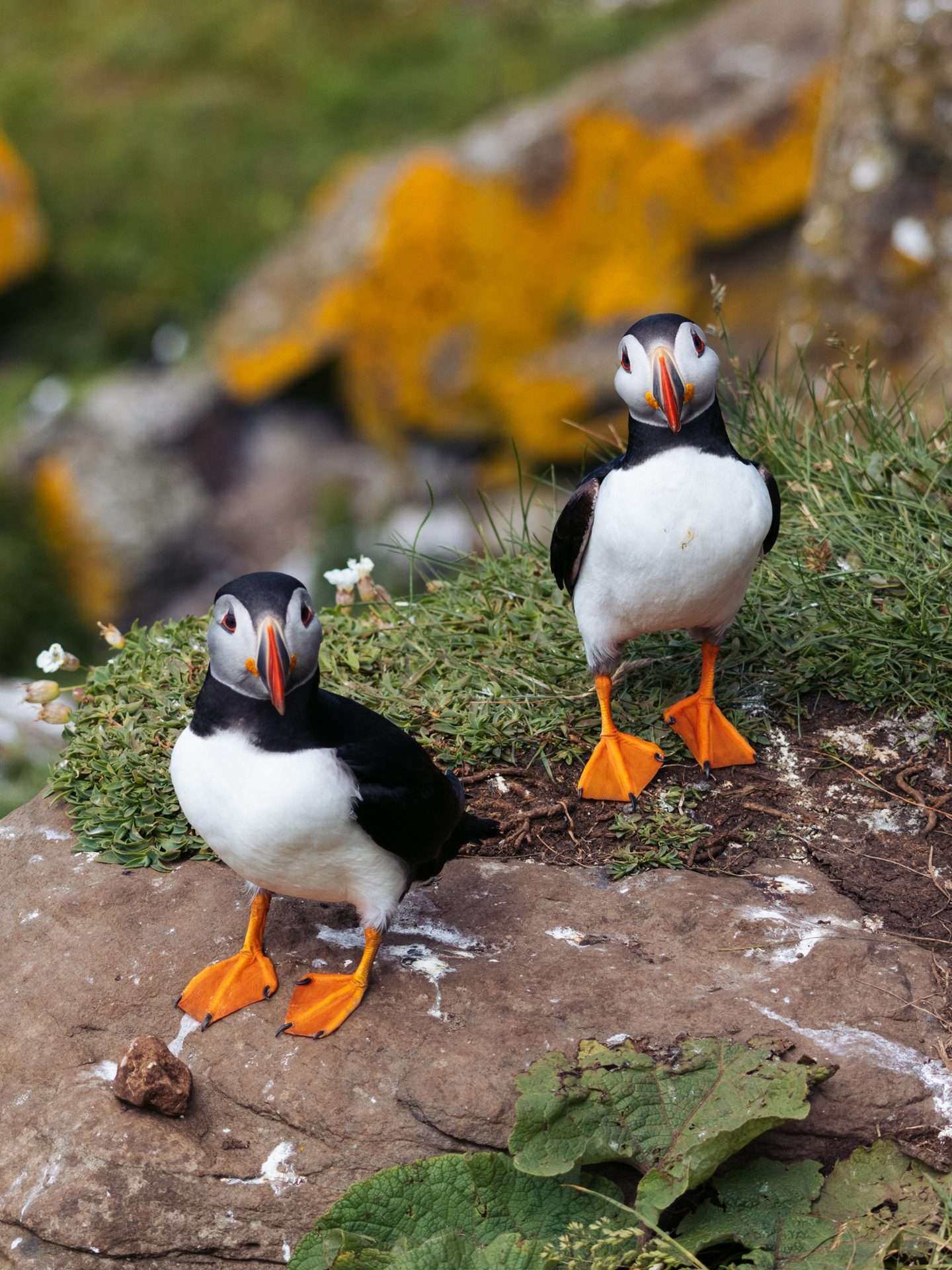
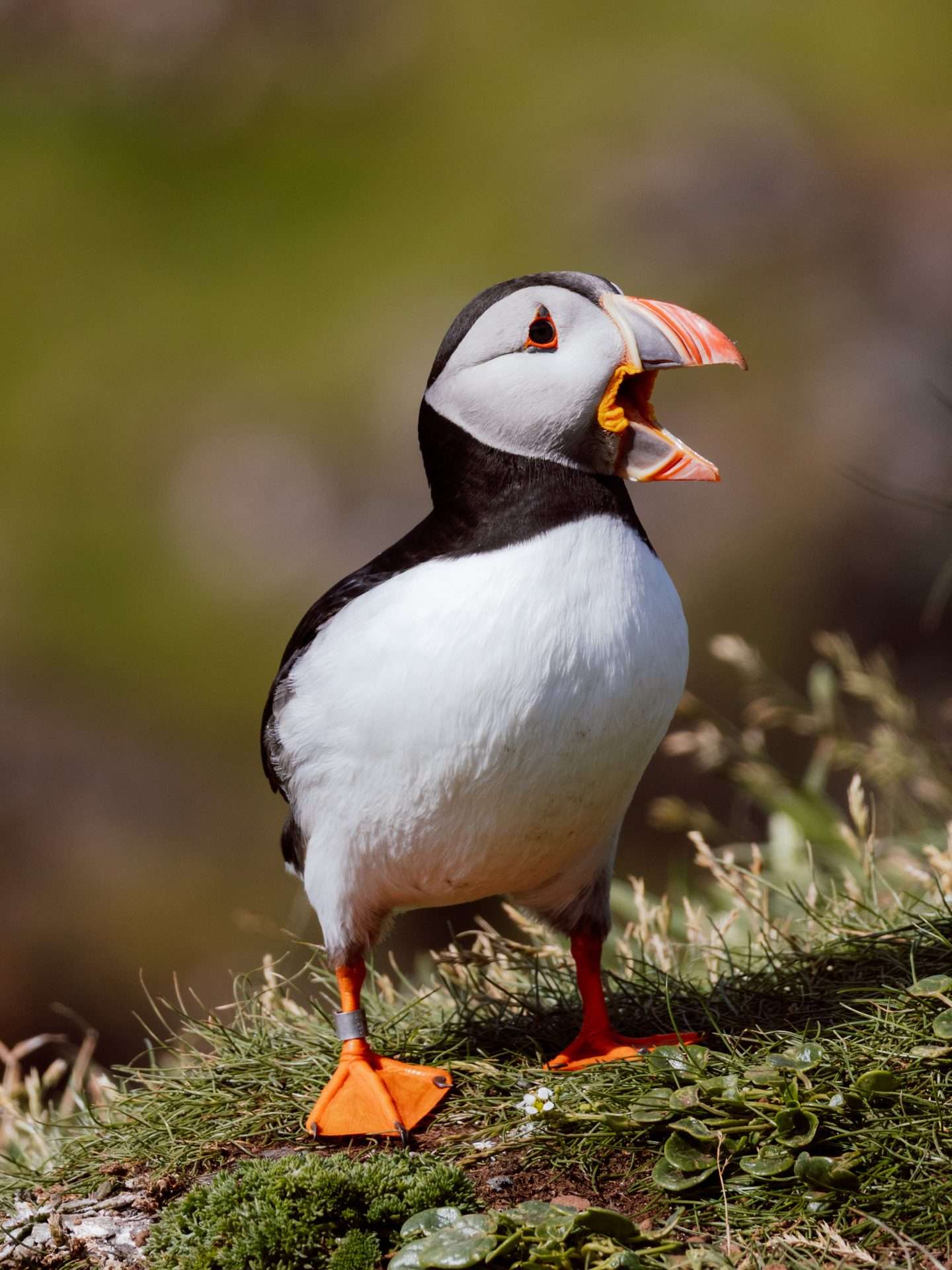
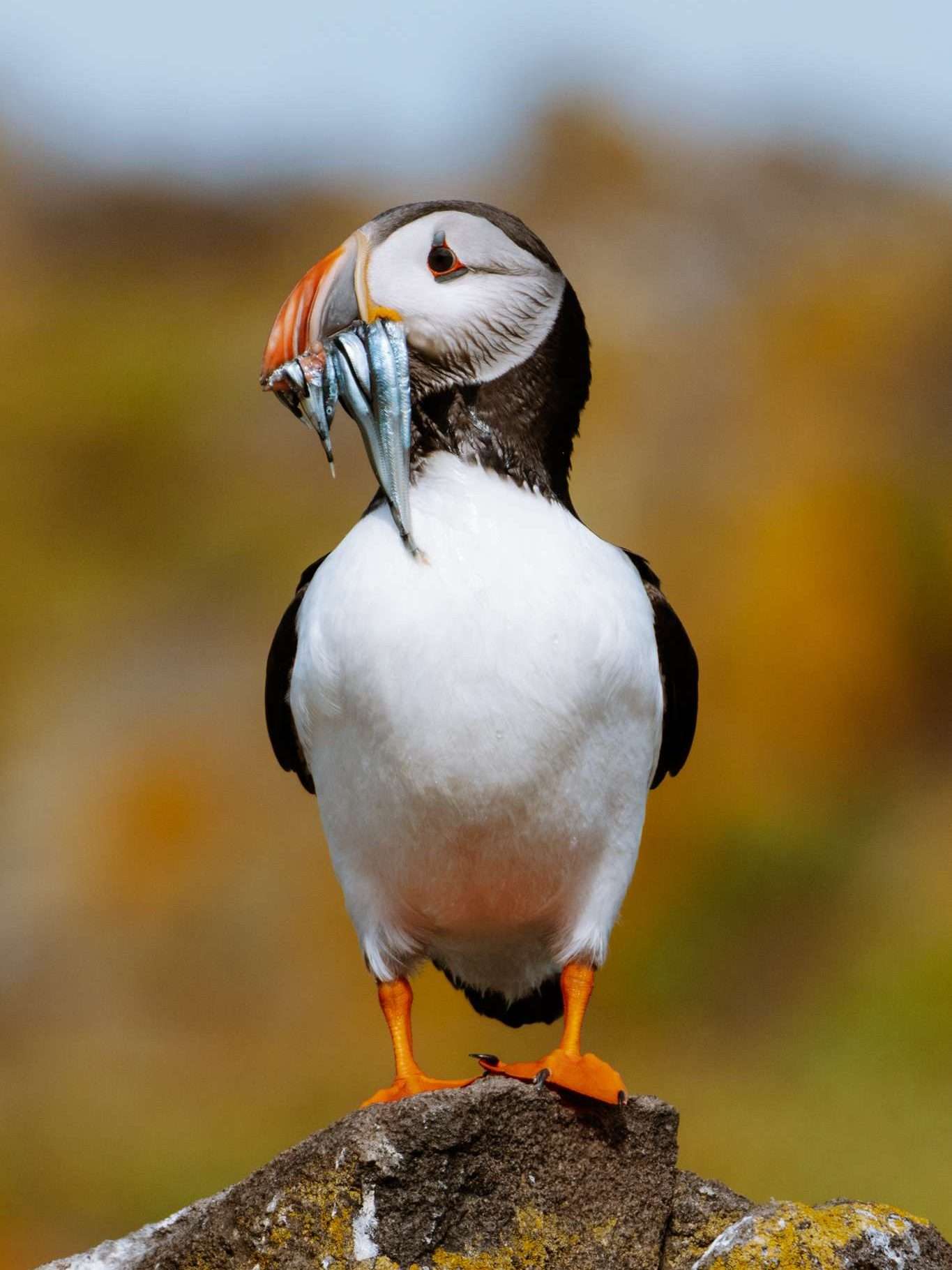
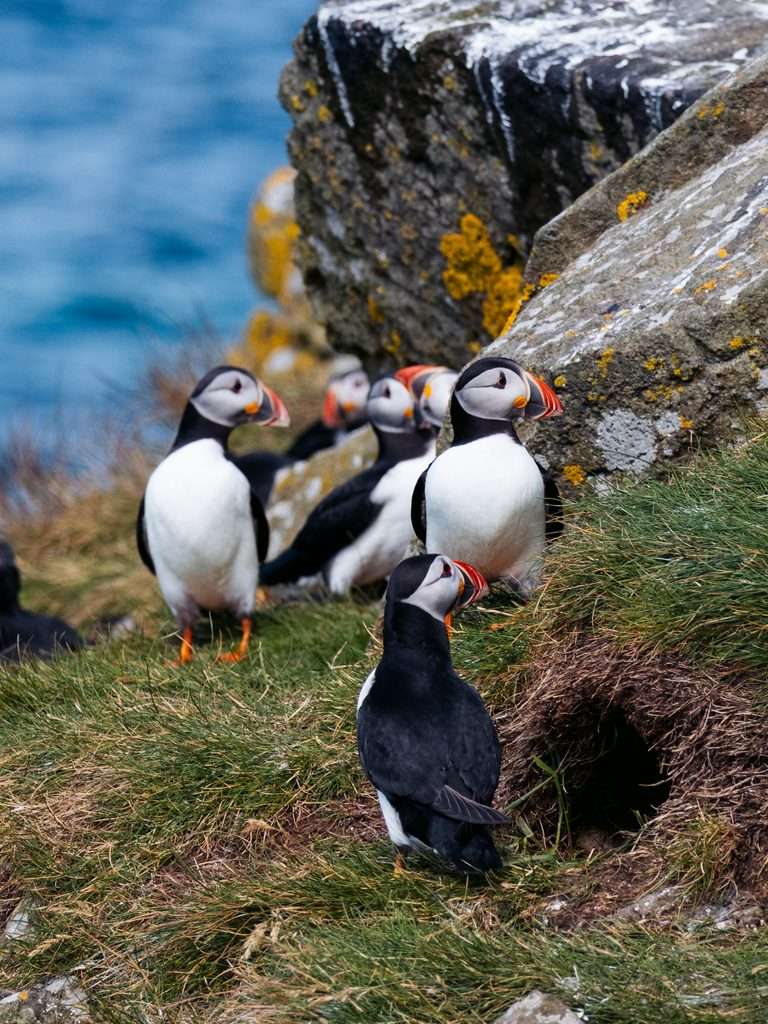
The puffin is a bird of the auks family. They spend most of their lives, about 8 months a year, on the open sea. Puffins come ashore only during the breeding season to incubate their eggs and raise their young. They nest in small burrows in the ground, near the edge of a cliff, where you can observe them from just a few meters away. As soon as the chicks are old enough, they disappear back out to sea and can no longer be found. Puffins are surprisingly tame and aren’t easily startled when people approach. One of the best places to witness this for yourself is the Treshnish Isles, a small group of islands off the Scottish isle of Mull. And that’s exactly what this article is about!
DID YOU KNOW: Puffins are monogamous and remain faithful to their partners for life, which means they return to the same partner and the same nest every year. They can live up to 30 years, which is quite a long time for a bird.
Best time to see puffins in Scotland
Puffins are migratory birds, which means you can only spot them on land during breeding season. That season runs from late April to early August. Outside of that window, they’re out on the open sea and simply nowhere to be found on shore.
The best time to see puffins in Scotland is May or June, when the colonies are at their largest and the birds are most active. It’s also the time of year when you’re most likely to see them up close, and to catch them flying back and forth to the sea with beaks full of fish for their chicks. From July onwards, the chicks gradually become independent and the colony starts to thin out. By early August, most puffins have already headed back out to sea for the next eight months. Visiting in April is possible, but the season is only just getting started and numbers tend to be lower.
The Isle of Mull in Scotland as your base
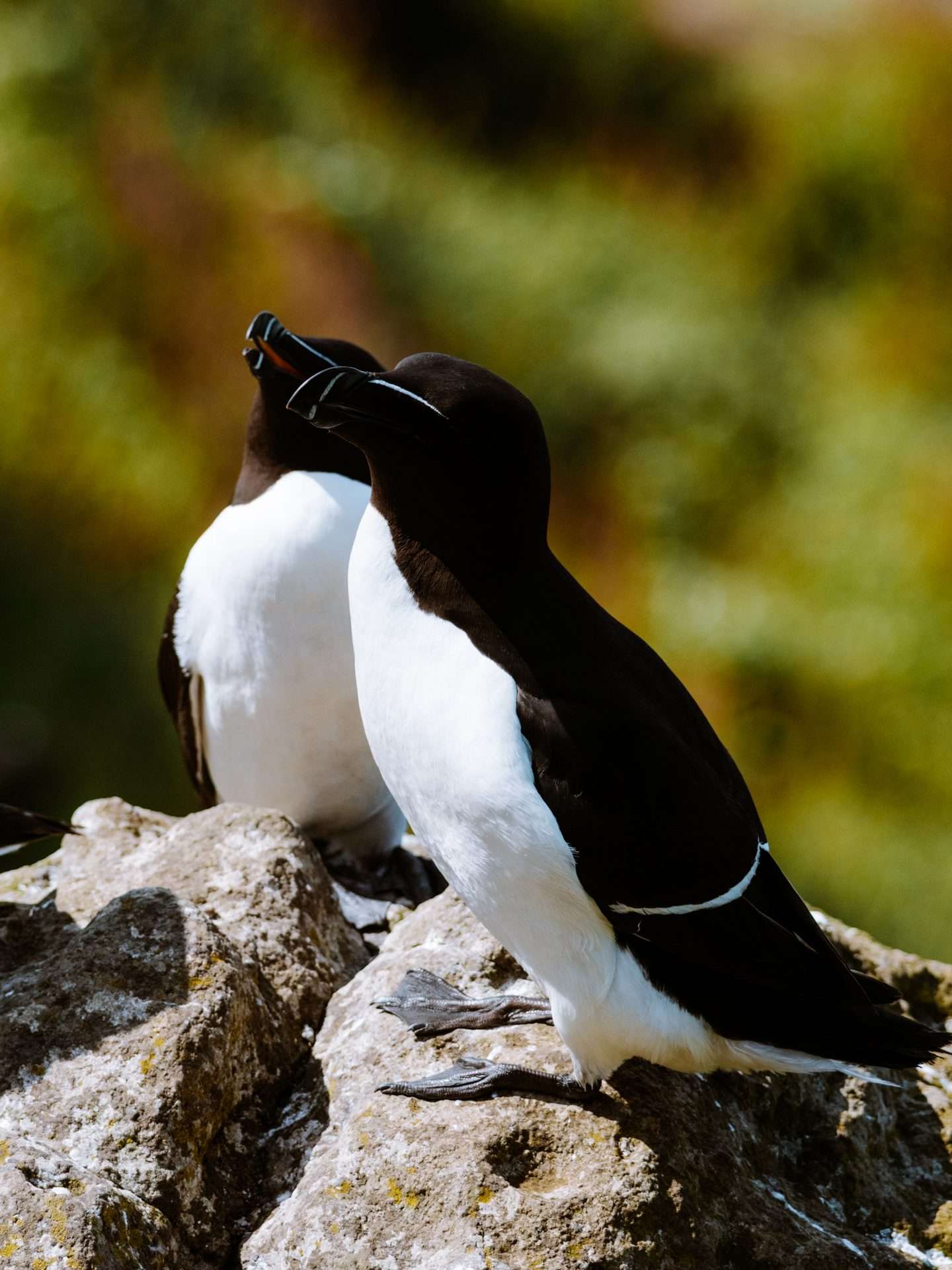
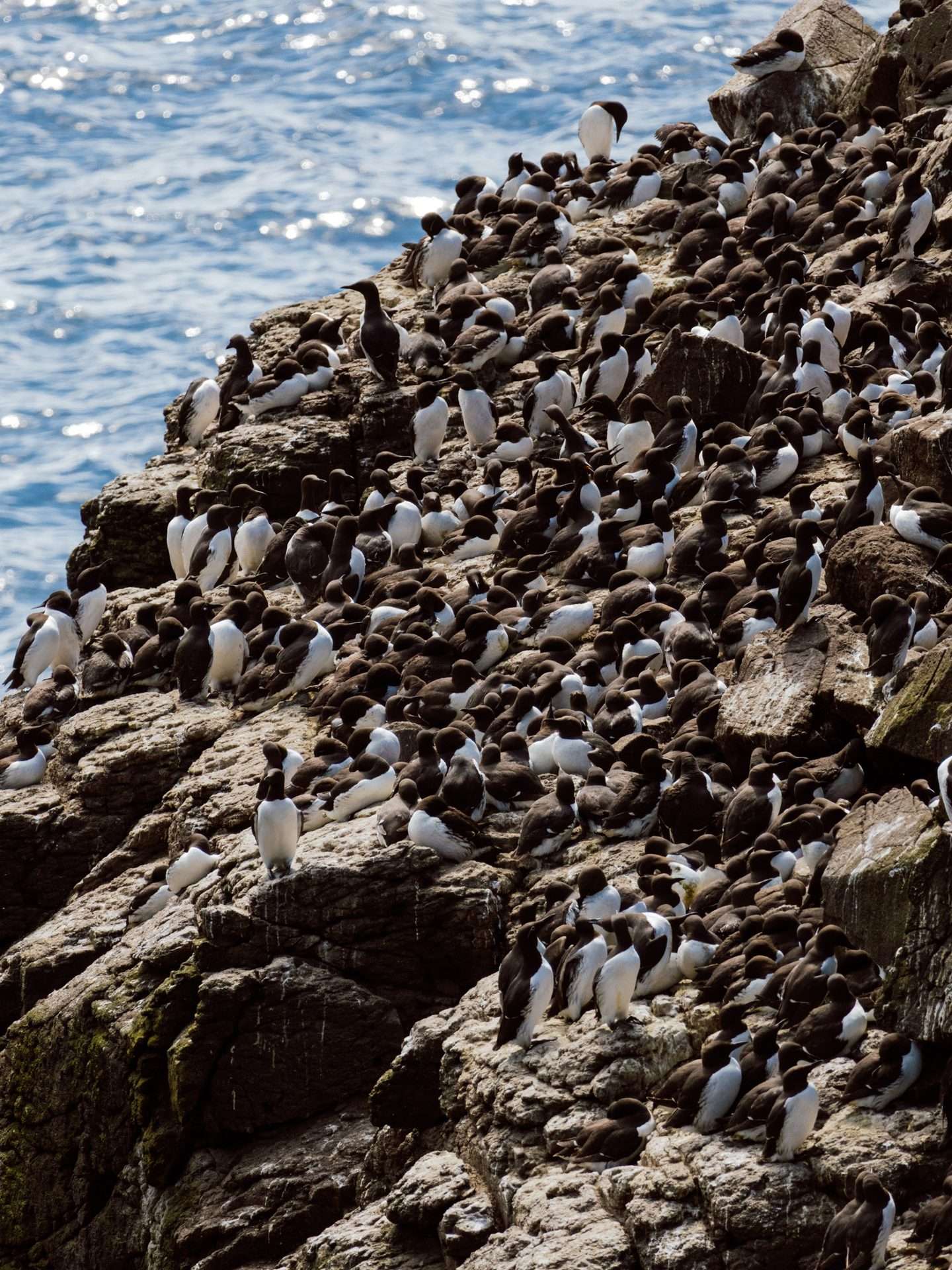
If you want to see puffins in Scotland, the Treshnish Isles are one of the best places to do so. This group of uninhabited islands lies just a few kilometres west of the Isle of Mull. On the island of Lunga alone, you’ll find a colony of no fewer than 6,000 puffins alongside thousands of guillemots, razorbills and cormorants. We also spotted seals and dolphins on the way there, which was an unexpected bonus. A short distance away lies the island of Staffa, where you may spot the puffin too, though Staffa is best known for something else entirely: Fingal’s Cave, a remarkable natural rock formation that’s well worth a visit in its own right.
How do you get to the Isle of Mull in Scotland?
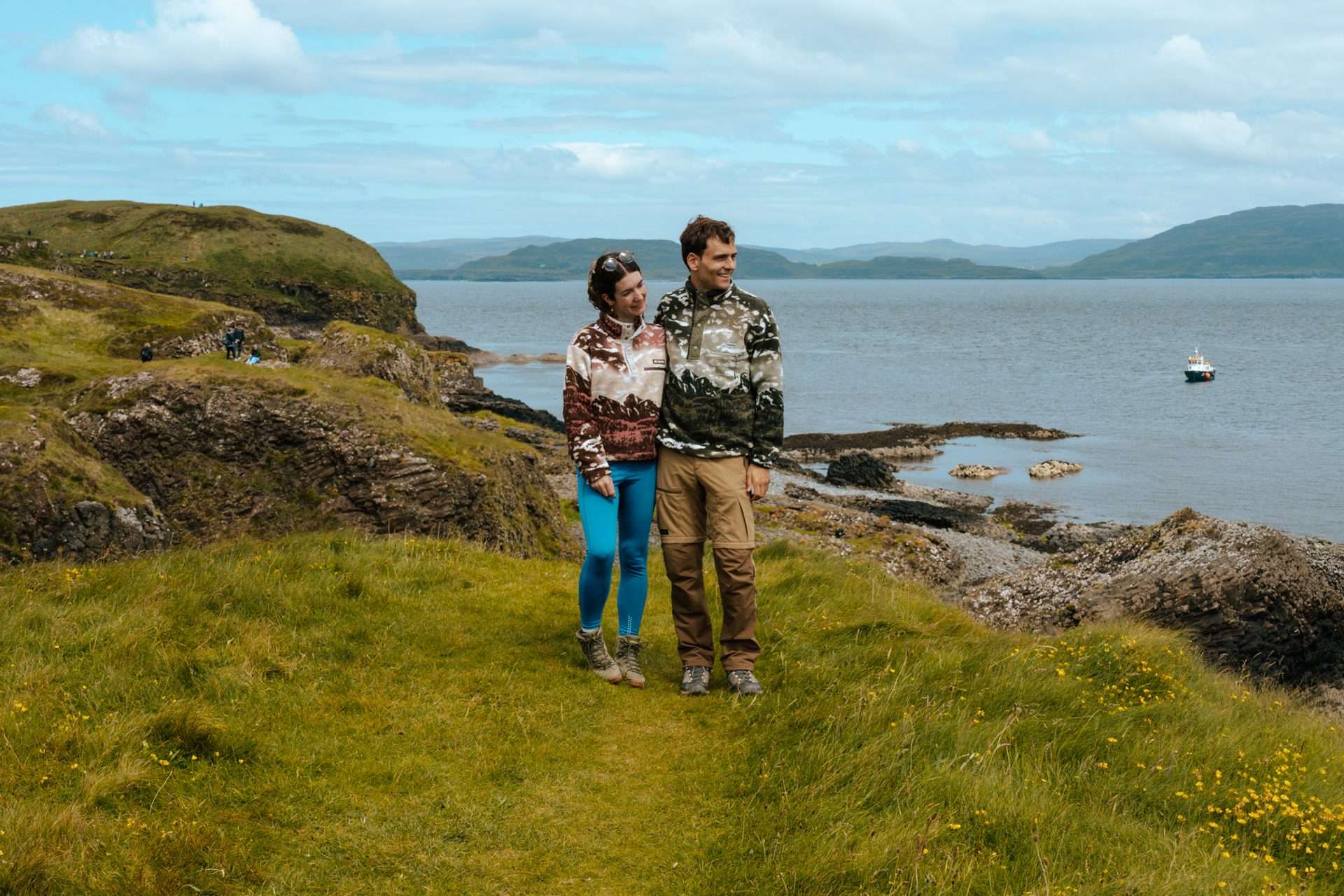
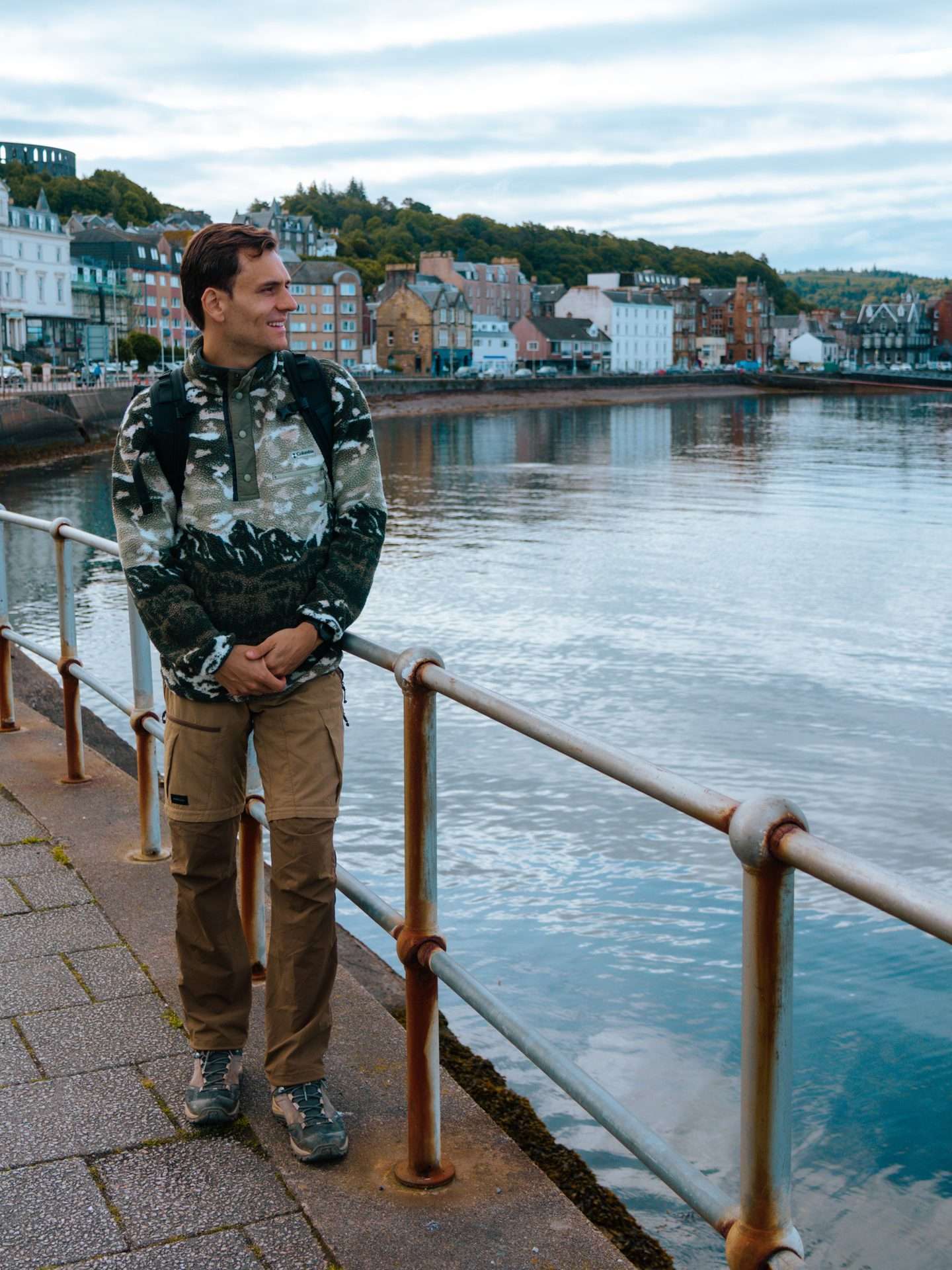
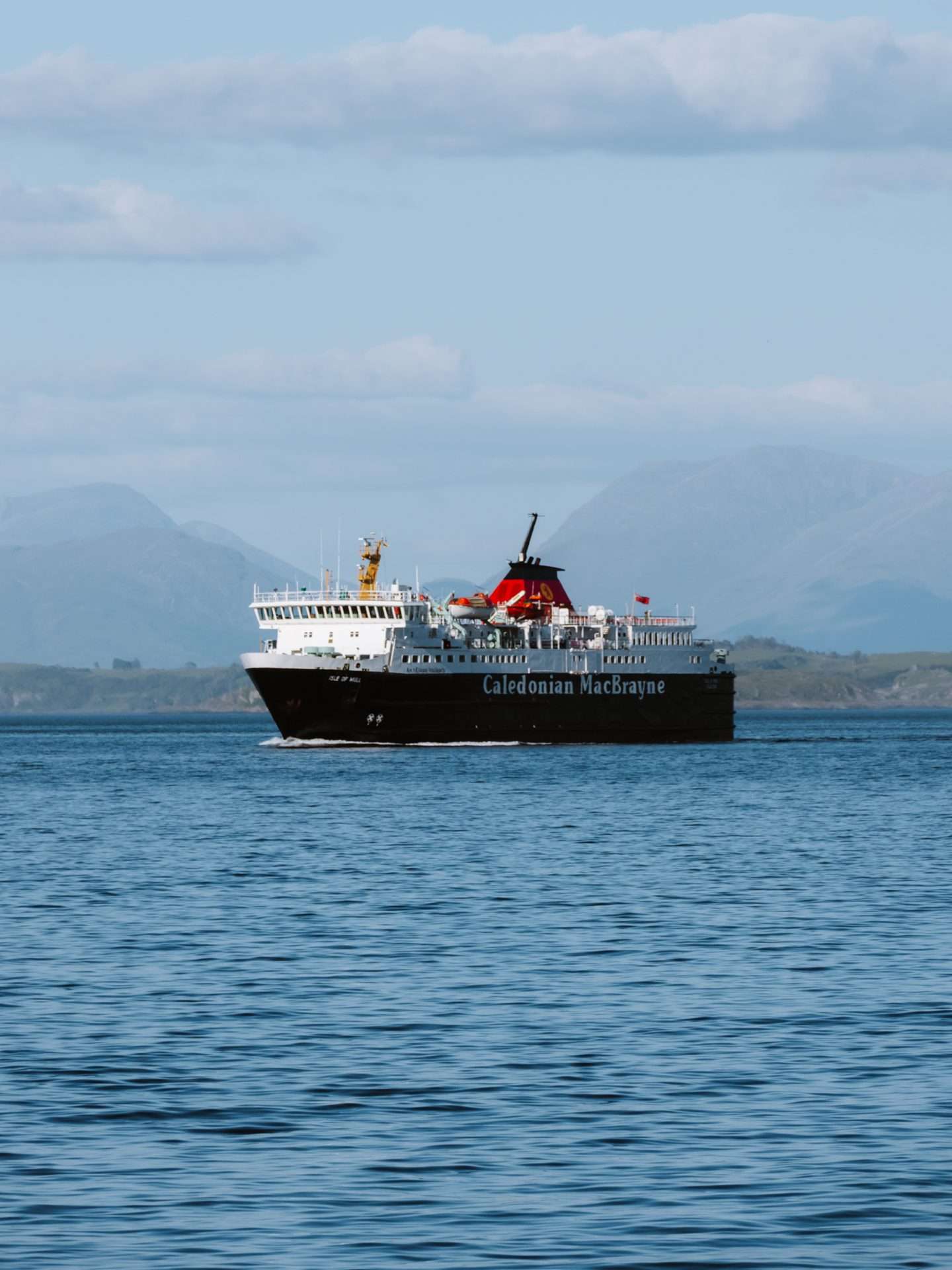
To visit the Treshnish Islands, you must join a tour; visiting on your own is not an option because this is a protected nature reserve. These tours always depart from the Isle of Mull in Scotland. The easiest way to reach the Isle of Mull is by the CalMac ferry from the town of Oban. Most tours assume you’ll be departing from Oban and schedule their times to coincide with the ferry schedule.
In the morning, you’ll take the ferry (usually around 9:55 a.m.) from the Oban Ferry Terminal to Craignure on the Isle of Mull. This crossing takes about 45 minutes. Once you arrive in Craignure, a minibus will be waiting to take you across the Isle of Mull to Fionnphort. In Fionnphort, you’ll board another small boat that will take you to the Treshnish Islands.
What is the tour to the Treshnish Islands like?
When booking a tour to the Treshnish Isles, you’ll generally have two options to choose from. The first combines Staffa and Lunga and if seeing puffins is your main goal, this is the one to go for. The second tour heads to Staffa and Iona, where you’ll find the ancient Iona Abbey and the burial site of many Scottish kings, a great choice if history is more your thing. We went for the Staffa and Lunga tour ourselves, and we didn’t regret it for a second.
What to see on the Island of Staffa in Scotland
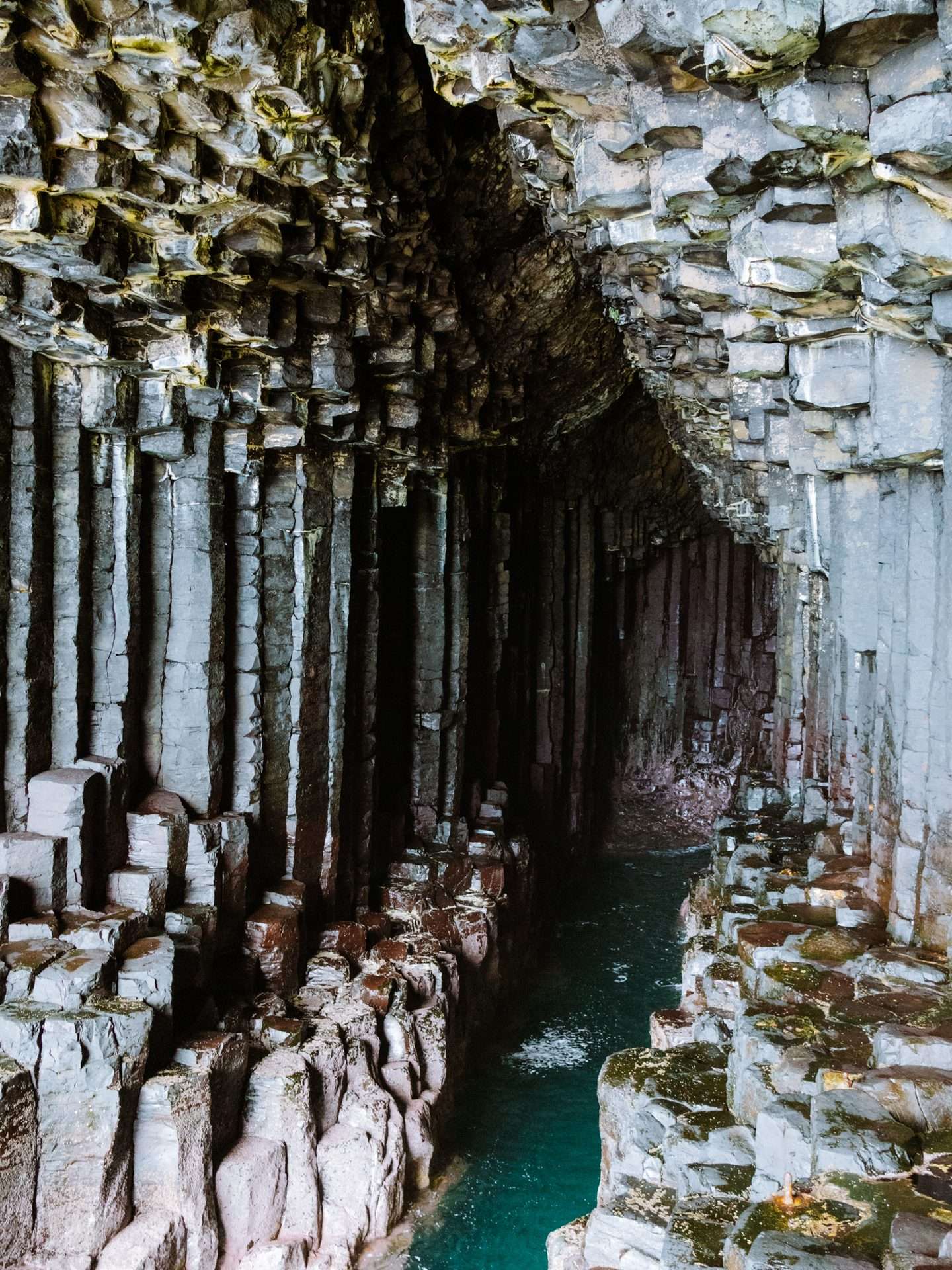
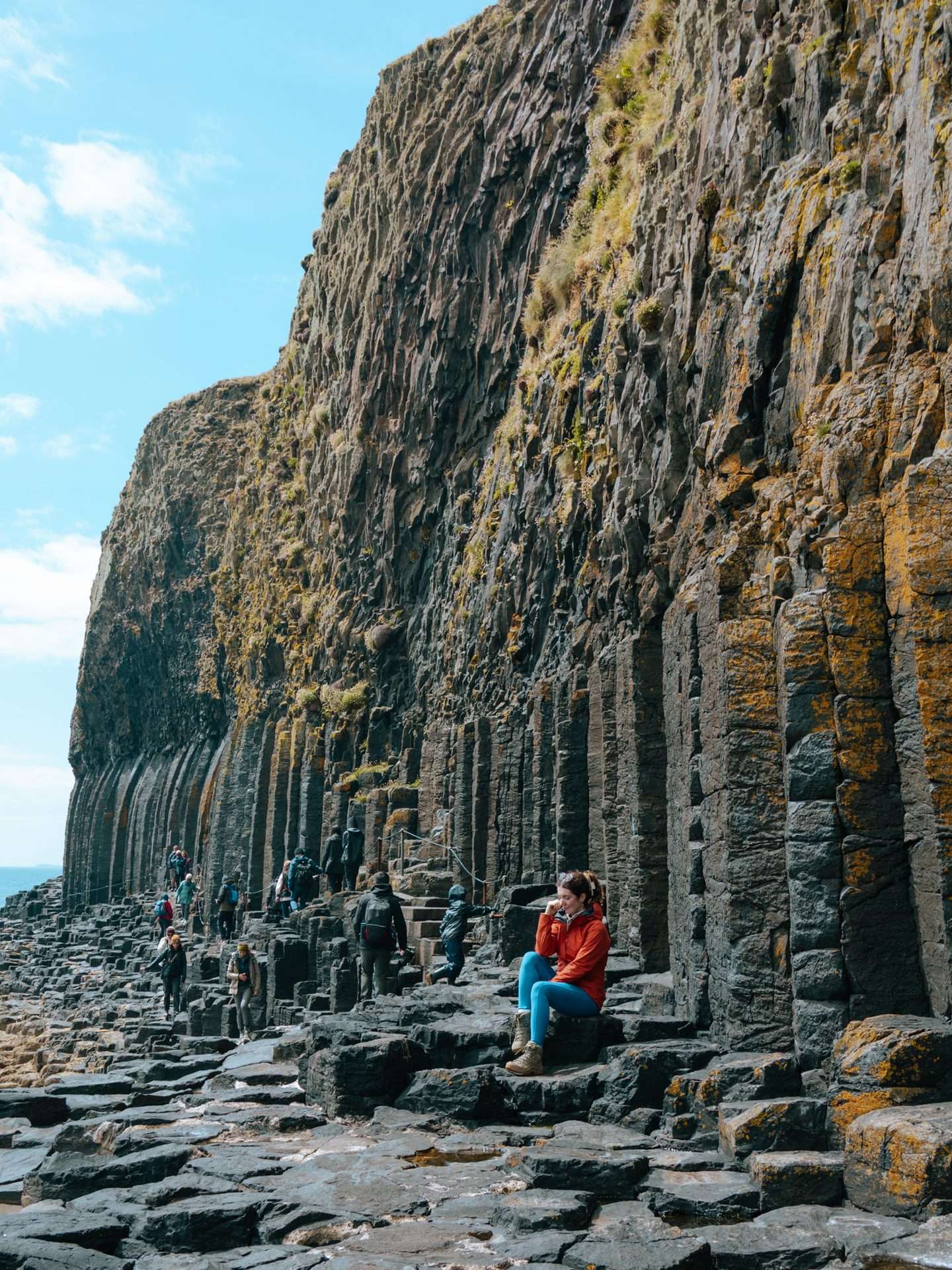
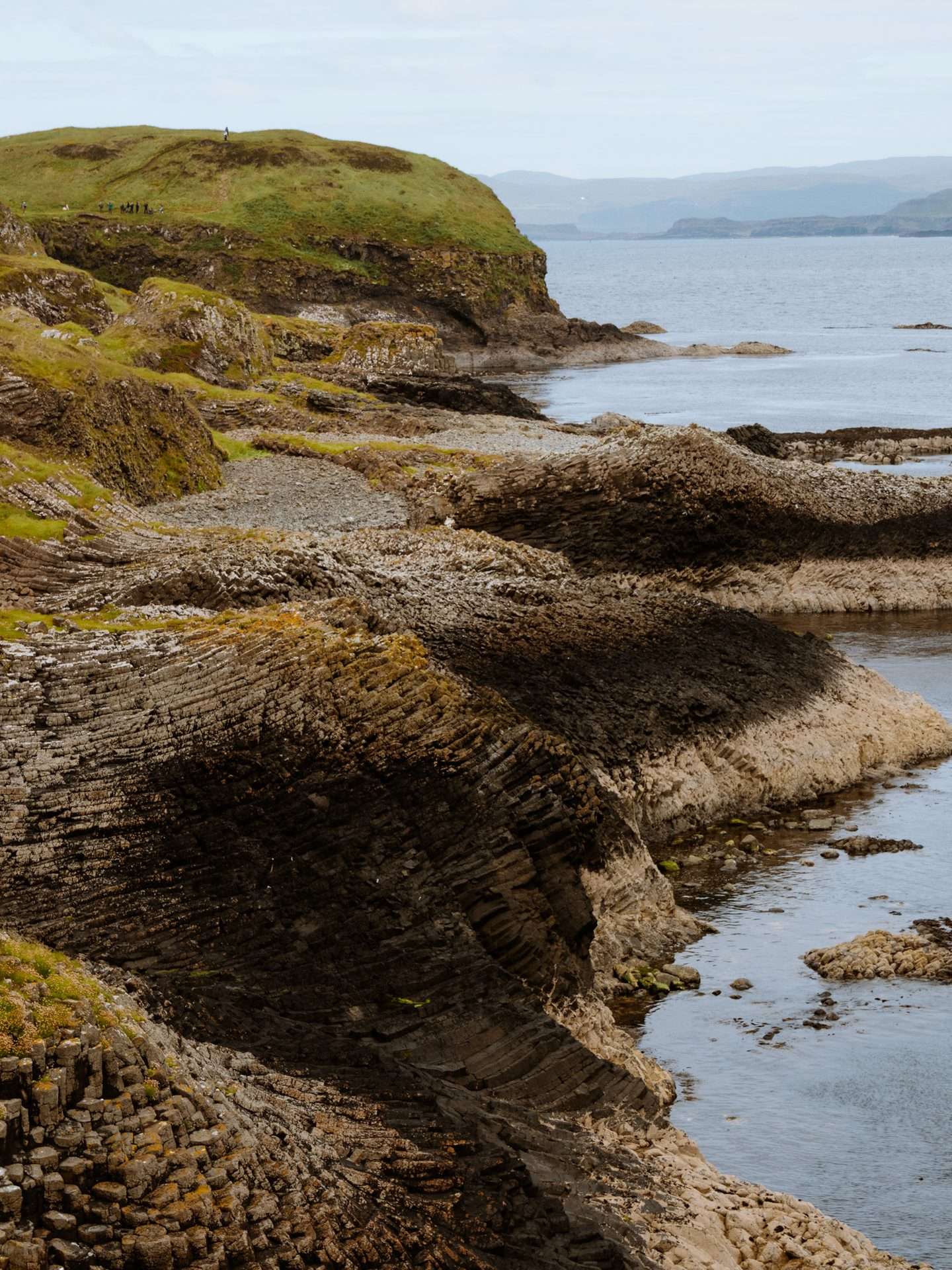
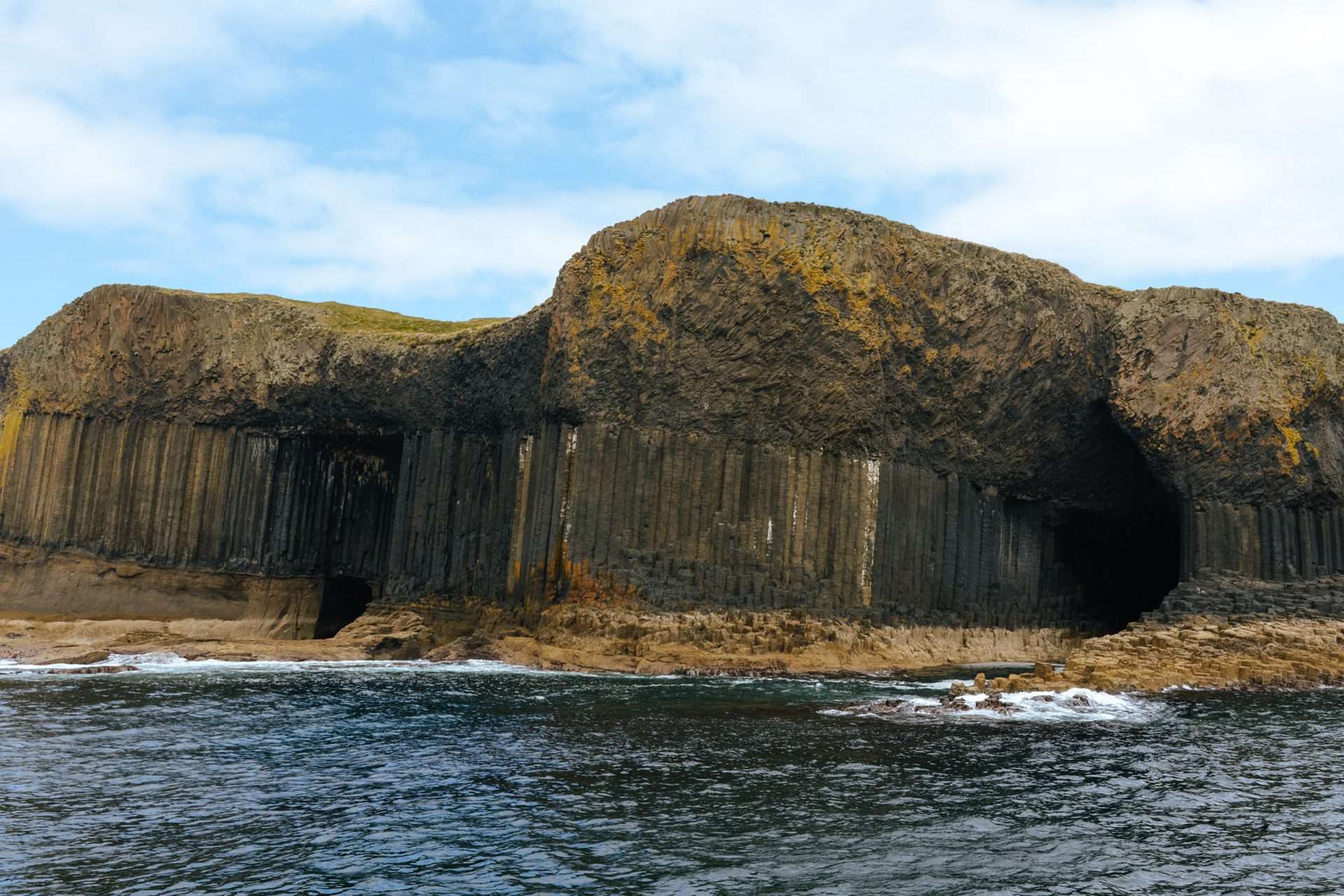
From Fionnphort on the Isle of Mull, it’s about an hour and a half by boat to the first stop: Staffa Island. Depending on the weather and sea conditions, you may be able to go ashore. If you can, you’ll have around an hour to explore freely. Staffa is also a puffin breeding ground, so you could head straight out to find them, but our advice? Go and see Fingal’s Cave first. You’ll have plenty of time for puffins later on Lunga, and the cave is simply not something you want to miss. It’s made up entirely of hexagonal basalt columns, with the sea crashing dramatically against them. One of those natural phenomena that’s hard to put into words until you’re standing right in front of it.
What to see on Lunga Island in Scotland
After Staffa, it’s another 45 minutes by boat to Lunga and this is where the real magic happens. This small, uninhabited island is a nature reserve with no buildings, no infrastructure, nothing man-made in sight. From the moment you step ashore and make your way up the hill, the first puffins are already there to greet you. Make sure you walk all the way to the end of the trail, where a large rocky outcrop is home to thousands of puffins, guillemots and cormorants, completely unbothered by your presence. Find a spot in the grass, sit down and just enjoy watching the birds doing their thing. You’ll have around two hours to explore the island at your own pace.
Back to Oban
After this unforgettable experience, it’s time to head back. The boat will take you back to Foinhport in about an hour, where the minibus will be waiting for you again. The bus will drop you off at the ferry terminal in Craignure on the Isle of Mull, where you’ll take the ferry back that evening. Expect to arrive back in Oban around 8:00 p.m., depending on how rough the sea is.
Which tour should I book to see puffins?
There’s no public transport to the Treshnish Isles, so a boat tour is your only option, but there’s plenty to choose from. If seeing puffins is the plan, make sure the tour includes at least an hour on Lunga. Two hours is ideal, as it gives you enough time to walk around, find a good spot in the grass and really take it all in without feeling rushed. Most tours combine Lunga with a stop on Staffa, where you can visit the impressive Fingal’s Cave.
Below is a list of two reputable tour operators for seeing puffins on the Treshnish Islands in Scotland.
- Turus Mara: This is the tour we booked. This tour starts and ends on the Isle of Mull, which means you’ll need to arrange your own ferry to and from Oban. When you book, you’ll receive clear instructions on which ferries to book. In our case, this was the 9:55 a.m. ferry from Oban and the 7:25 p.m. ferry from Craignure. Once you book this tour, be sure to book your ferry tickets as soon as possible to guarantee a spot!
- Staffa Tours offers more flexibility in terms of where you can depart from. They operate daily direct tours from Oban, as well as from Tobermory and Fionnphort on the Isle of Mull itself. Both tours have limited availability and are therefore often sold out months in advance! If you’re planning a trip to Scotland, be sure to book these tours as soon as possible.
Practical tips for your daytrip
- Always bring a windproof raincoat, because this is Scotland after all. Also, dress in layers, because it often feels much cooler out at sea than on the mainland. The weather can also change quickly.
- Bring motion sickness medication if you’re prone to it. The seas can sometimes get rough.
- Be sure to bring binoculars and a camera with a good zoom lens.
- Bring food and drinks. There are no amenities on the islands, so you’ll need to bring your own lunch.
- There are also no restrooms on the islands. There are restrooms on the boats, though, so be sure to use one before you go ashore on the islands.
Where to stay in Oban, Scotland
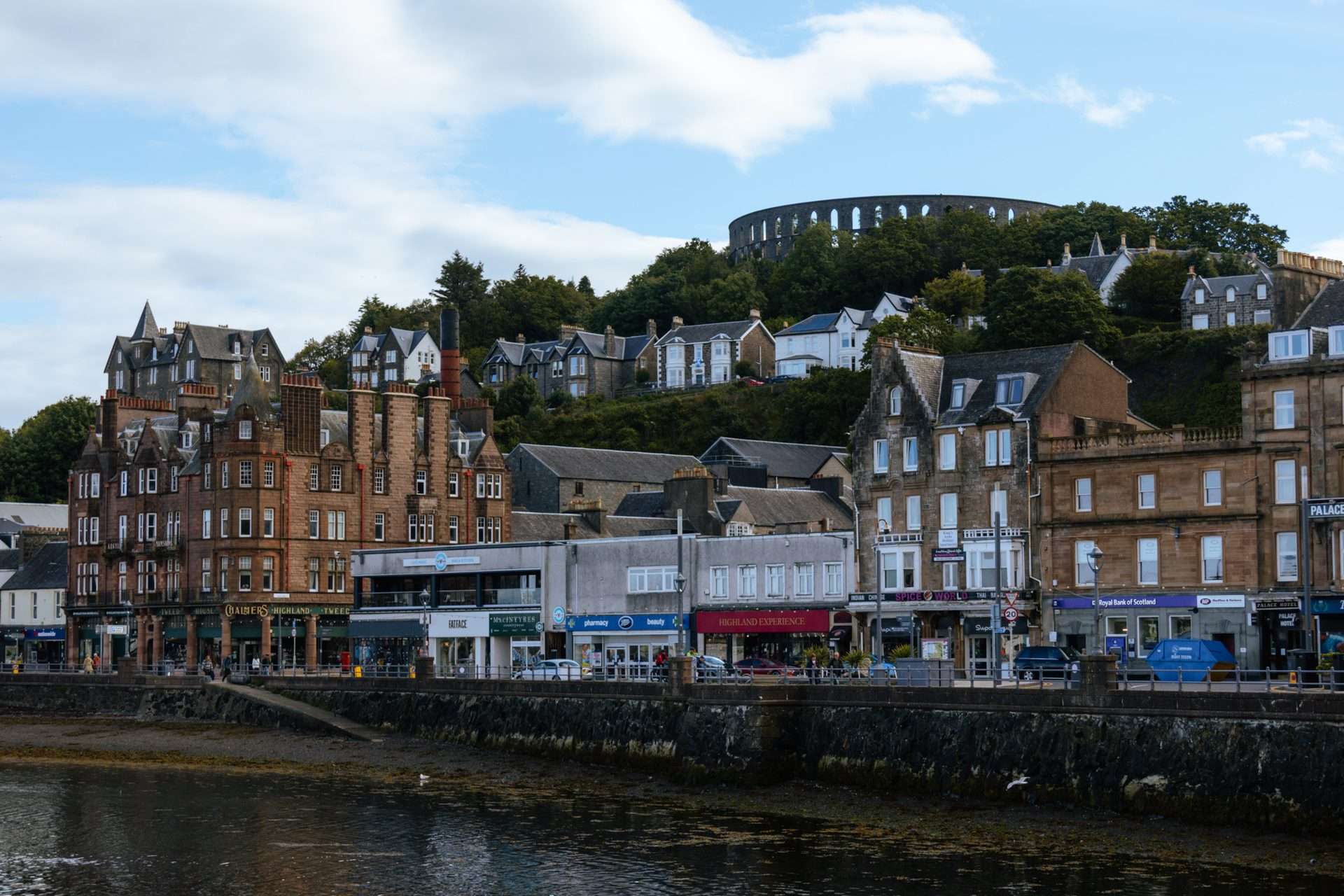
Oban is the ideal base from which to plan your day trip to the Isle of Mull and the Treshnish Islands. Here are our recommendations for places to stay:
- Budget (€): Maridon House
- Comfort (€€): Oban Bay Hotel
- Luxury (€€€): No. 17, the Promenade
Where to see puffins in Scotland?
The Isle of Mull and the Treshnish Islands are excellent places to see puffins, but Scotland has even more spots. Here’s an overview of the best places to see puffins in Scotland:
- Isle of May: With more than 50.000 breeding pairs, this is the largest colony on Scotland’s east coast. The Isle of May is accessible by boat from Anstruther or North Berwick. It’s an ideal day trip from Edinburgh.
- Handa Island: This island is accessible via a short 10-minute boat ride from the small village of Tarbet on the northwest coast of Scotland. The island is a protected nature reserve and is home to one of the largest seabird colonies in Northwest Europe.
- St. Kilda: For the true adventurer, as this remote archipelago lies about 65 kilometers west of the Outer Hebrides and is home to an estimated 250.000 to 300.000 breeding puffins, accounting for about a quarter of the total population in the United Kingdom. The only way to get there is by boat from the Hebrides, which, depending on the weather, can be quite an undertaking.
- Dunnet Head, Caithness: the northernmost point of the Scottish mainland and one of the few places where you can spot puffins without taking a boat. You walk across a grassy plain to the headland, where you can look out over the wild sea and the nesting birds on the cliffs below you.
- Sumburgh Head (Shetland): Sumburgh Head, at the southern tip of Shetland, is one of the most easily accessible puffin sites in all of Scotland. You can spot them from the cliff trails without even having to take a boat. But you’ll need to get to the Shetland Islands first.
Do you have any questions about where to see puffins in Scotland? Let us know in the comments below! Looking for more information for your next trip? Don’t hesitate to contact us or feel free to send an email to info@snoezelsontheroad.com