Morocco is amazing. Exploring Morocco in a campervan is even better! Just a two-hour boat ride from the European mainland, you’ll find yourself in a completely different world. Bustling souks and cities with winding alleyways, getting lost in the Sahara Desert, or surfing on the Atlantic Ocean. Not to mention Moroccan hospitality and the country’s vibrant culture. Thanks to its pleasant climate, Morocco is also the perfect destination to escape the European winter. Are you planning a trip to Morocco by campervan? Then read on for the perfect four-week itinerary for vanlife in Morocco!
Traveling to Morocco by campervan: what you need to know
Van life in Morocco is an amazing experience, but it does require some preparation. How do I travel to Morocco in a campervan? Do I need a visa for Morocco? What kind of SIM card do I need in Morocco? Below, you’ll find our personal tips and answers for a worry-free trip to Morocco in your campervan or RV.
1. Taking the camper to Morocco by ferry
You can take a ferry to Morocco from various Spanish cities. The easiest route is between Algeciras (Spain) and Tangier Med (Morocco). You can purchase an open ticket, which allows you to choose your own return date and the number of people traveling with you. The price in 2026 for a round-trip crossing for two people with a campervan is €250. We booked our ticket through Viajes Normandie, a well-known travel agency in Algeciras that helps you take care of everything smoothly! You can send an email in advance to reserve your ticket and then pick it up at their office in Algeciras the day before you leave.
TRAVEL TIP: Drones are strictly prohibited in Morocco. If you have a drone with you, you can leave it in a locker at Viajes Normandie for safekeeping until your return.
2. Visa
You do not need to apply for a visa in advance to travel to Morocco. Citizens of most countries, including Belgium and the Netherlands, are eligible for a visa upon arrival. Therefore, you do not need a special visa for a stay in Morocco of up to 90 days.
3. Cash
In Morocco, cash is still widely used for payments. It’s therefore a good idea to have some Moroccan dirhams on hand upon arrival. You can exchange some money at Viajes Normandie in Algeciras, or you can simply withdraw cash from one of the ATMs at Tanger Med, which are located right after you arrive.
4. SIM card
First and foremost, don’t forget to turn off roaming before boarding the boat in Spain. For your first day in Morocco, you might want to activate an eSIM, and once you’re there, you can easily buy a local SIM card with unlimited data. We recommend Inwi, one of Morocco’s largest telecom operators. With this SIM card, you’ll have relatively good coverage throughout the country.
Morocco campervan itinerary: one month road trip
This 30-day motorhome itinerary of Morocco is designed to take you to the main highlights: from the Sahara Desert to the rugged landscape of the Atlas Mountains, and bustling cities such as Fez and Marrakech, and the laid-back atmosphere of coastal towns like Taghazout and Essaouira. You can extend this route or tailor it to your own pace!
Don’t have a campervan but still want to follow this itinerary? You can also easily do this road trip with a rental car in Morocco! In that case, start and end your trip in Marrakech and skip Tangier Med.
Day 1: Arrival at Tangier Med
+/- 130 km ● 2h30′ driving (not including the ferry crossing)
It’s an hour and a half by ferry from Algeciras, but allow some extra time for exiting the ferry and going through border control before you can actually hit the road. Upon arrival at Tanger Med, you’ll drive through an X-ray scanner, after which you’ll need to show your documents: vehicle inspection certificate, passport, and insurance documents (so make sure you have all of these with you for a trip to Morocco). Sometimes there’s a brief additional check where a dog will sniff around inside your campervan for a moment.
TRAVEL TIP: Is your campervan (or vehicle) registered in your company’s name or someone else’s? If so, make sure you have a power of attorney or proof that you are the owner of the vehicle, preferably in French, English, or Arabic. Many Moroccans speak only limited English, so having your documents in French is definitely a plus.
Depending on what time you arrive, you can continue on to the Chefchaouen region. Keep in mind that a drive in Morocco always takes longer than you think. The speed limit is often 60 or 80 km/h, and on top of that, there’s a lot of activity on and along the road: vendors, animals, hikers, and frequent police checkpoints, which can quickly slow you down.
Where to stay?
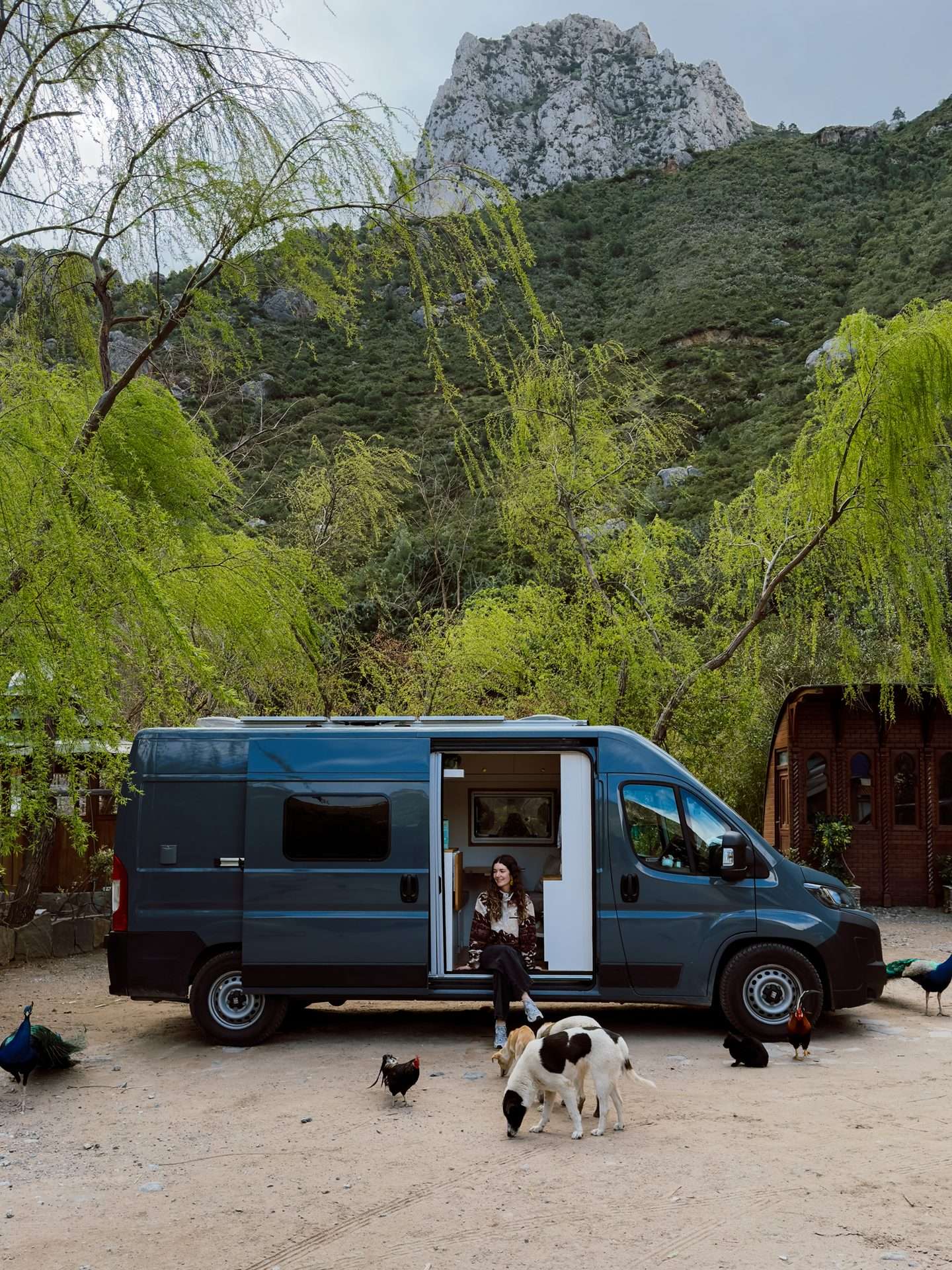
Located 120 km from Tangier Med is Camping Tyrolienne Tanjawi, on the edge of Talassemtane National Park and the Akchour Waterfall. It’s a local campground by the river where you’ll be surrounded by chickens, peacocks, cats, and dogs. A unique setting to kick off your adventure in Morocco.
Day 2: Chefchaouen & Akchour Waterfall
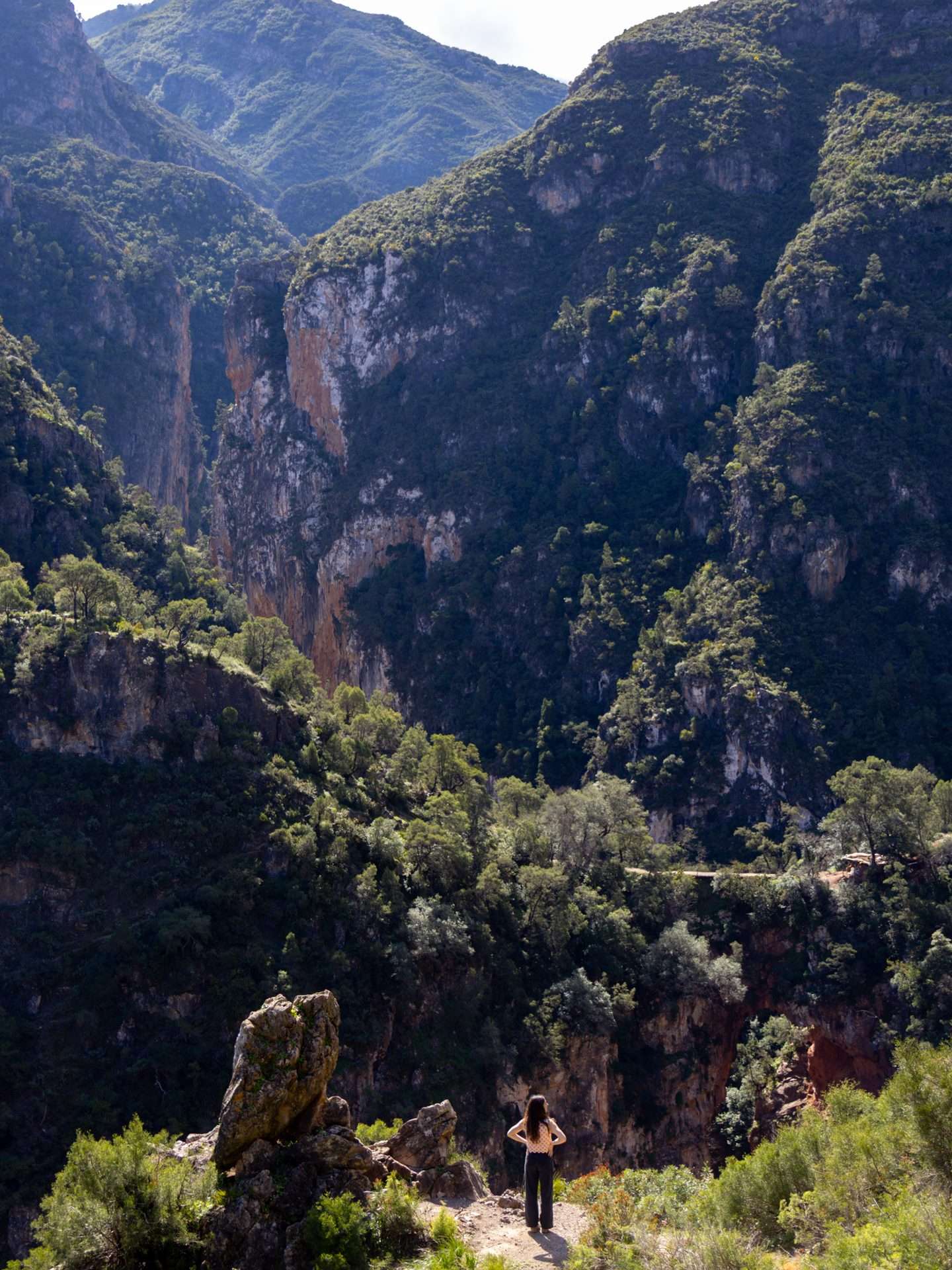
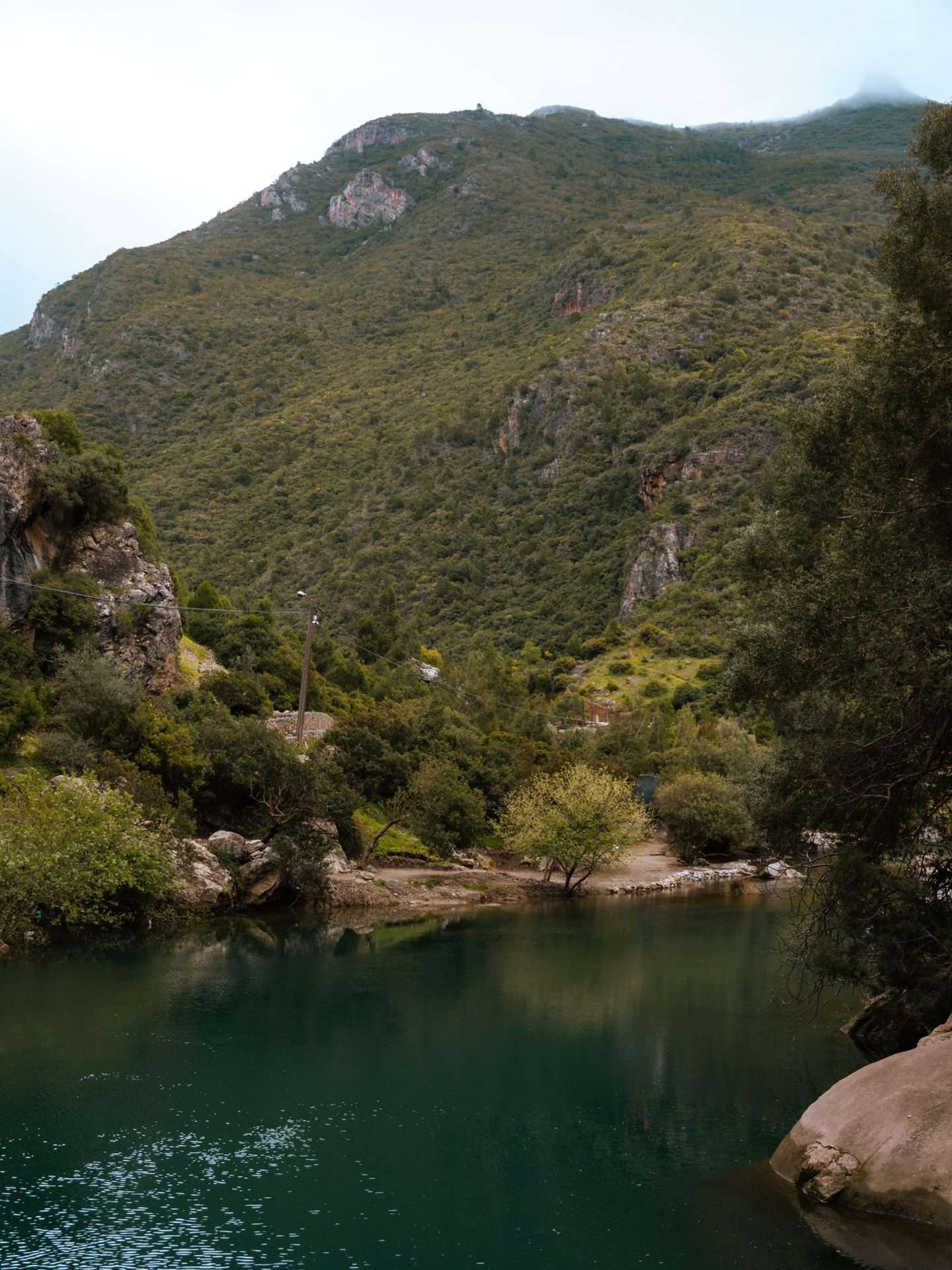
Start your morning with a walk in Talassemtane National Park to the Akchour Waterfall. It’s just a 5-minute drive from the campground. There’s a large parking lot where you can safely leave your campervan for about 10 DH per hour. From the parking lot, it’s about a 45-minute walk to God’s Bridge. Along the way, you’ll first follow the river, which is strikingly blue, before gradually climbing higher to enjoy a fantastic view of the valley. If you also want to see the Akchour Waterfalls, plan on a hike of about 4 hours. Along the way, you may be approached by locals who say a guide is necessary, which it isn’t. The trails are self-explanatory, and you basically just need to follow the water.
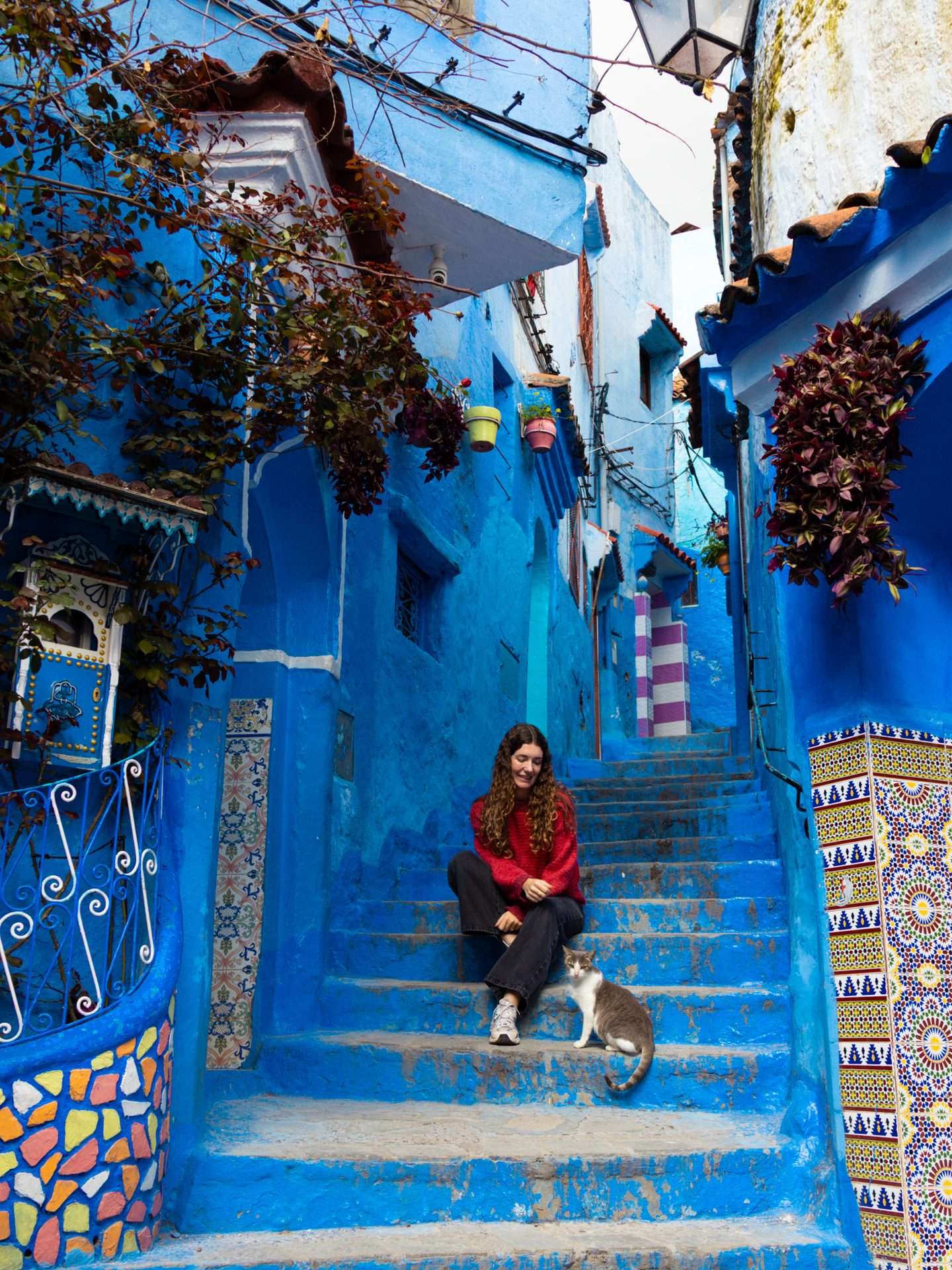
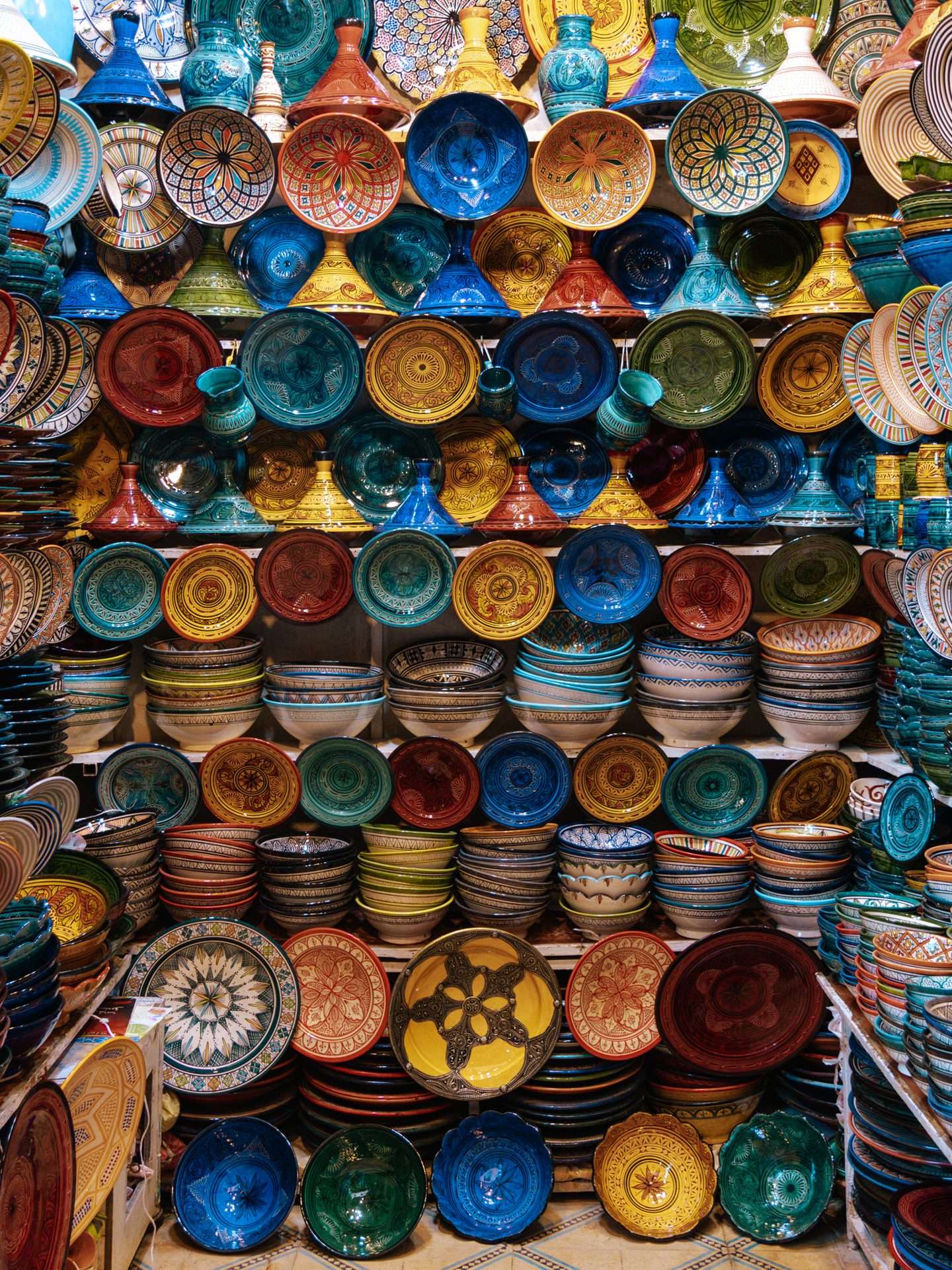
From there, it’s a 45-minute drive to Chefchaouen, the blue pearl of Morocco. No one really knows exactly why the city is painted blue. It’s a lovely town to spend a few hours strolling through. Dive into the souk and admire the many photogenic blue spots. Don’t hesitate to pick up something nice, the souk in Chefchaouen is more affordable compared to other souks in Morocco. For lunch or dinner, Café Clock is a wonderful spot to sit down and enjoy some classic Moroccan cooking.
Where to stay?
In Chefchaouen, there are beautiful riads, or you can choose a campground a little further outside the city. We stayed with a local family about a half-hour drive from Chefchaouen. We had iftar together, since we were there during Ramadan, and our host told us more about life in the Rif Mountains.
Days 3 – 5: Fez
+/- 200 km ● 4h drive
Today you’ll continue your drive to Fez, Morocco’s oldest imperial city and the country’s third-largest city. Gradually, the rugged landscape of the Rif Mountains gives way to rolling, green hills where shepherds tend their sheep and goats.
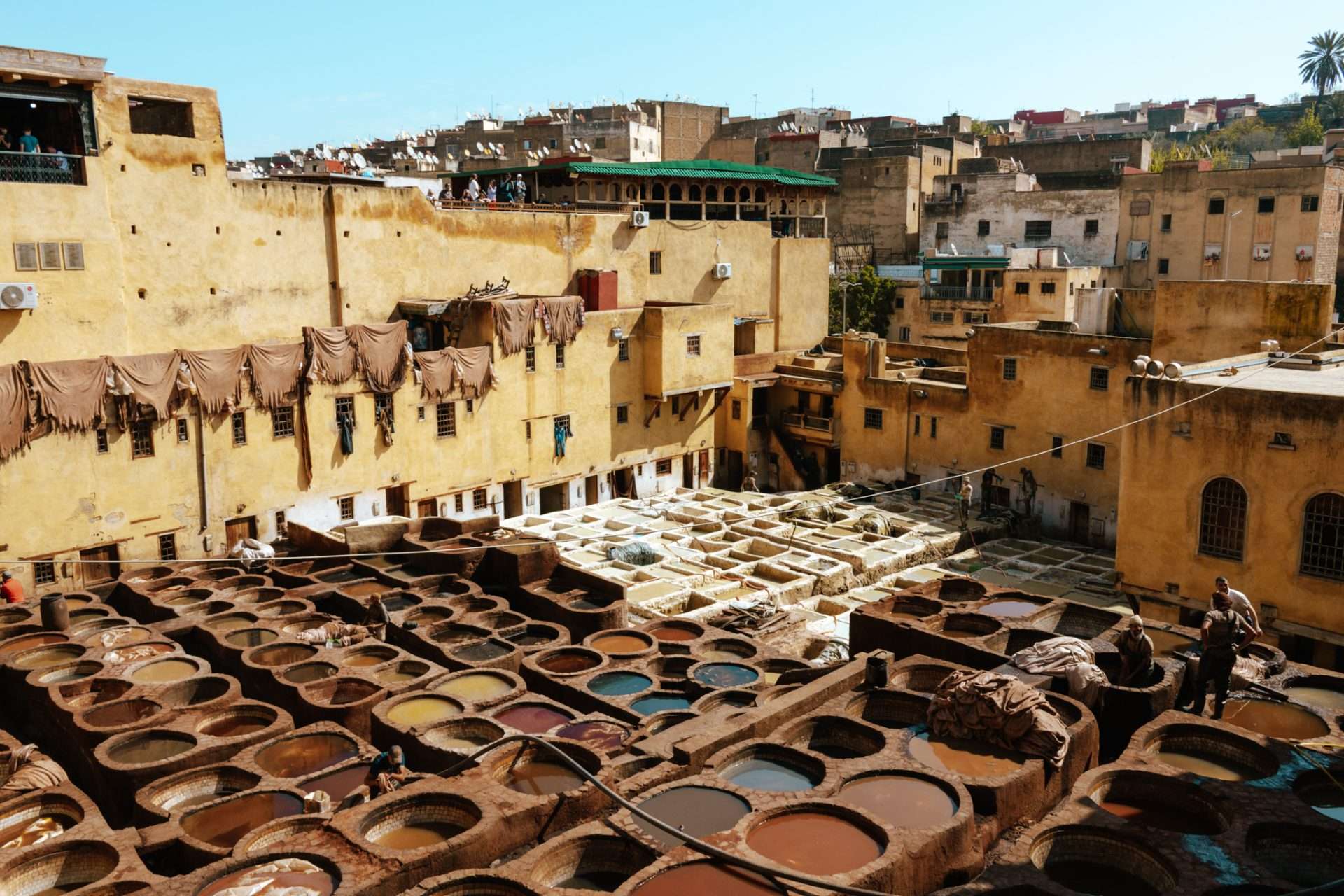
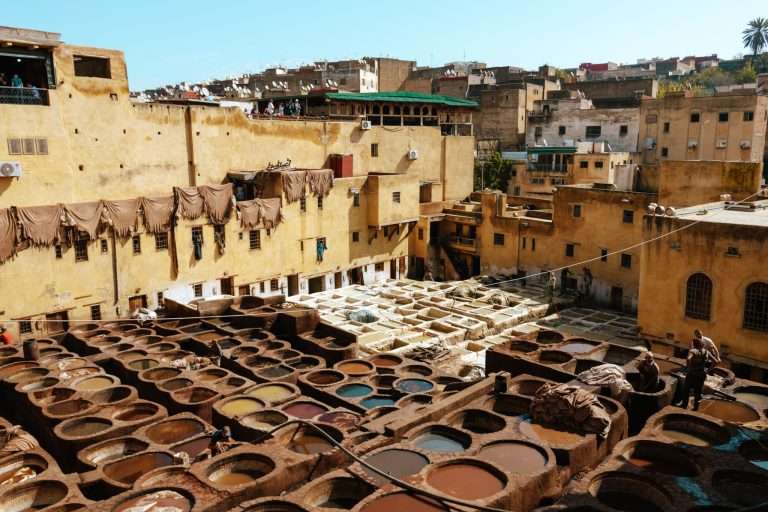
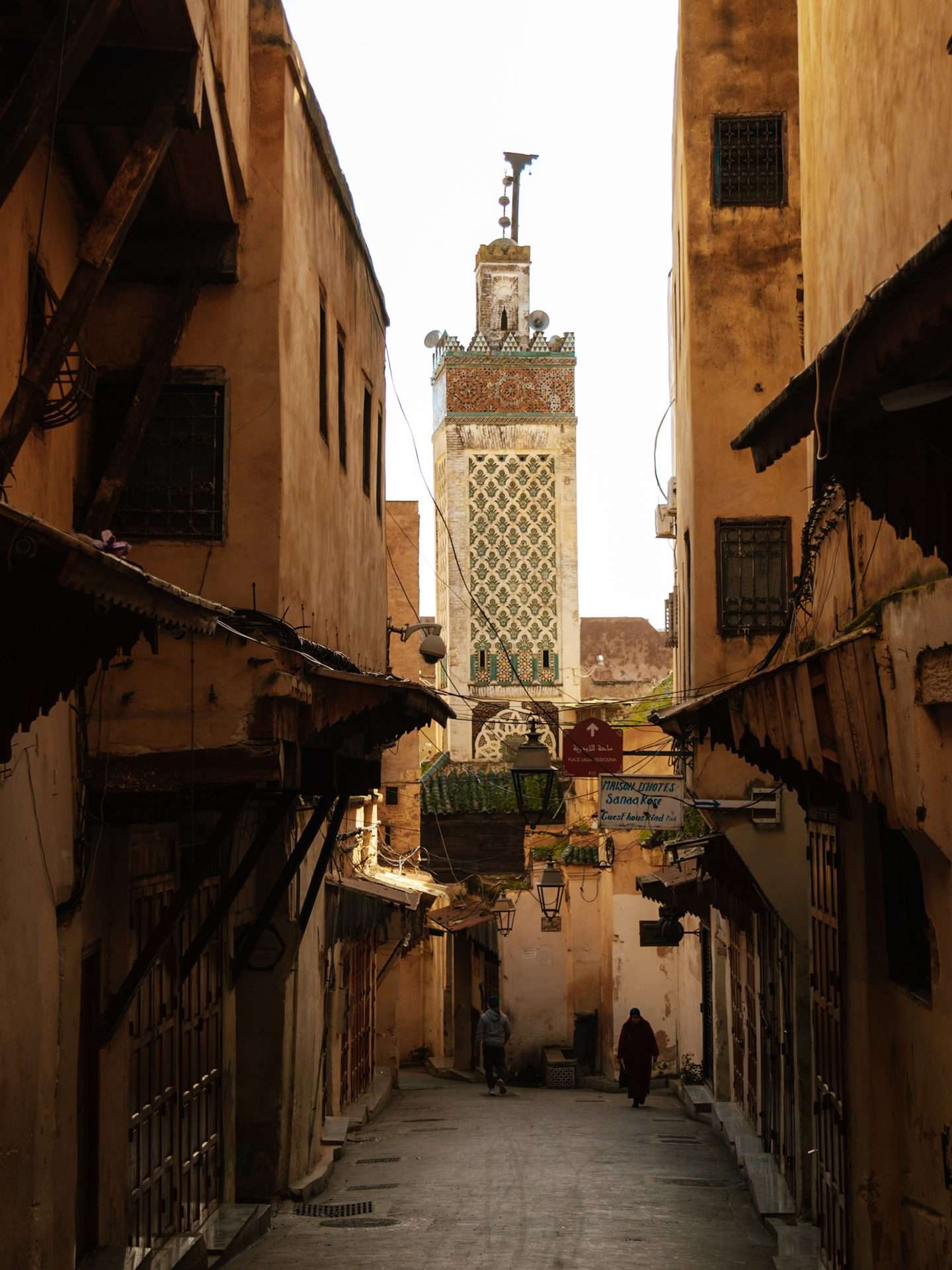
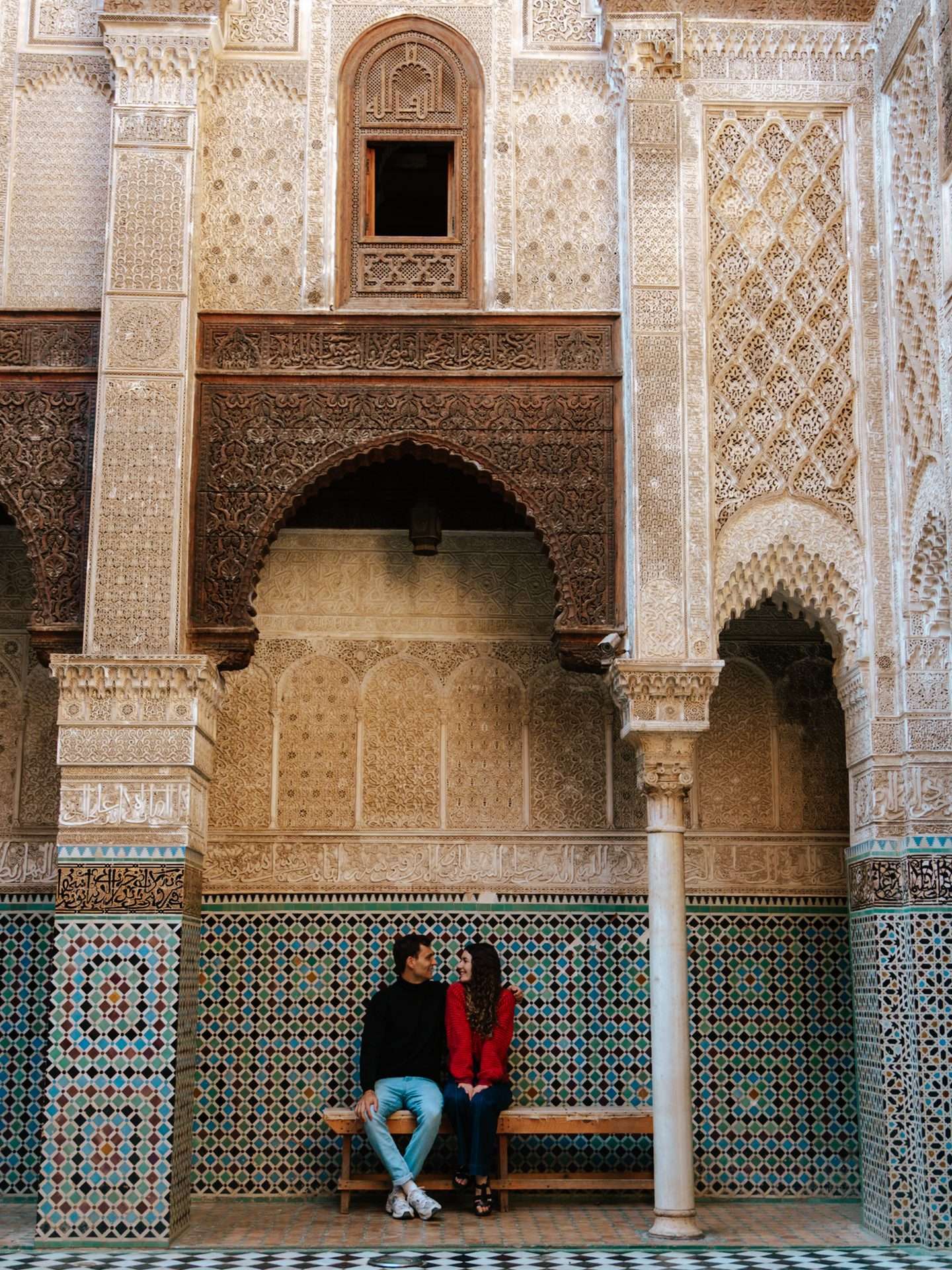
Fez is a unique city and the cultural and spiritual heart of the country. A visit to the Al-Attarine Koranic school is an absolute must. You also shouldn’t miss the centuries-old tanneries with Chouara Tannery being the most famous one. Be sure to take the time to get lost in the many souks of the Fez medina, the largest car-free city center in the world. Recommended places to eat include the intimate Le Tarbouche and the rooftop restaurants Fondouk Bazaar and Dar Hammad. Prefer to explore with a bit of context? A guided walking tour of the medina is a great way to get the most out of your time in Fez.
Where to stay?
With your campervan you can park at a secure parking lot just outside the medina for only 40 DH per night. It’s an ideal base for exploring Fez on foot. The parking attendant can even give you access to restrooms if you ask. If you’d prefer a camping, Auberge Dômes Relax is highly recommended. It is 12 km from the city, so you’ll have to commute to Fez by taxi.
Day 6: Ziz Valley
+/- 375 km ● 6h drive
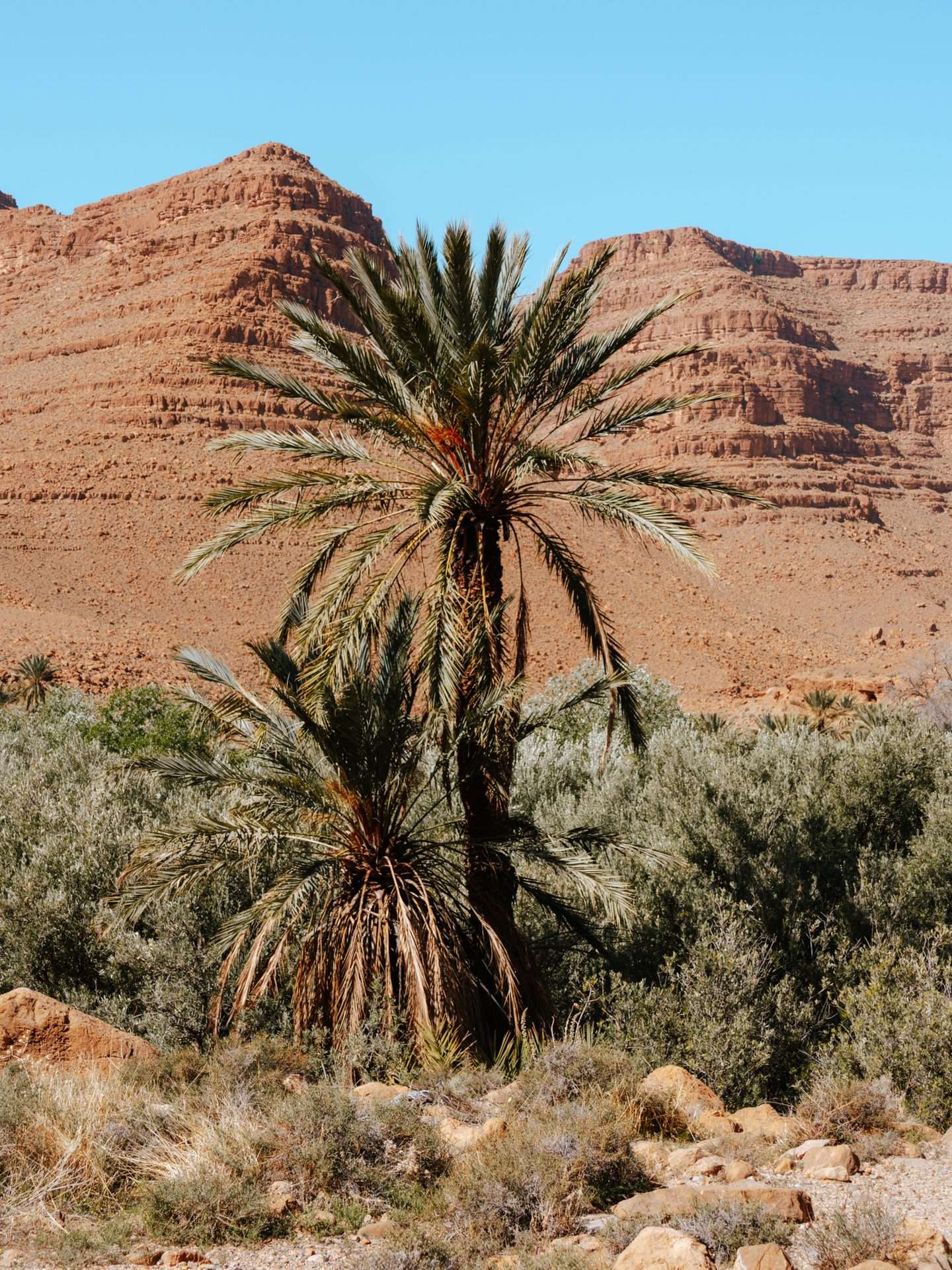
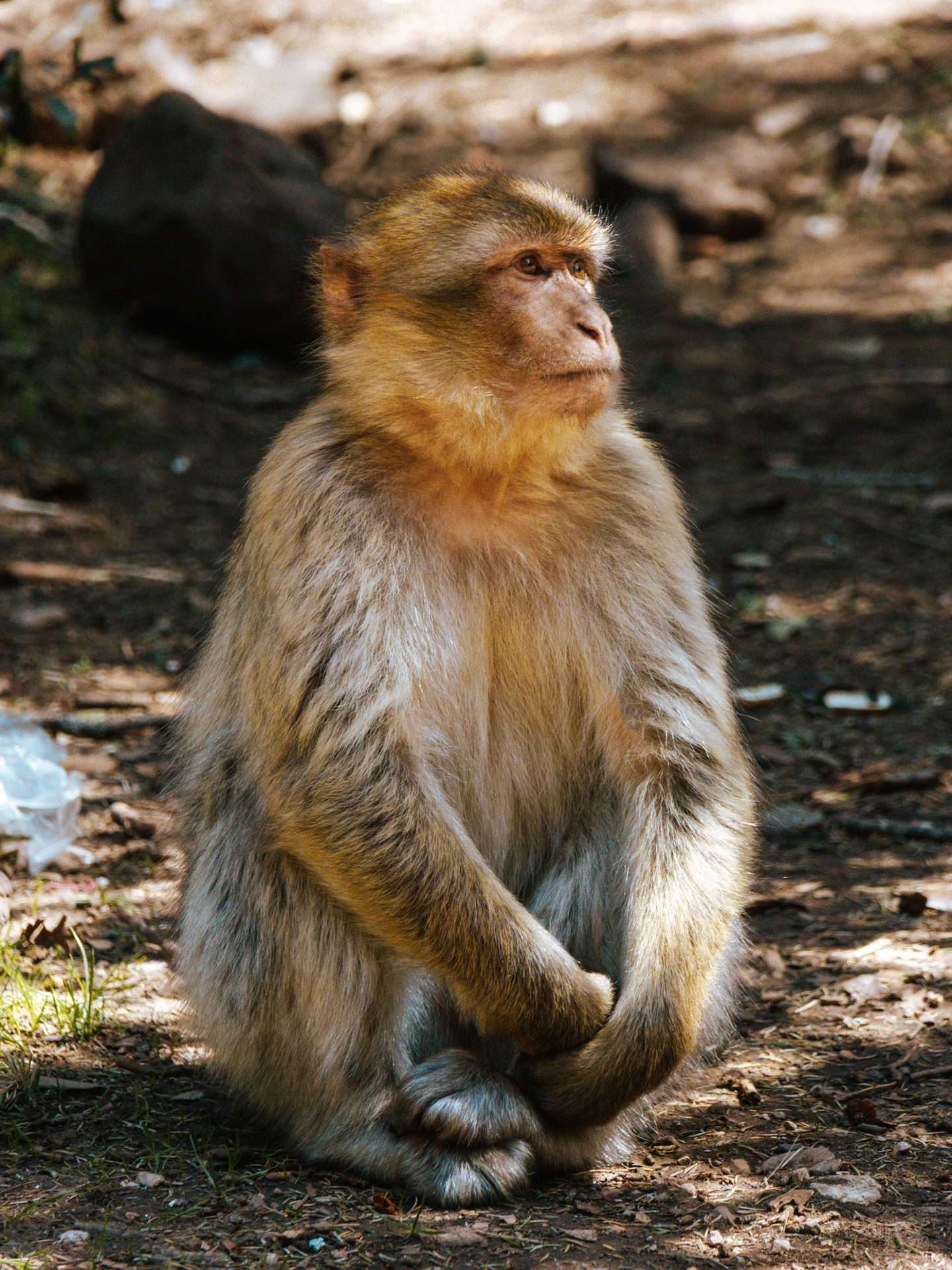
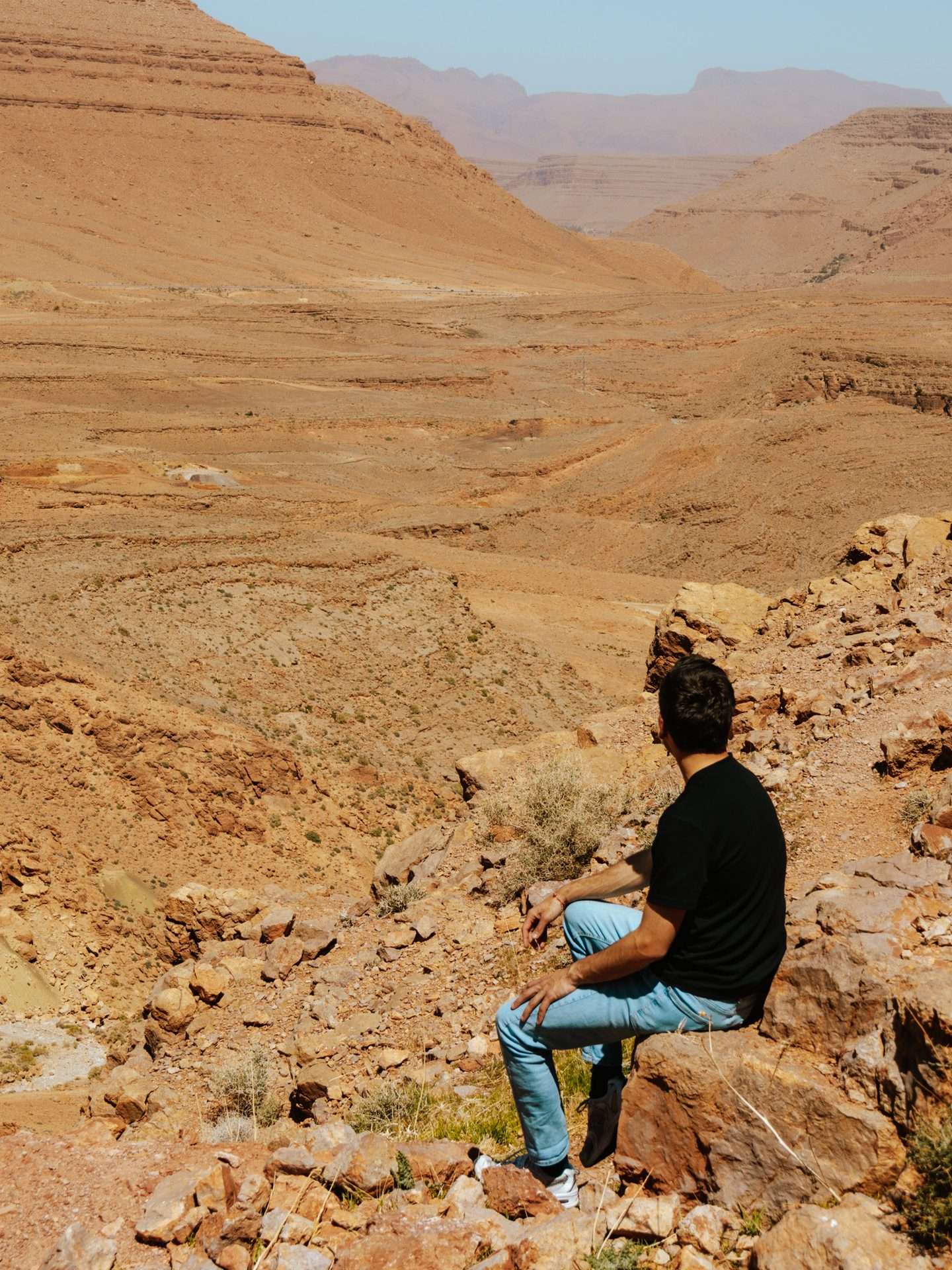
Day 6 is a longer drive, but one that offers impressive scenery. Once again, you’ll see the landscape change: this time from green hills to arid plains with deep canyons. It’s a good idea to stop and pick up some groceries at the Carrefour in Fez first, since it’s the last major store before you head into the desert. Halfway through the drive, you’ll pass through the Middle Atlas Mountains, where around Azrou you have a good chance of spotting wild Barbary macaques along the roadside. The drive ends in the Ziz Valley, where you’ll spend the night in a palmeraie, a lush palm grove by the river, framed by old, authentic kasbahs.
Did you know? A kasbah is an ancient fortress that was used to defend the valley against attackers. A ksar is a collection of kasbahs.
Where to stay?
We spent the night in our campervan right next to this old kasbah where you can also stay in a room. The building is made entirely of mud and straw. The owner, Ali, is a warm host who grows everything himself. The food there is delicious, and after dinner he’ll gladly take you along the river and through the gardens to tell you more about the valley’s irrigation system. It’s a great place to stop for one night.
Dag 7 – 9: Merzouga (Sahara desert)
+/- 160 km ● 2h30′ drive
Merzouga is the perfect base for exploring the Moroccan Sahara. The vast sand dunes stretch as far as the eye can see in every direction, and the silence that comes with them is something you simply have to experience for yourself. It’s also a wonderful place to slow down for a day or two.
TRAVEL TIP: Not driving a 4WD? Stick to the paved roads. The crushed stone spread along the roadsides can make the sand look perfectly driveable in a regular car or camper, but don’t be fooled. Before you know it, you’ll be negotiating with a local driver to pull you out. We are speaking from experience. 😉
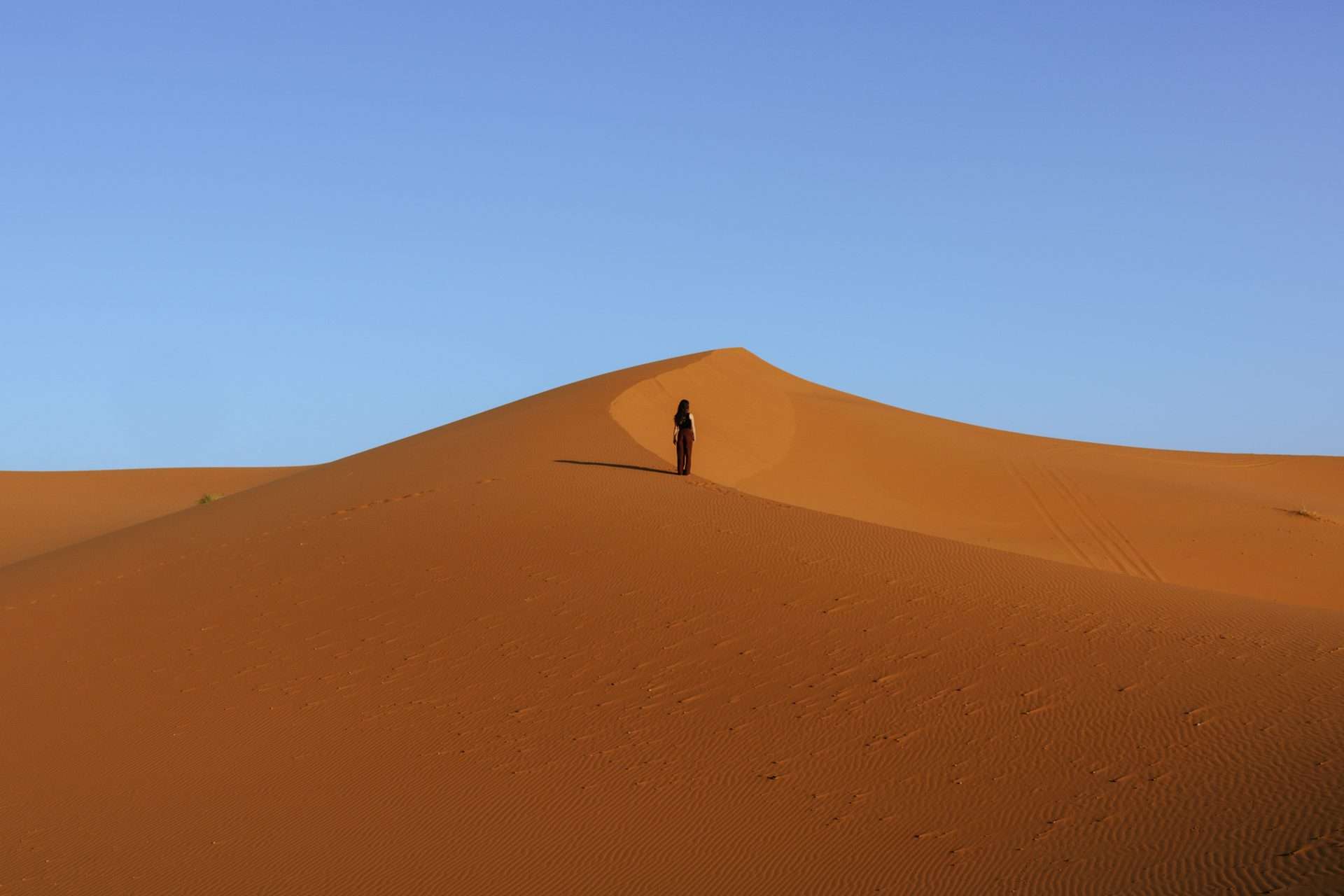
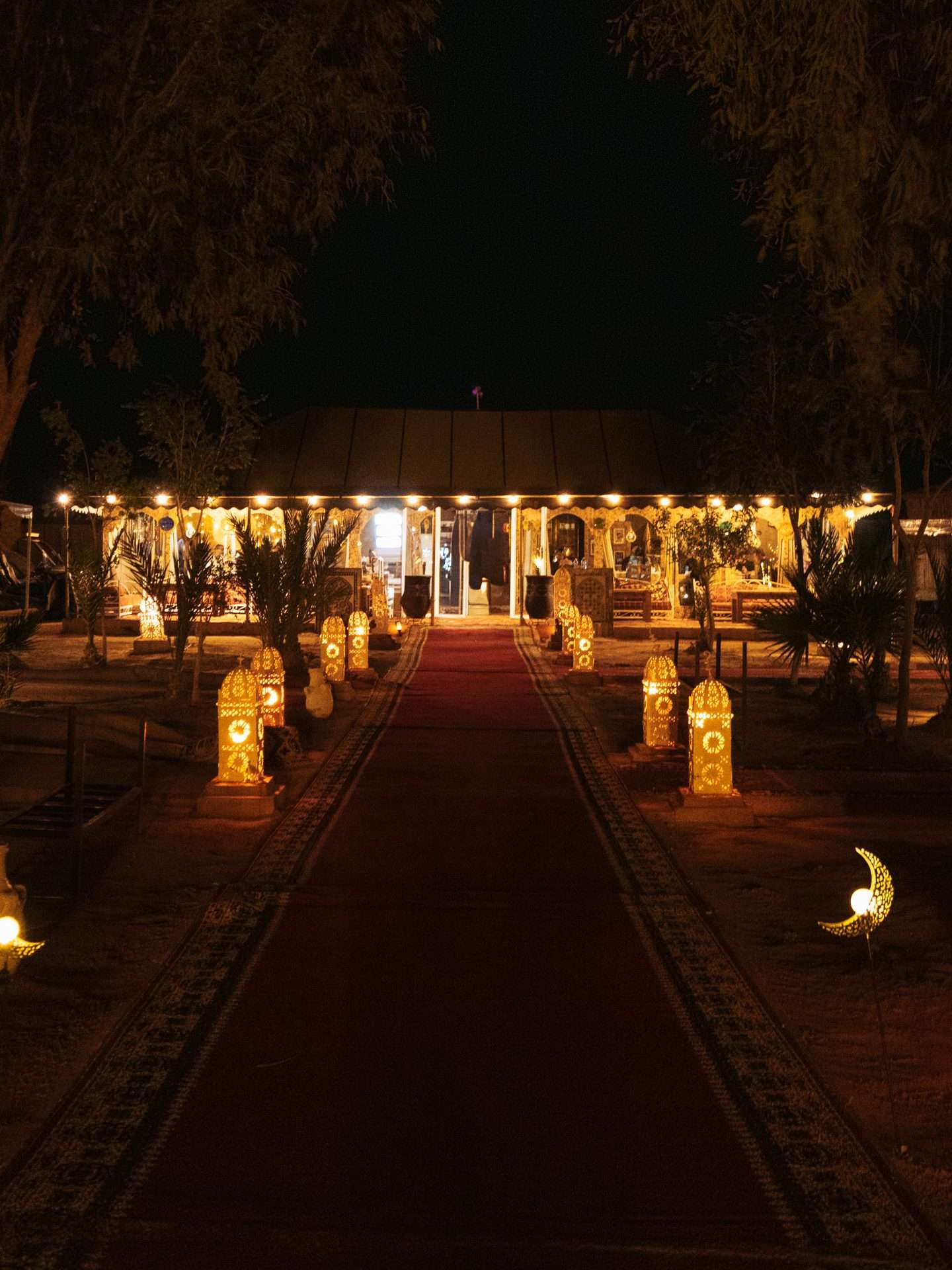
Spending a night in a tented camp in the middle of the desert is something we’d recommend to anyone. We stayed at Sahara Majestic Luxury Camp and had a wonderful evening. As the sun went down, we climbed the dunes to watch the sunset, followed by a dinner of tagine and kefta around the camp. Later, everyone gathered around the campfire with tea and music. And if you look up at night, you’ll be rewarded with an incredible starry sky.
Another great stop near Merzouga is Rissani. If you’re here on a Tuesday, Thursday, or Sunday, you should definitely check out the big market in Rissani. You’ll also find a livestock market where Moroccans buy and sell their cows, goats, and sheep (note: this can be upsetting if you’re an animal lover, but it’s simply part of daily life in Morocco). In Rissani, you can also enjoy delicious Berber pizza, which is typical of this region.
Where to stay?
We combined a few nights at this campground in Merzouga on the edge of the desert with a night in a tented camp in the middle of the dunes. The campground also has a swimming pool, a fantastic restaurant, and offers various excursions, such as a buggy or ATV ride through the desert. For the tented camp , we stayed at Sahara Majestic Luxury Camp, where transportation to and from the campground was included.
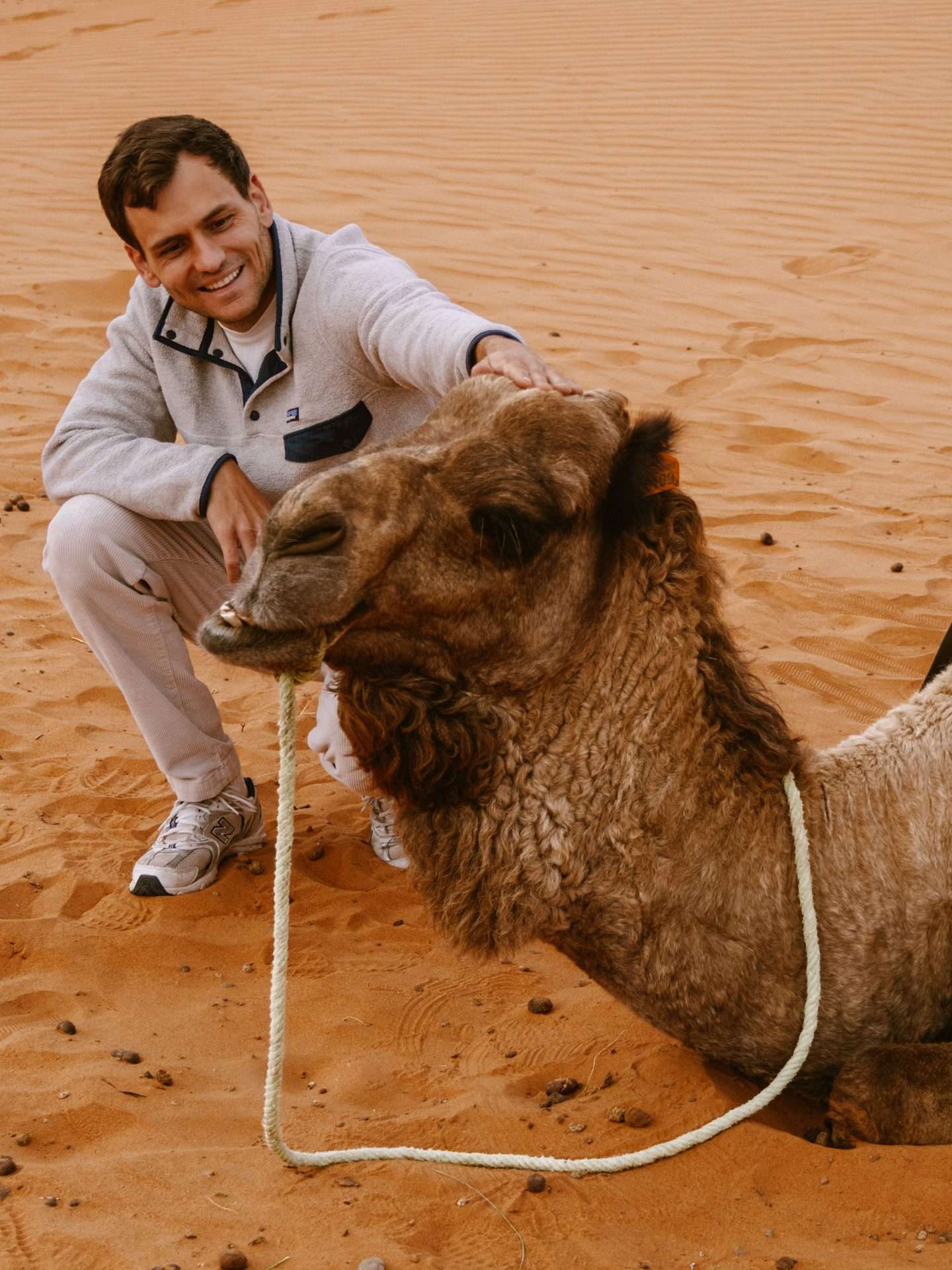
TRAVEL TIP: In Merzouga you will be offered camel rides. Our advice is to not do this! Unfortunately, the animals are often mistreated. They’re frequently heavily laden with tourists from morning to night, all under the scorching sun. It looks romantic in photos, but the animals are completely exhausted (even if they tell you otherwise).
Days 10 – 12: Todra Gorge and Dades Gorge
+/- 200 km ● 4h drive
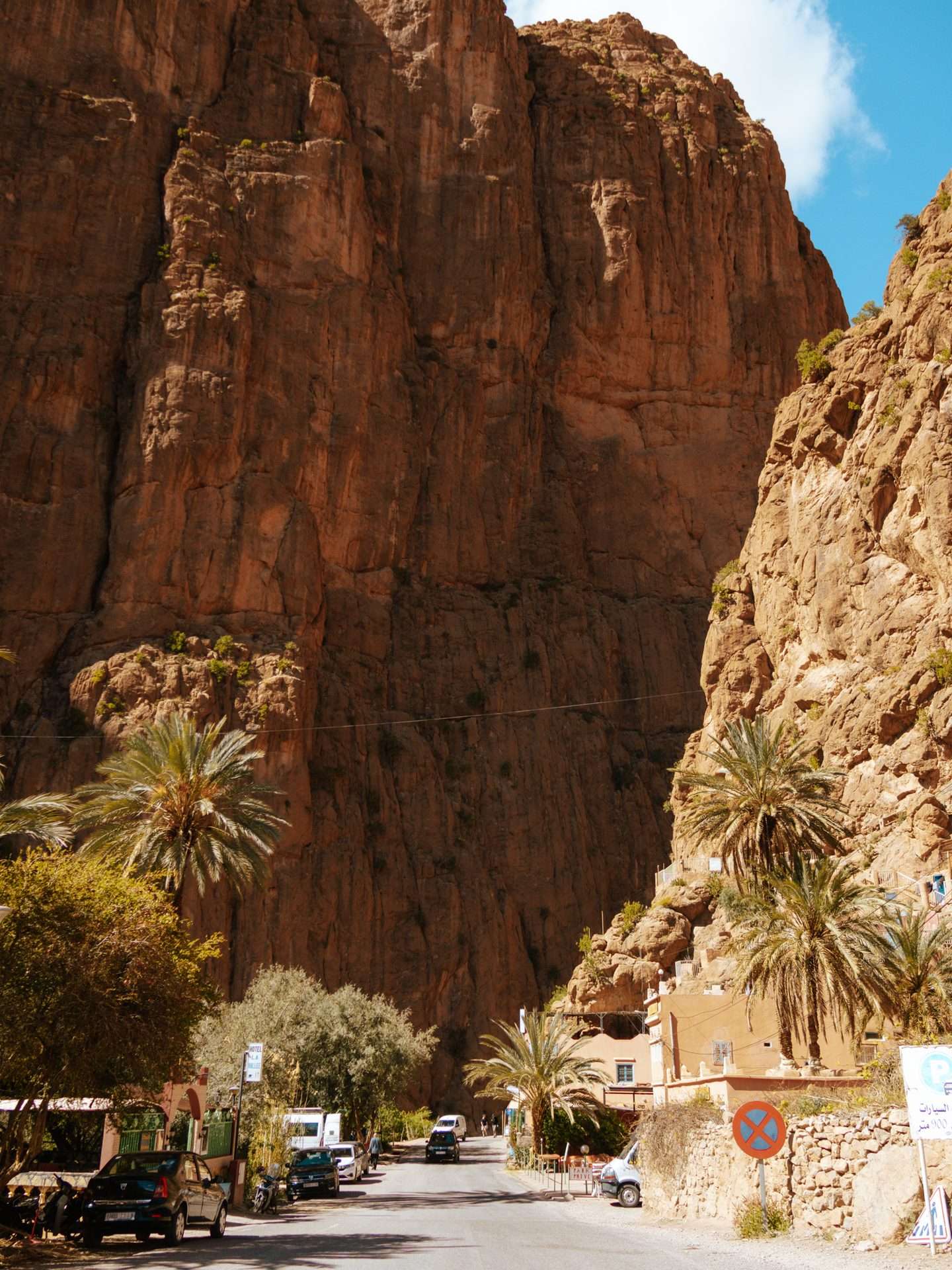
The next stop takes you to the heart of the Atlas Mountains, home to two of the country’s most spectacular gorges: the Todra Gorge and the Dades Gorge. From Merzouga, it’s about a 4-hour drive to the town of Tinghir, the gateway to the Todra Gorge. Driving through the gorge is an impressive experience. The road winds between two rocks that are only a few meters apart in some places. If you’re a fan of rock climbing or via ferratas, this is a good reason to stay here a little longer.
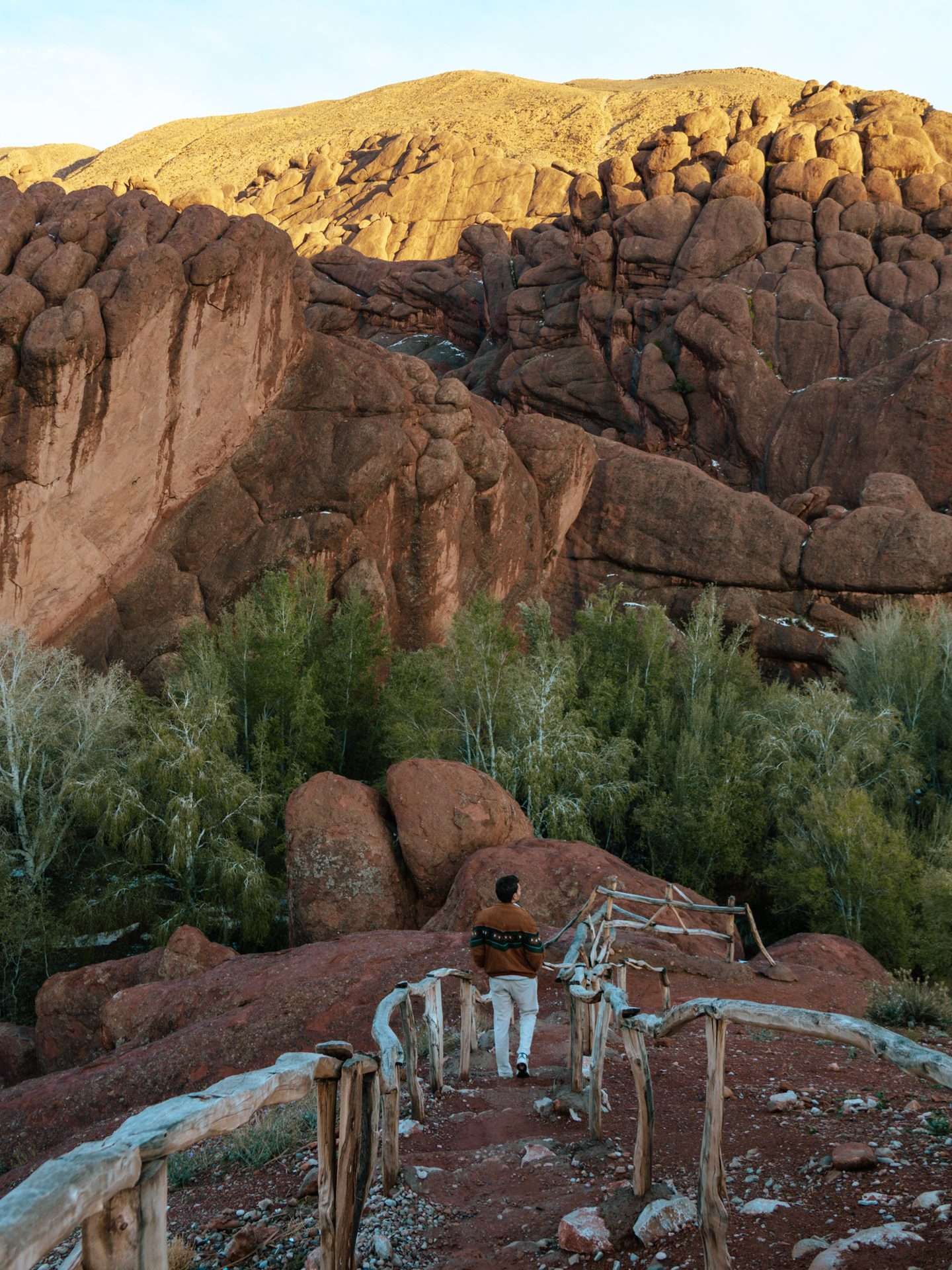
From the Todra Gorge, the renovated P7104 road takes you to the Dades Gorge. This route showcases Morocco at its best: a succession of stunning mountain landscapes, red rocks, and villages where everyday Berber life goes on as usual. In the Dades Gorge, hiking the Monkey Fingers trail is one of the best things to do.
Where to stay?
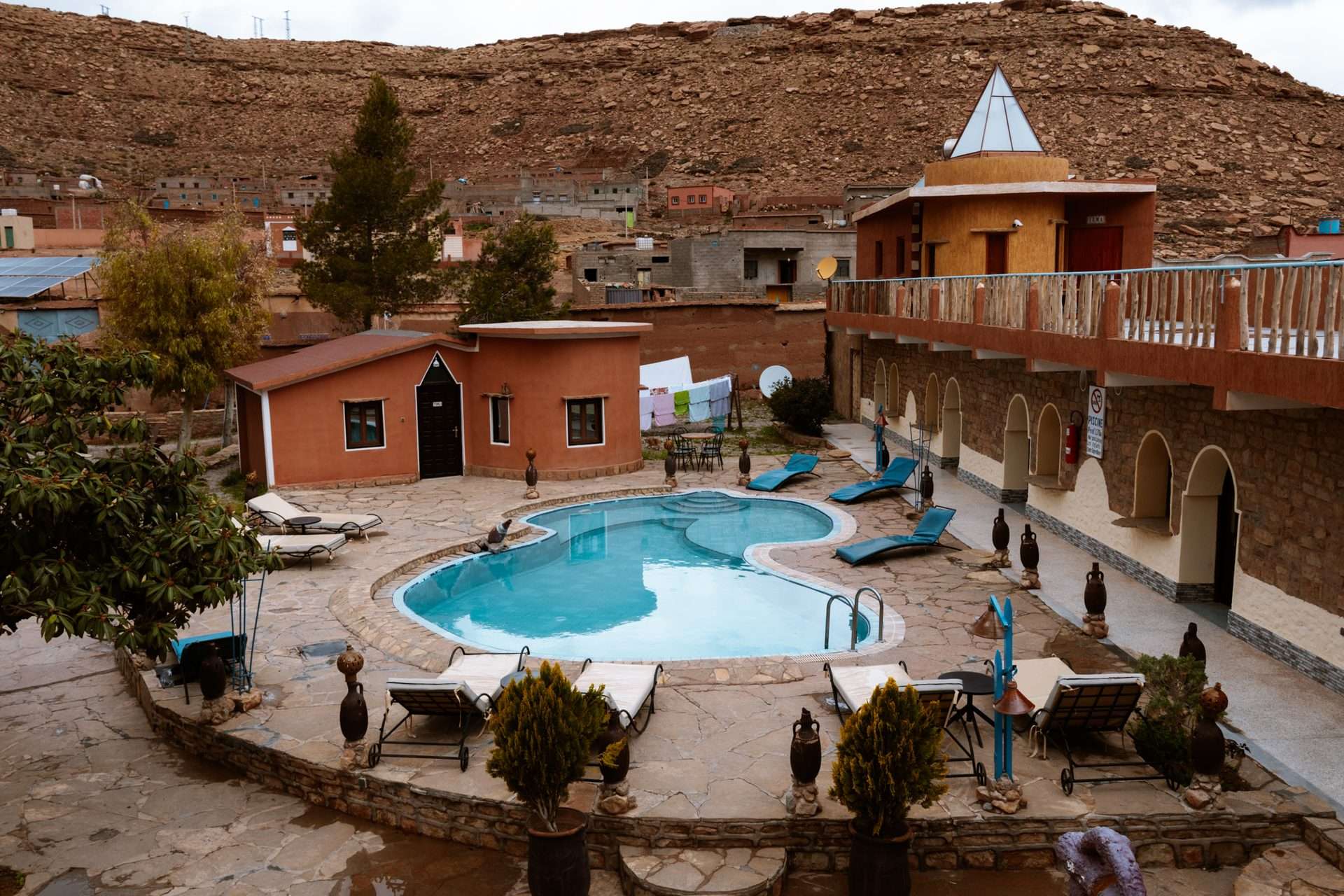
There are quite a few campgrounds in both gorges. These are often the parking lots of restaurants or hotels where you can use the restroom facilities for a reasonable price. You can usually grab a table at the restaurant as well for diner. In the Todra Gorge, Auberge Camping Atlas and Auberge Baddou are highly recommended. In the Dades Gorge, Camping Berbère de la Montagne and Camping Aït Oudinar are worth a visit.
Days 13 – 14: Ouarzazate & Aït Ben Haddou
+/- 170 km ● 3h drive
Starting from the Dades Gorge is Ouarzazate is the next stop. This city is also known as the “Hollywood of Morocco”. The reason is obvious: the famous Atlas Studios are located here, and combined with the surrounding landscape, this region has served as the backdrop for numerous major productions such as Game of Thrones, The Mummy, and Lawrence of Arabia. In addition, the well-preserved Kasbah Taourirt is one of the city’s most beautiful attractions.
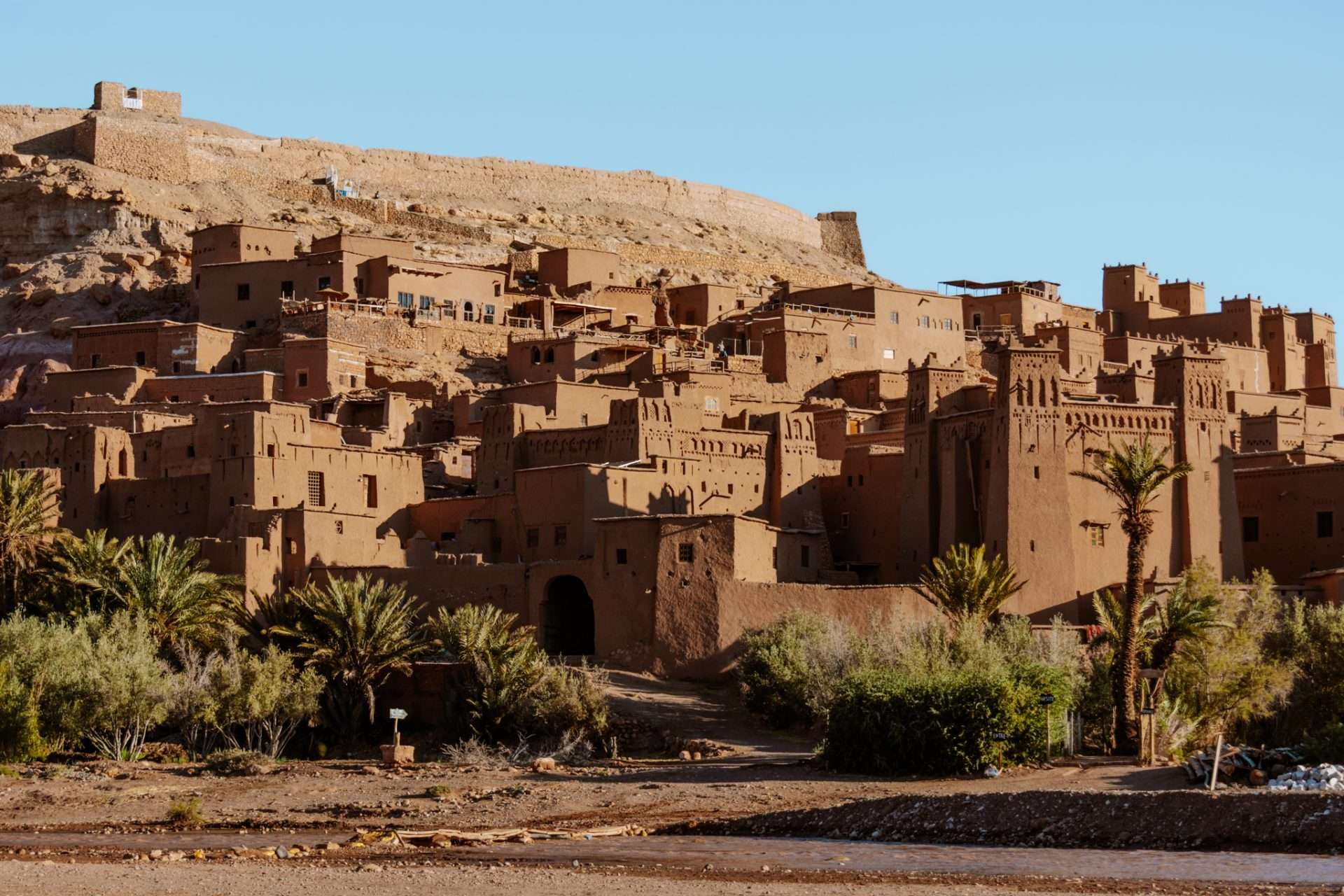
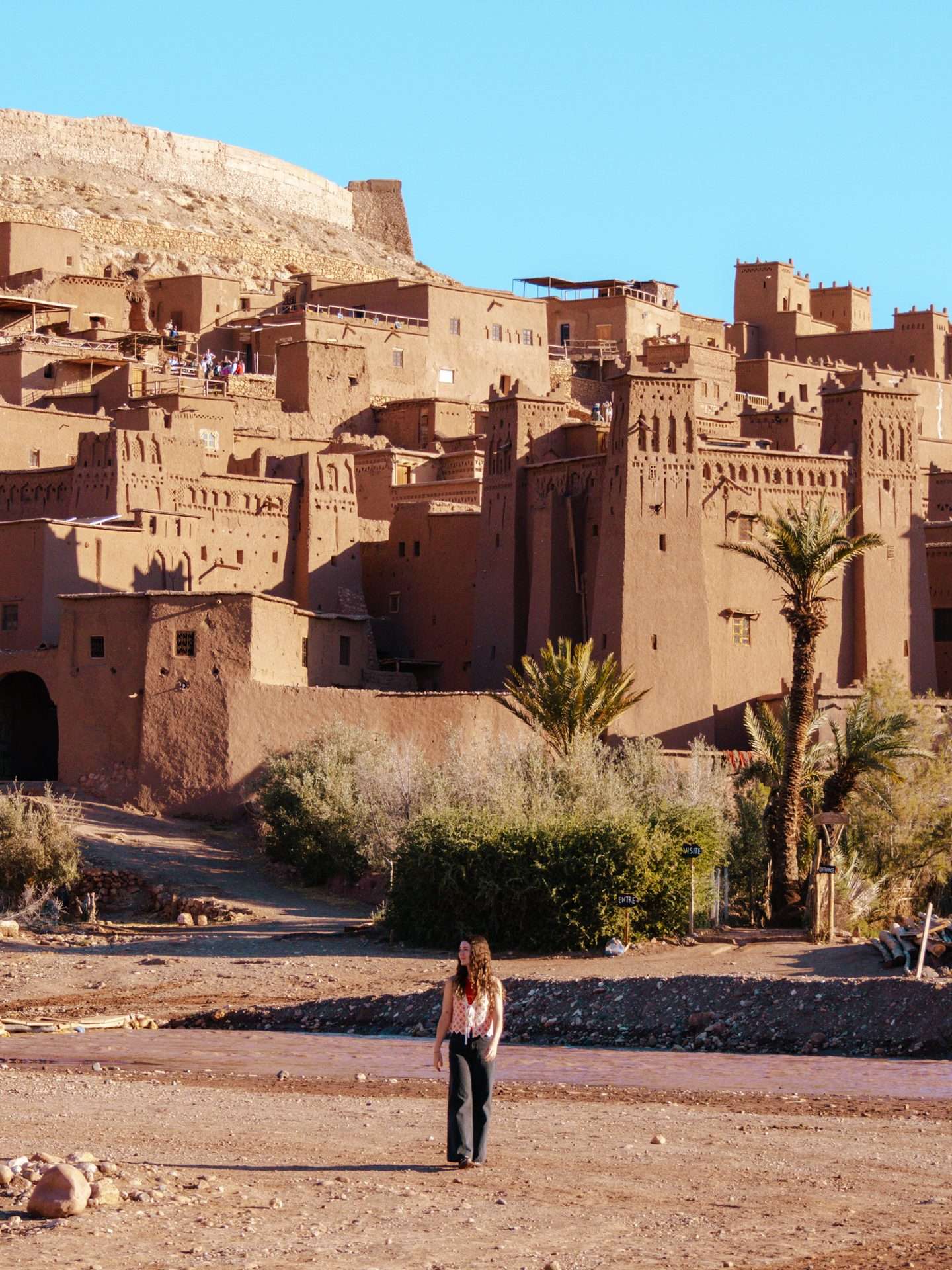
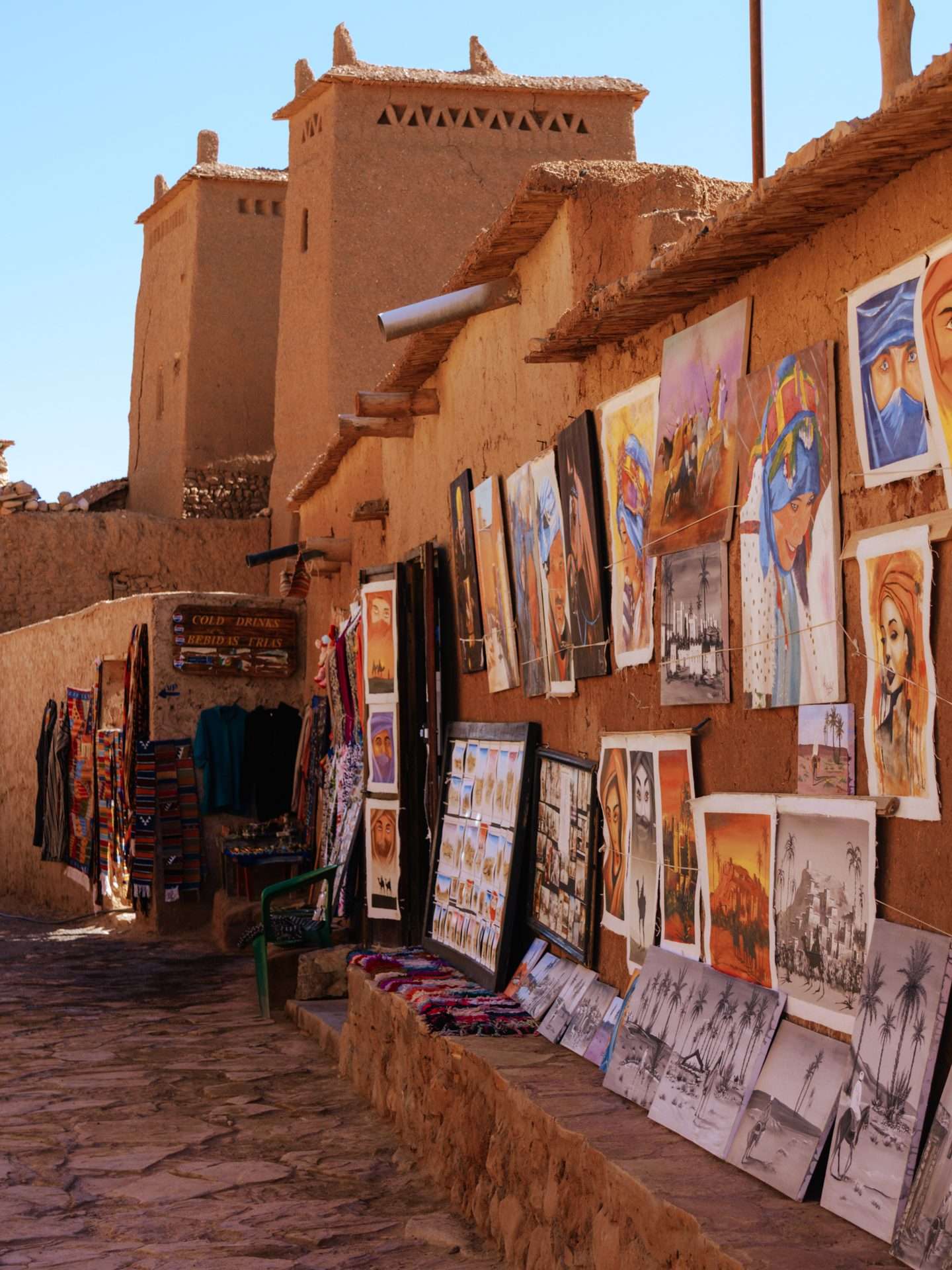
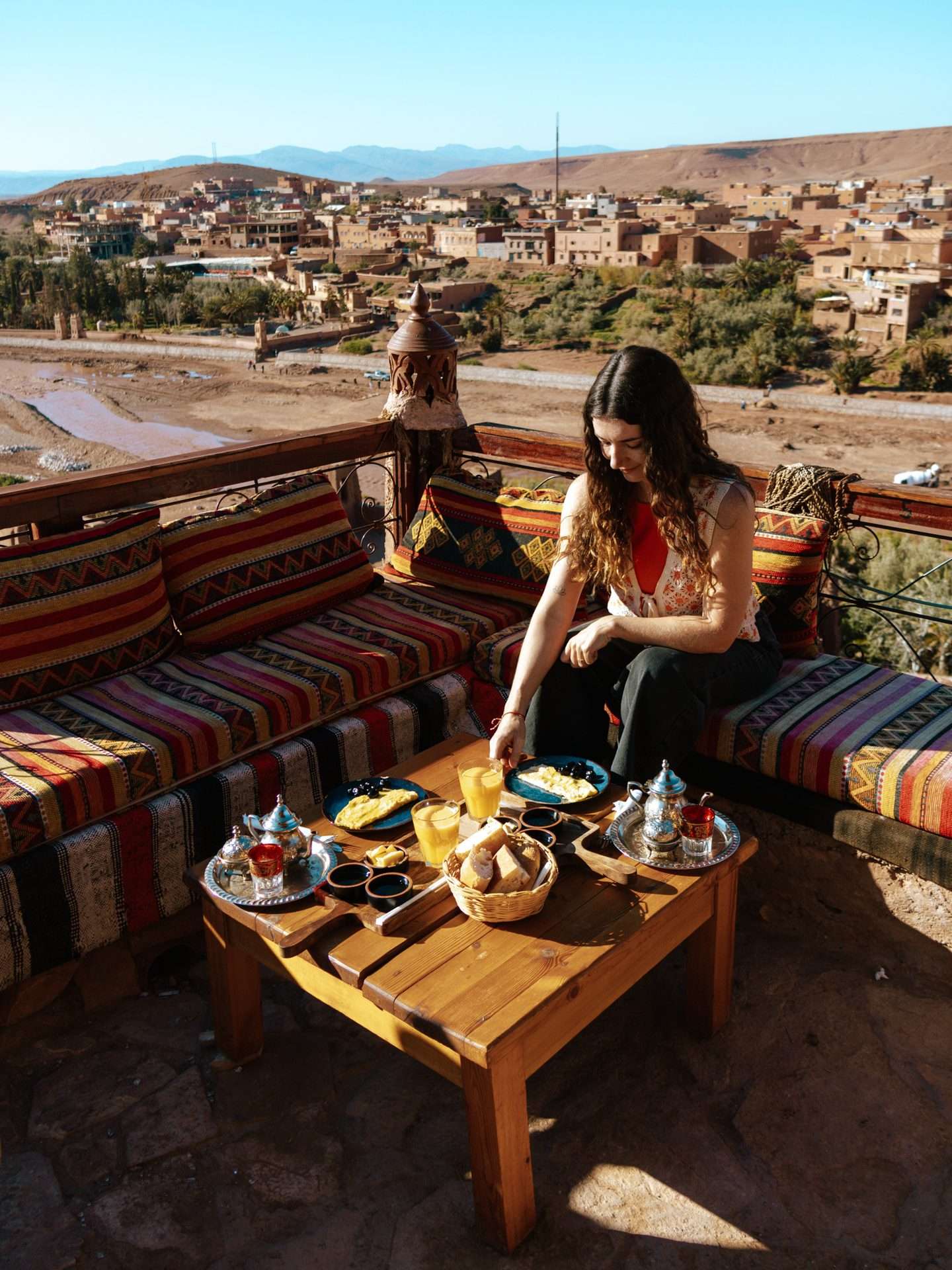
We personally didn’t find Ouarzazate that special compared to the village of Aït Ben Haddou. This UNESCO World Heritage Site consists entirely of sandstone structures and is considered the best-preserved ksar in Morocco. The village is very popular, so try to arrive before 11:00 a.m. or after 5:00 p.m. By then, the day-trippers will have left, and the light will be at its best for photos.
Where to stay?
Between Ouarzazate and Aït Ben Haddou, you’ll find Camping L’Escale de Ouarzazate, which offers great amenities, including a pool and a restaurant. This is a great base for visiting both places. If you’d rather stay somewhere with a view of Aït Ben Haddou itself, the parking lot at Hotel Nouflla is highly recommended, where you can also use the hotel’s restroom facilities.
Day 15: Tizi n’Tichka
+/- 180 km ● 3h30 drive
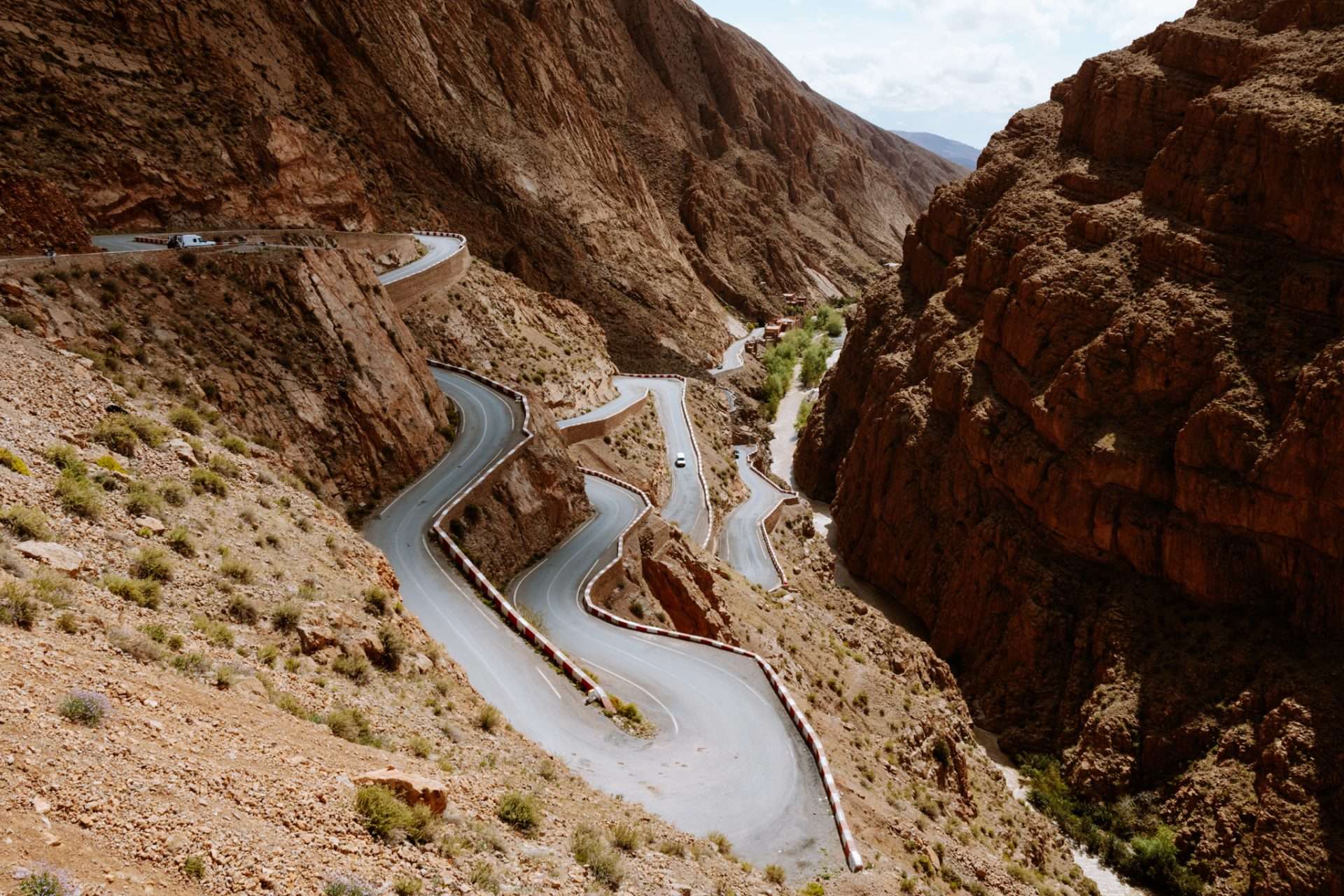
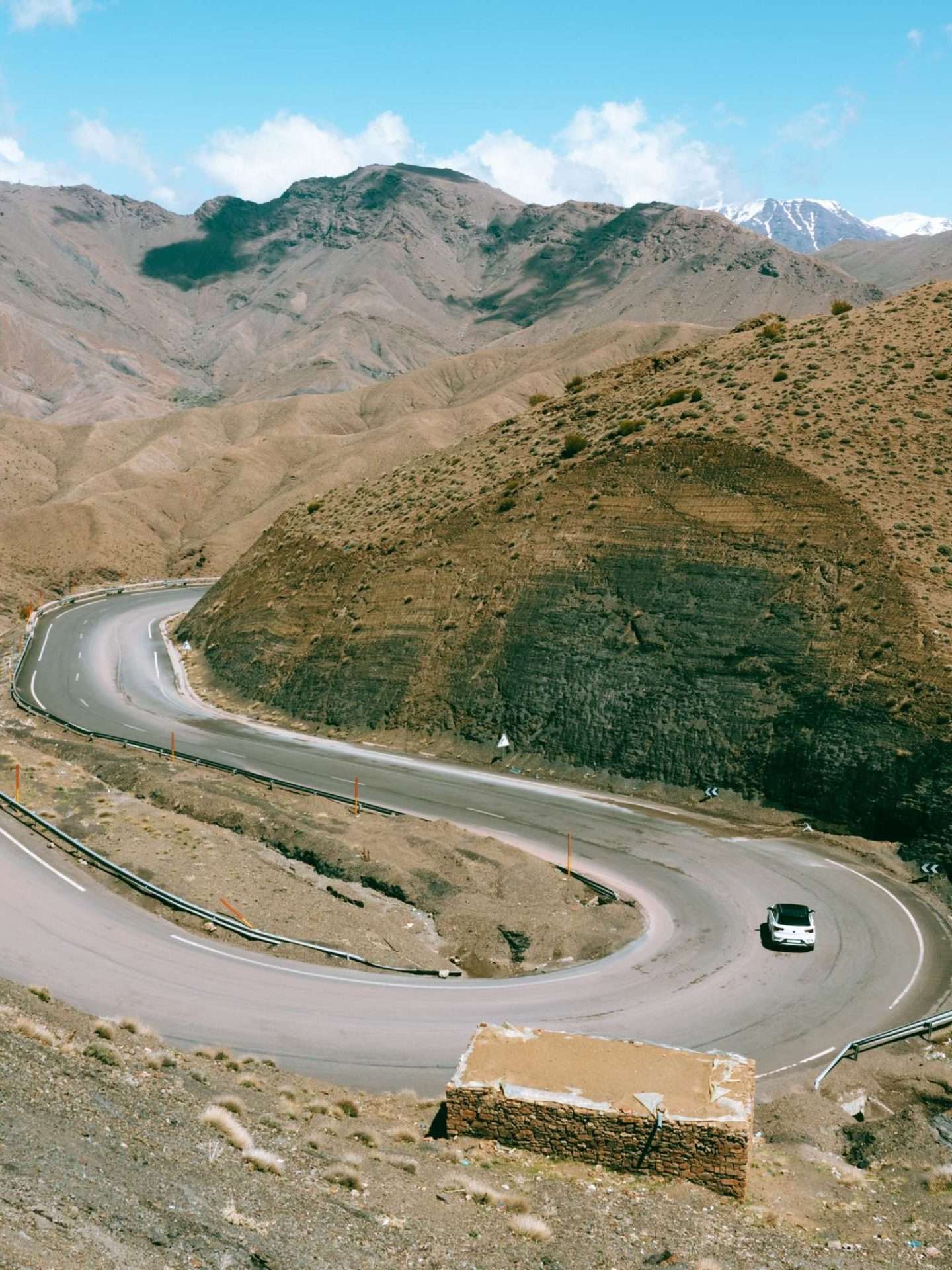
It’s time to leave the rocky desert landscape behind for greener scenery and a coastal climate. The boundary between these two worlds is the Tizi n’Tichka Pass, a mountain pass that is part of the N9, the road connecting Ouarzazate to Marrakech. Through an endless series of curves, the road climbs to 2260 meters, making it the highest mountain pass in North Africa.
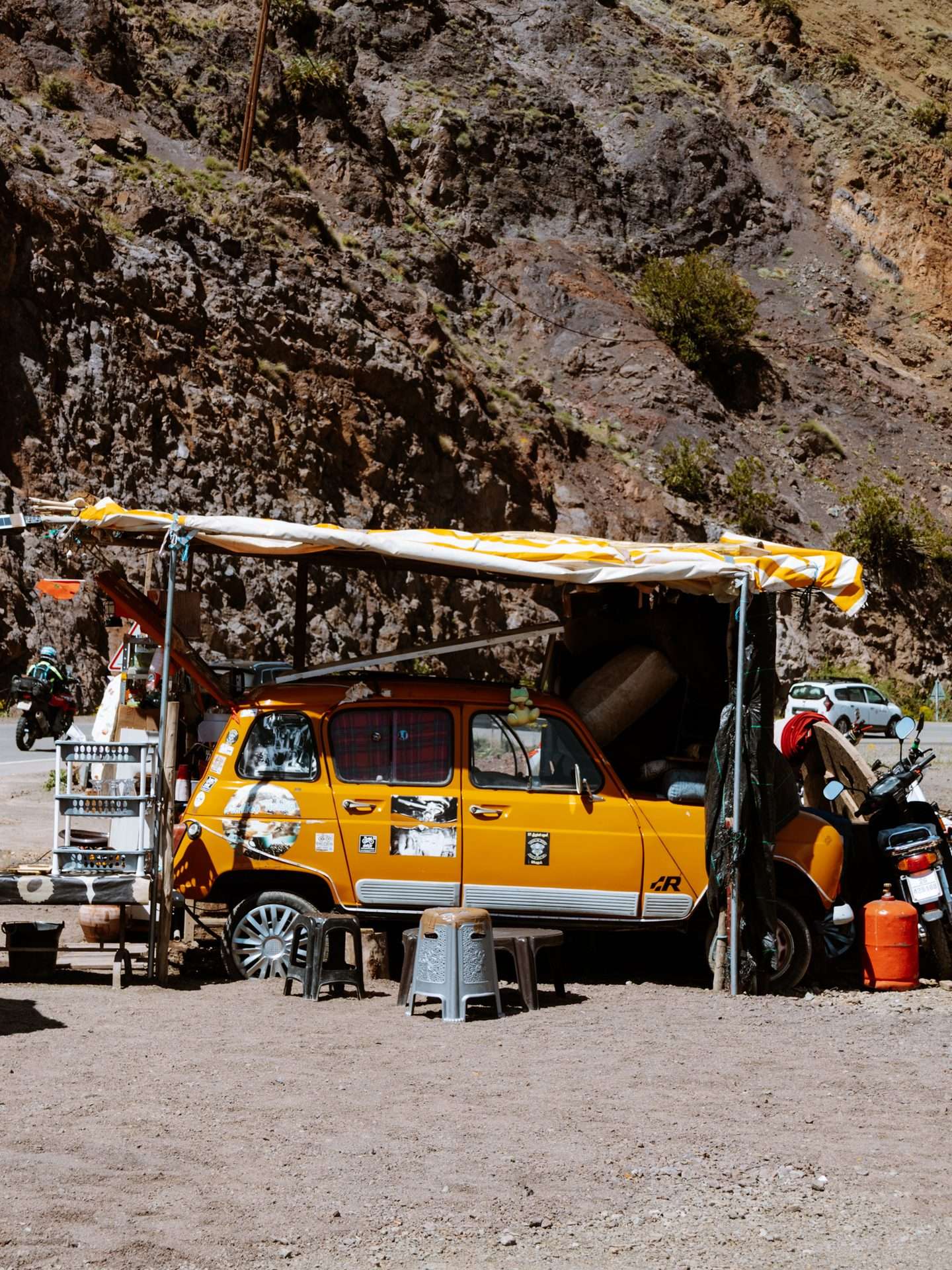
TRAVEL TIP: You’ll find the best coffee in Morocco along the road. As you travel, you’ll regularly come across stalls where a local barista brews fresh coffee for 15 to 20 DH (barely €1.50). Stop for a moment, get out of the car, and enjoy a delicious cup of coffee with a view as a quick break. Along the Tizi n’Tichka Pass is Coffee Tichka one of the better spots.
Where to stay?
After crossing the Tizi n’Tichka Pass, continue on toward Marrakech. On the outskirts of the city, you’ll find several cozy campgrounds where you can stay. These campgrounds often feature a swimming pool and a wonderful restaurant, such as Camping Manzil La Tortue.
If you have more time, you can also head first from Ouarzazate to Taroudant and Agadir on the Atlantic coast. On the way back north, you can stop in Marrakech later on. South of Agadir, destinations like Tafraoute and Sidi Ifni aren’t far away. From there, you can continue north along the coast through Tamraght, Taghazout, and Essaouira.
Days 16 – 19: Marrakech
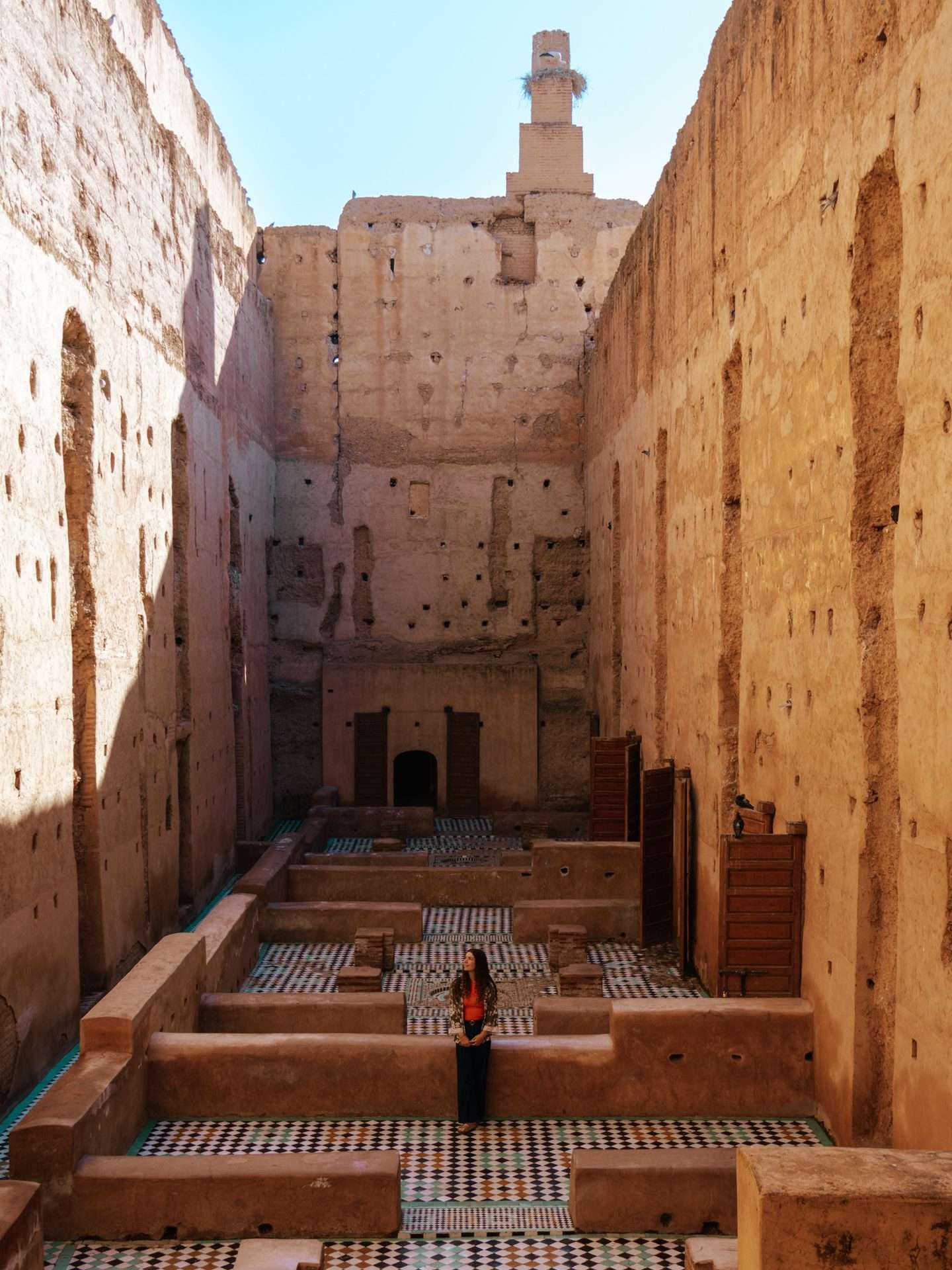
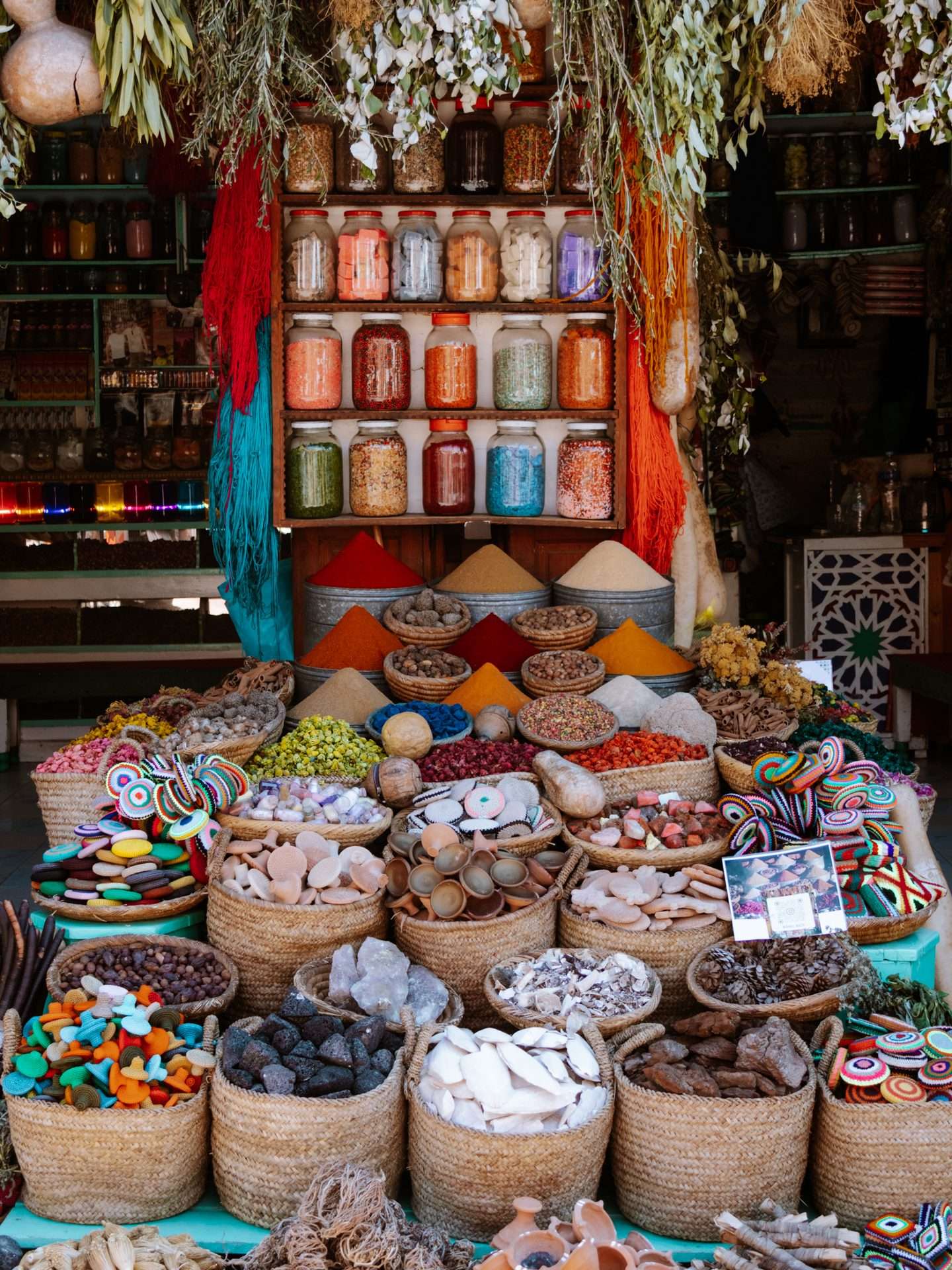
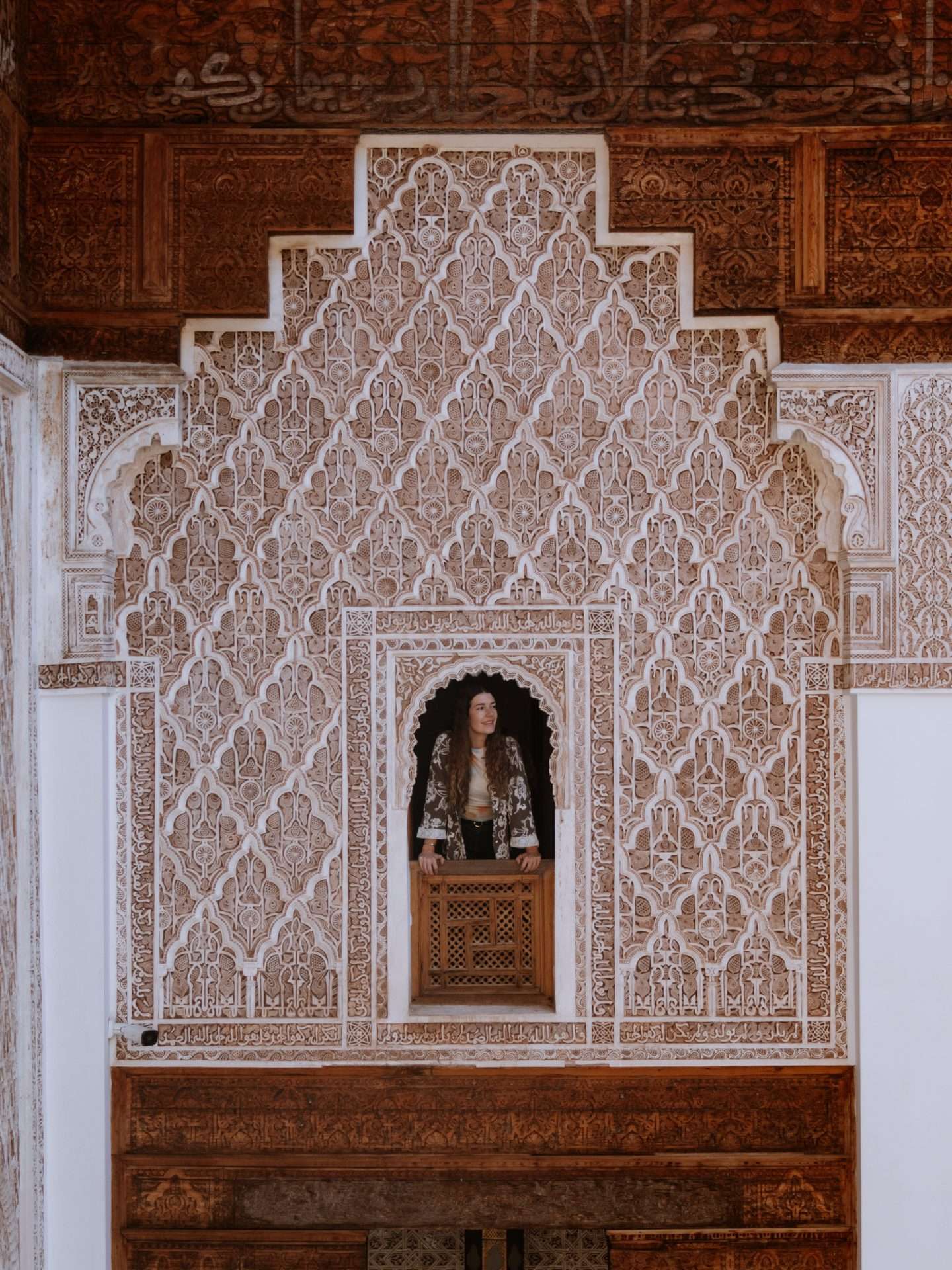
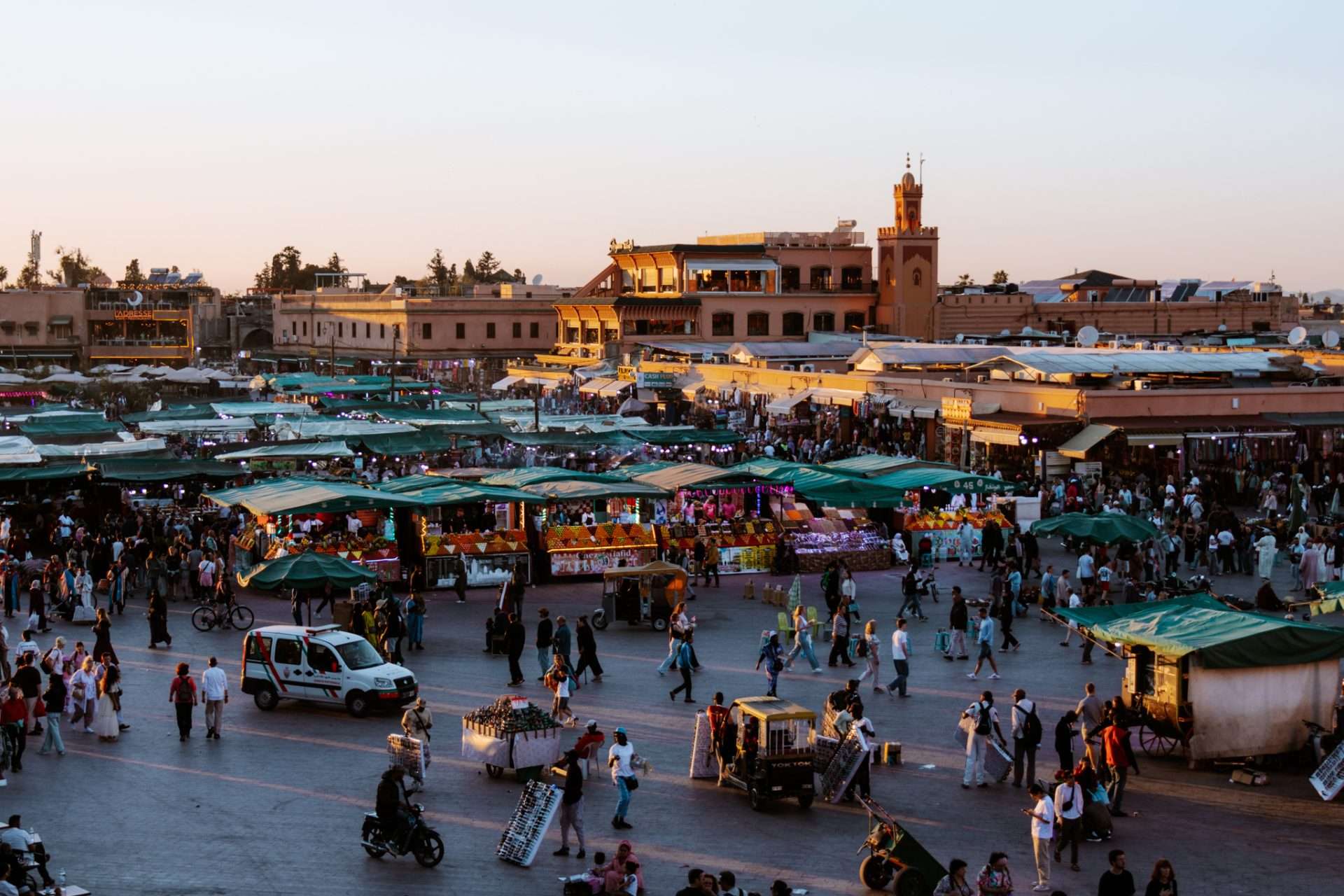
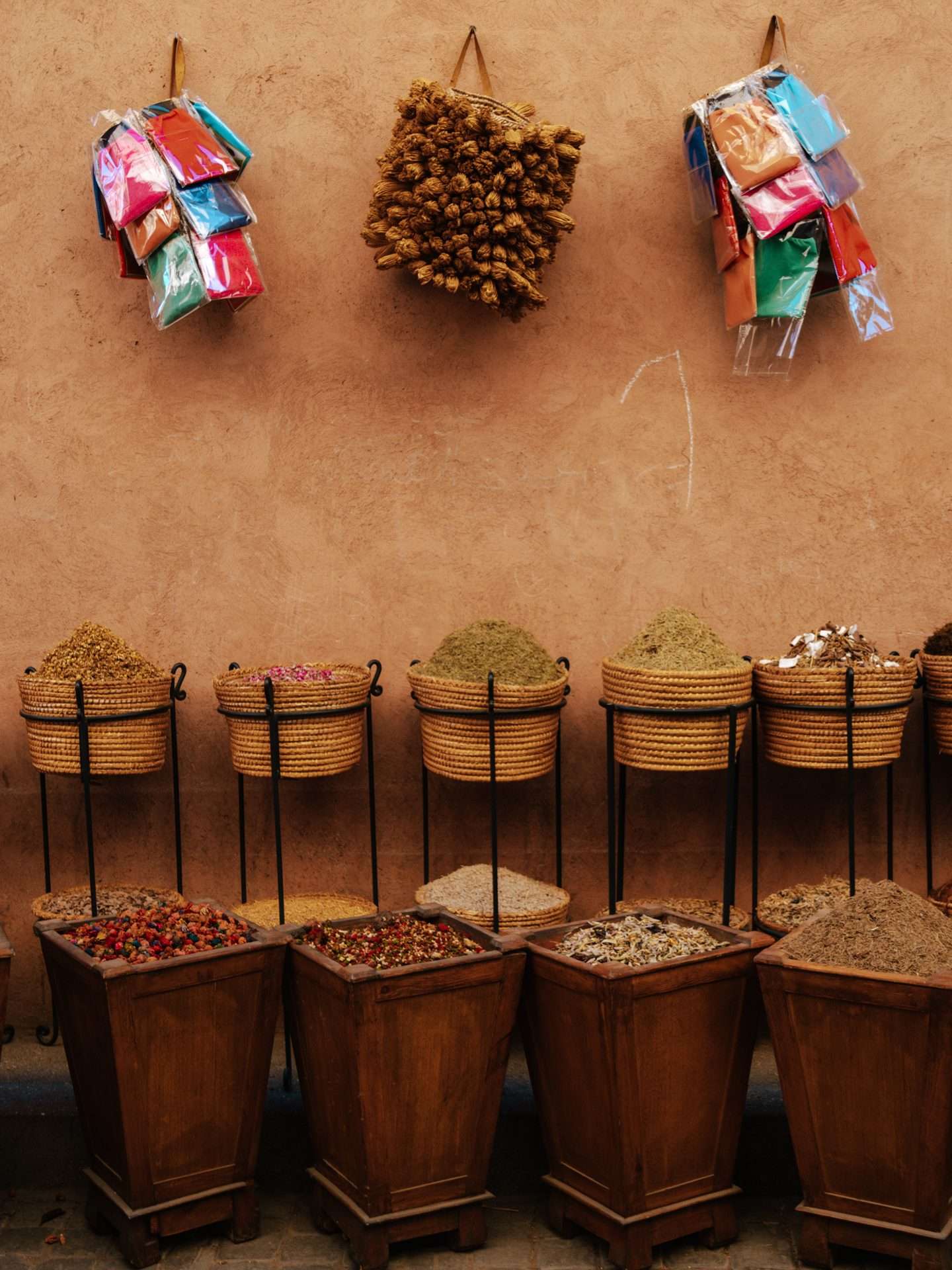
Marrakech is one of the most popular cities in Morocco (and North Africa). To get the most out of your visit, it’s best to set aside at least three full days to explore this lively and bustling city. Highlights include the iconic Jemaa el Fna Square, getting lost in the medina, a visit to the Madrasa Ben Youssef Koranic school, and the beautiful Bahia Palace. There’s also plenty to enjoy on the culinary front, with coffee at Bacha Coffee, tea at 1112 Tea House, and plenty of delicious restaurants nearby.
Where to stay?
Spending the night in a campervan near downtown Marrakech can be a challenge. This parking lot, located about 20 minutes from the Medina, is a good option for one night or for safely leaving your campervan for a few days while you treat yourself to a stay in a riad in the city. The parking lot is guarded 24 hours a day. We stayed at Riad Mehdia, which we highly recommend and it’s right in the heart of the city.
If you prefer to sleep in a quiet setting, Camping Car Sajada is the perfect choice. The host can arrange a taxi service to the city center upon request.
Day 20: Taroudant
+/- 270 km ● 3h30 drive
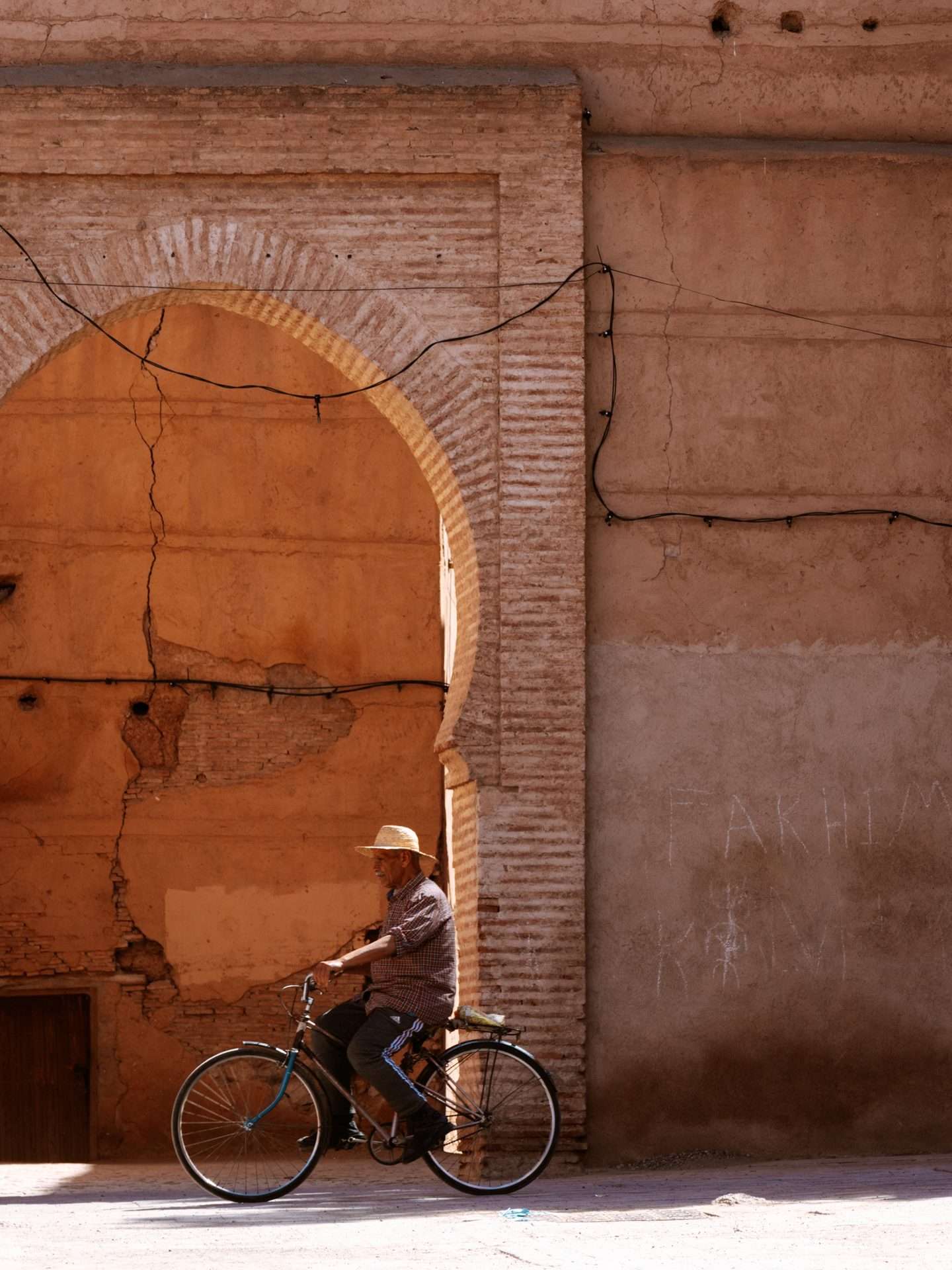
For anyone looking to take a breather from the hustle and bustle of big cities, Taroudant is a nice stopover. This small town is sometimes called “Little Marrakech,” but without the crowds and heavy tourism. The town has a well-preserved medina, and the atmosphere is pleasantly authentic. The locals let you go about your business without being pushy. A nice place to stop for a day and a night.
Where to stay?
Within walking distance of downtown and the tannery, you’ll find parking at a homestay for just 50 DH per night, with a small additional fee for using the facilities. A little further down the road, there’s also a new parking lot (El Asswar) as an alternative, which is guarded 24/7.
Days 21 – 23: Tamraght & Taghazout
+/- 100 km ● 1h45‘ drive
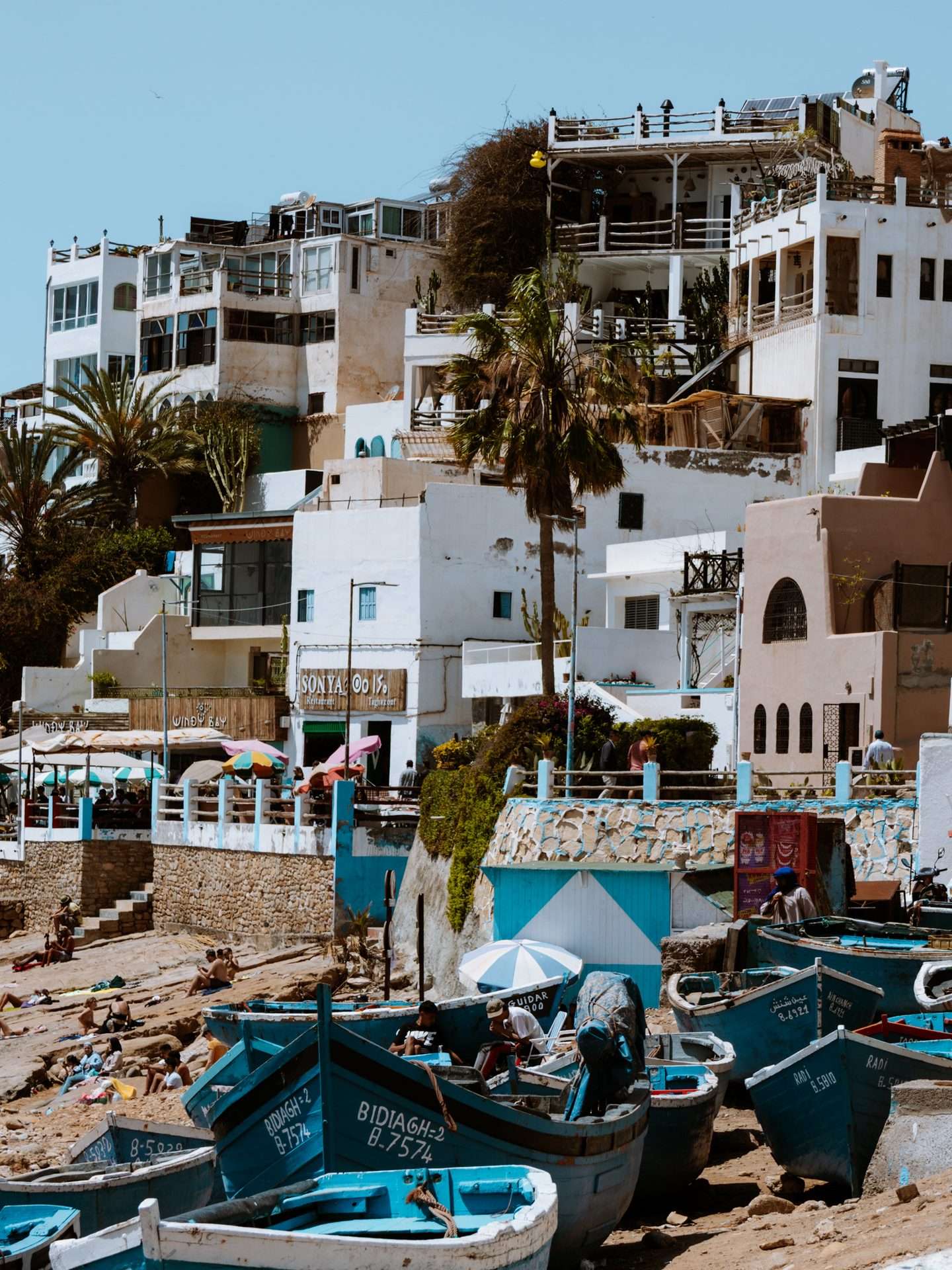
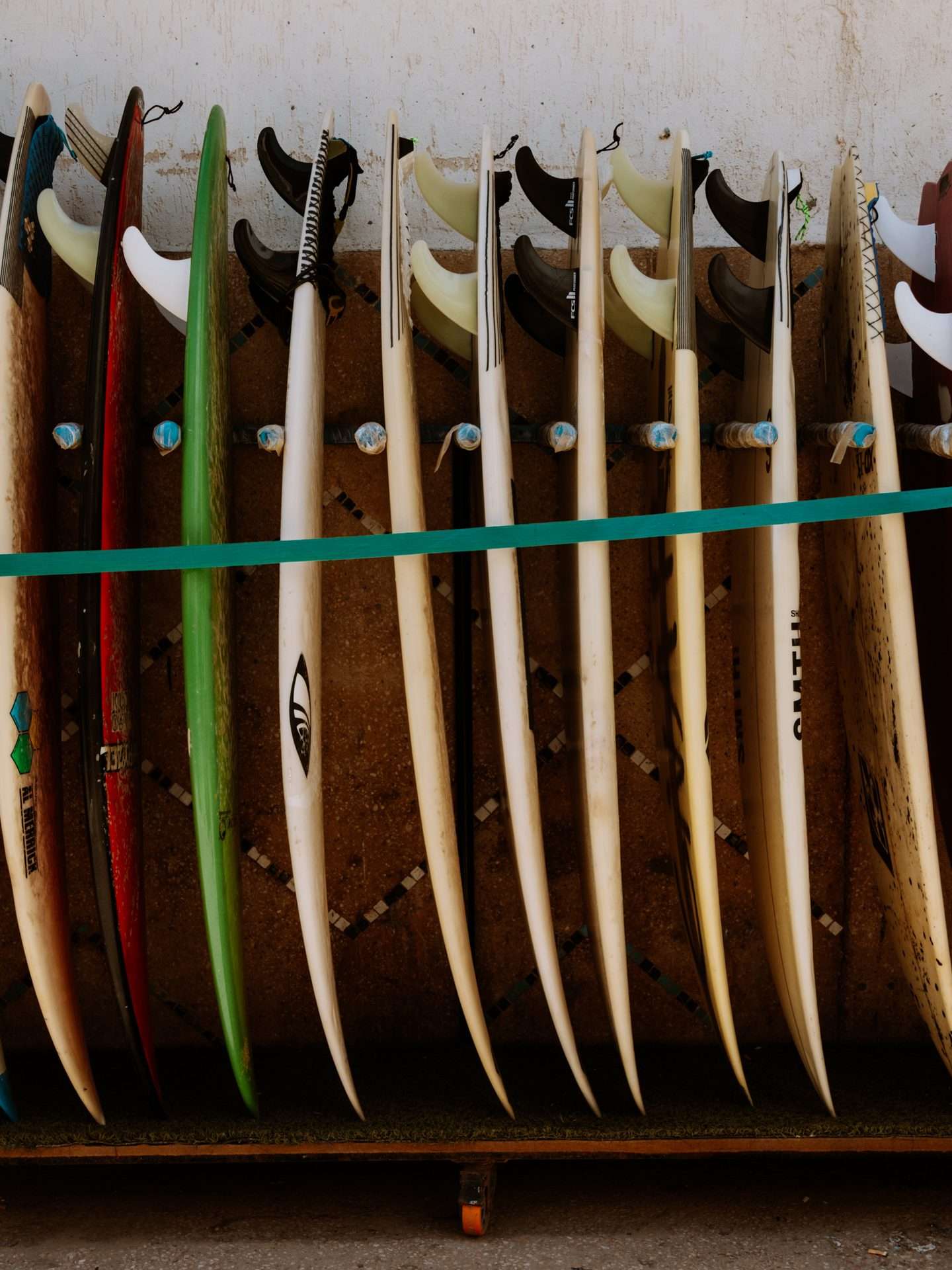
After the desert and the mountains, it’s time for the beach and the sea. Tamraght and Taghazout are two neighboring coastal villages known for their beginner-friendly surfing, yoga retreats, and laid-back vibe. The atmosphere there is much more relaxed than in the big cities. Both villages are excellent bases for a few days of sun and sea, and are connected by a beautiful 5-kilometer walking trail. Taghazout is the livelier of the two, where life takes place right on the coast. Tamraght is a bit quieter.
TRAVEL TIP: Want to do something different between surfing sessions? One of Africa’s largest souks, in nearby Agadir, is just a 15-minute drive away.
Where to stay?
One of our favorite campsites of the entire trip was in Tamraght, with the sea on one side and the village on the other. With the hiking trail to Taghazout and a reliable taxi and bus service between the two villages, this was an ideal base for us. It’s a bit dated but has everything you need, especially because there aren’t much facilities around in this area for campers.
Days 24 – 25: Essaouira
+/- 160 km ● 3h drive
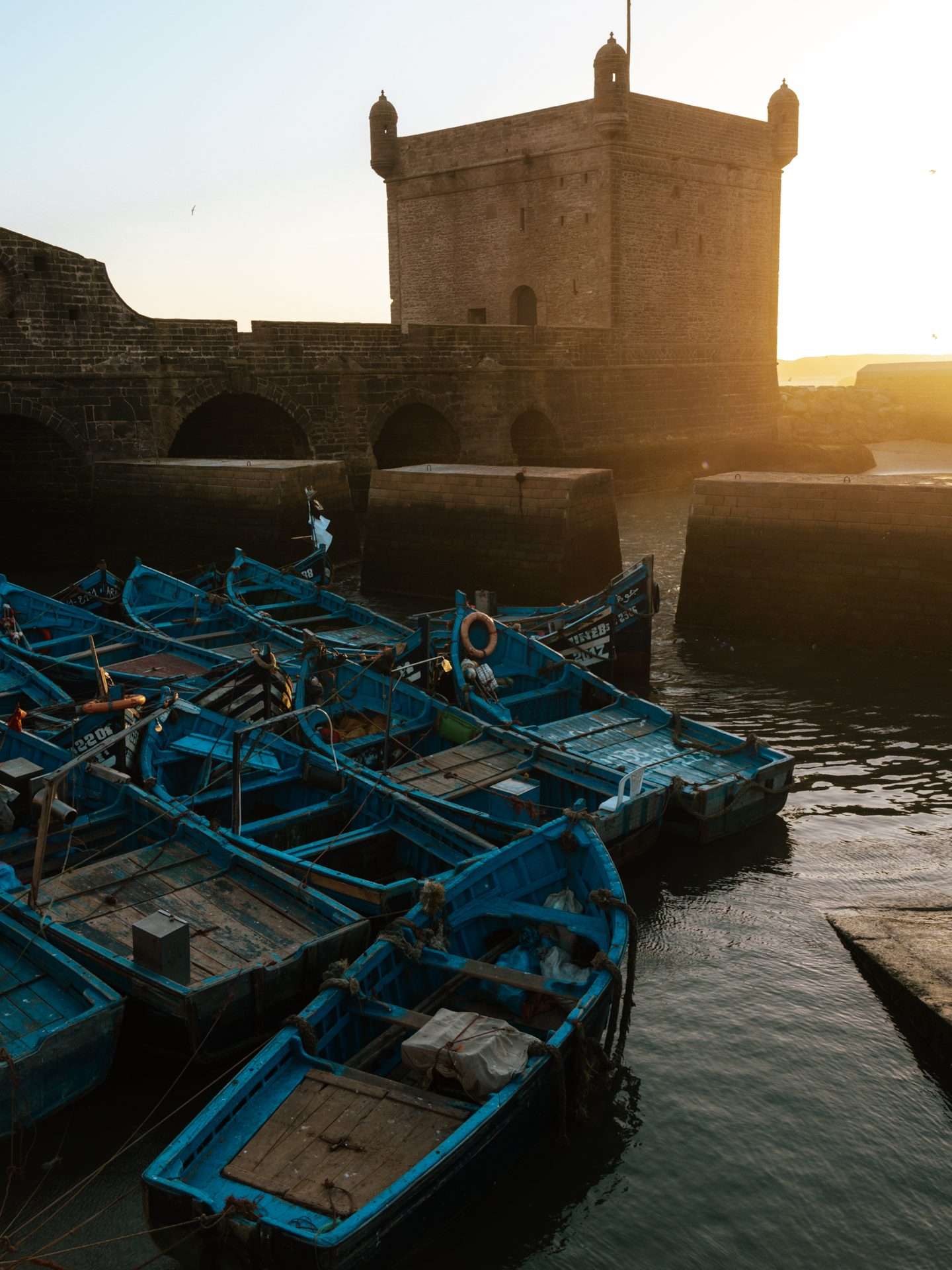
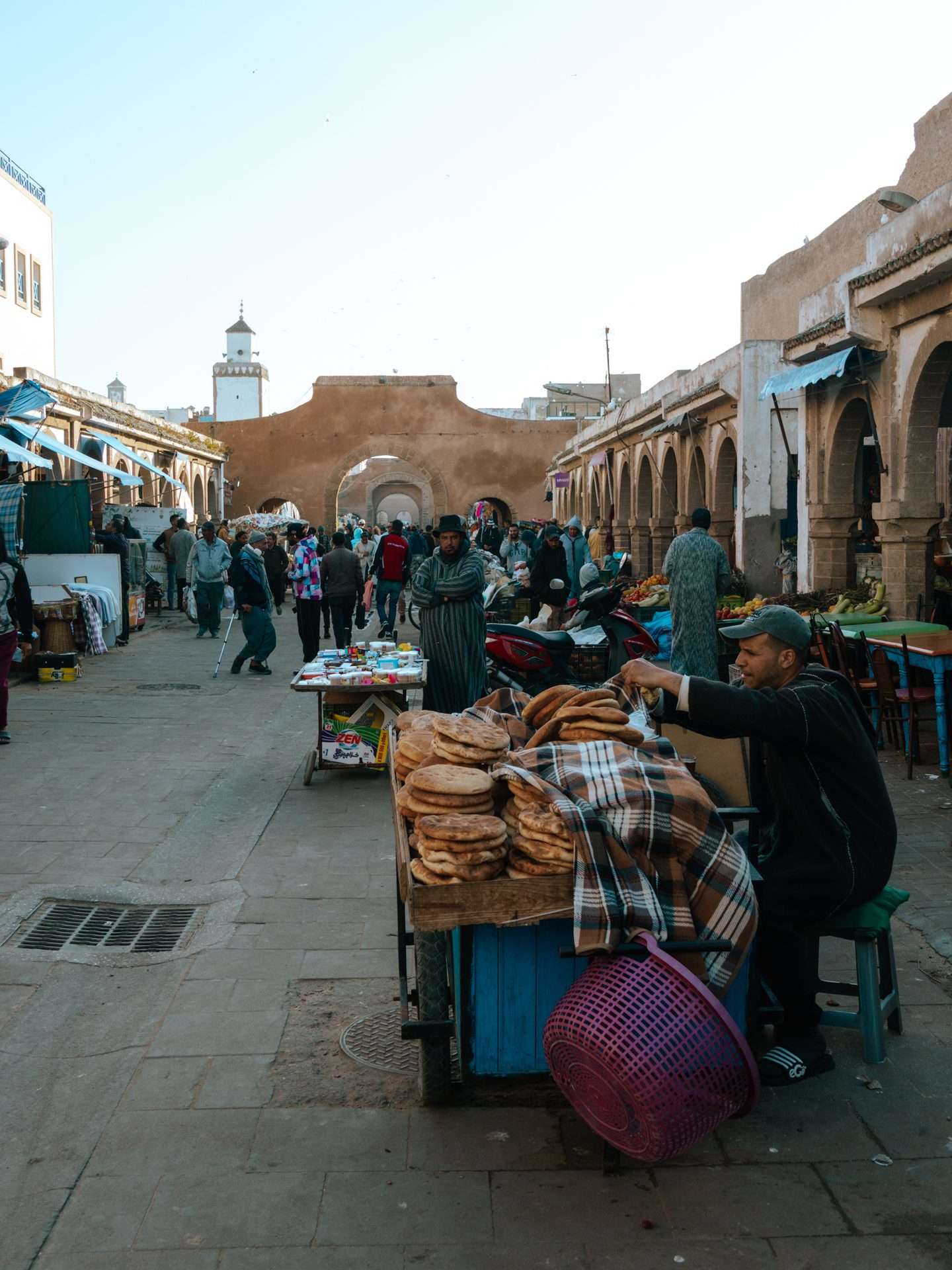
Essaouira is known as one of the windiest places on the Moroccan coast, making it a popular destination for kitesurfers. If you’re not into surfing, you can go horseback riding on the beach instead. The city also has a well-preserved historic center, with a charming medina surrounded by city walls offering beautiful views of the Atlantic Ocean. On the culinary front, we were pleasantly surprised by a delicious Italian restaurant here, Taverna Bolognese Da Maurizio, which even had a good wine list (a rarity in Morocco!).
Where to stay?
For a cozy campground, you’ll need to head just outside the city center. Villa Marhaba Bike and Villa Coriandre are right next to each other and both have a really nice setting. Both villas also offer a taxi service to help you explore the city center easily and affordably. There are some parking lots on the outskirts of the city, but overnight parking isn’t allowed there.
Days 26 – 28: Rabat
+/- 450 km ● 5h drive
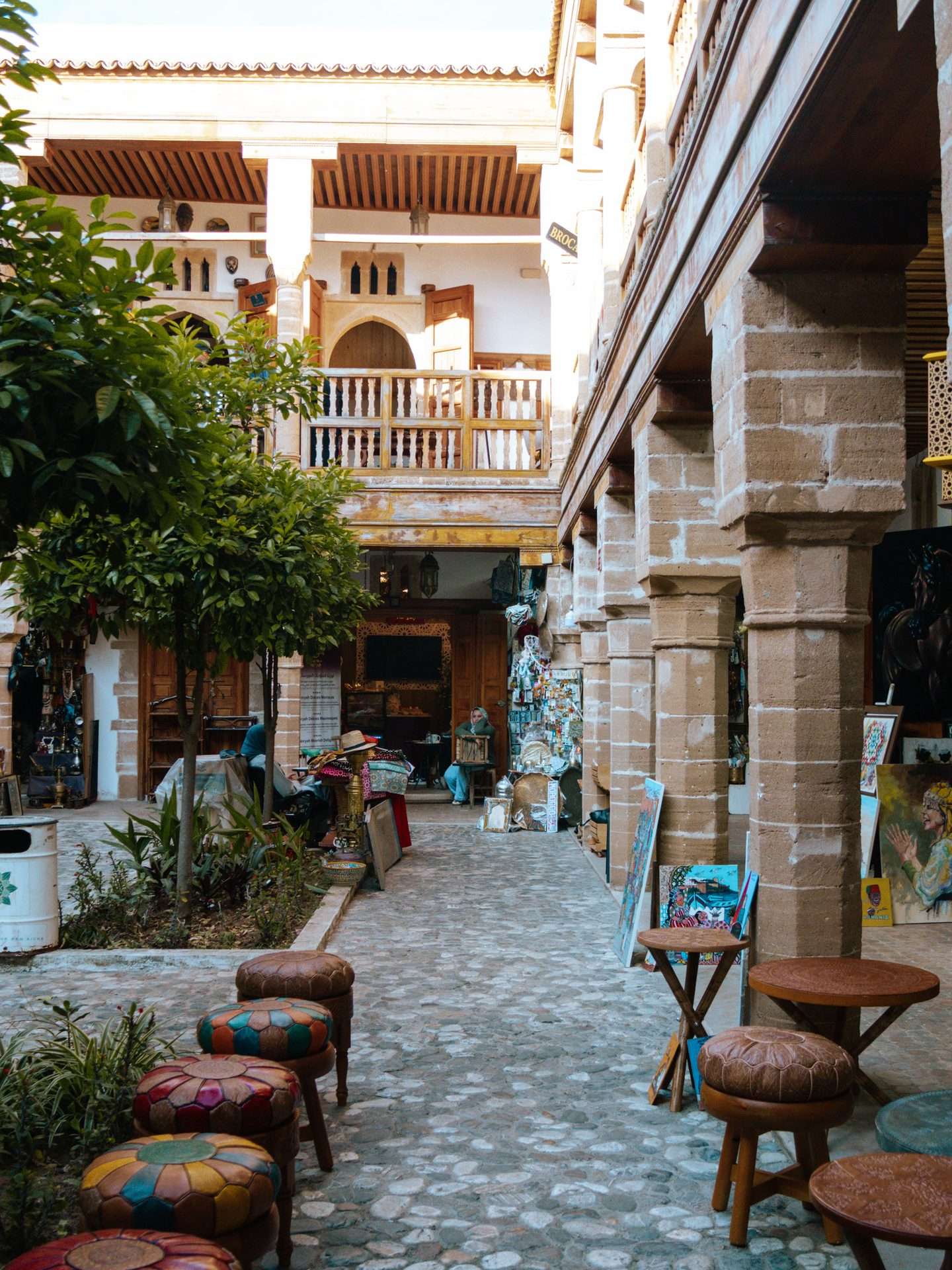
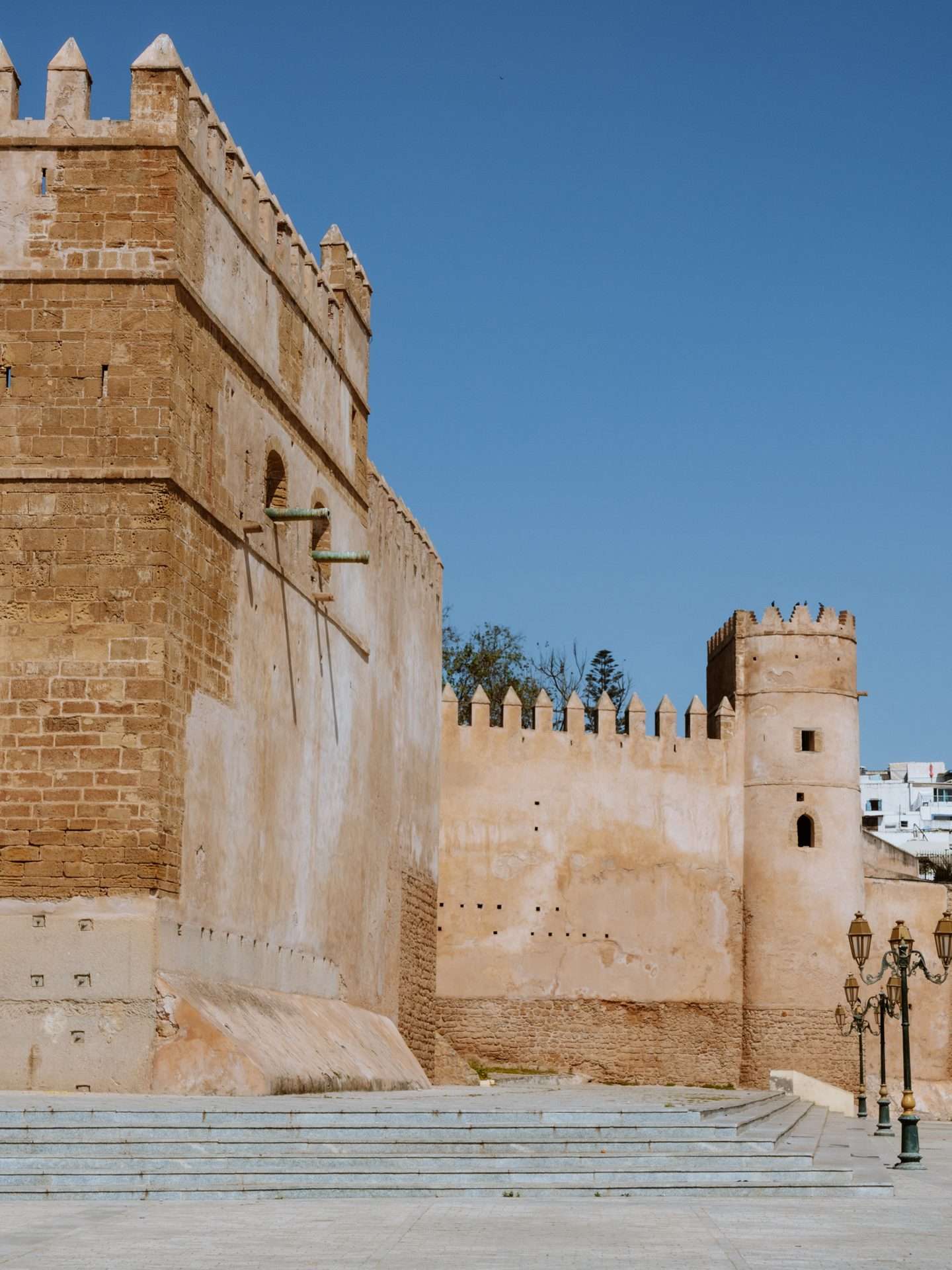
Rabat may not be the first city you’d put on your list, but on the way back to Tangier Med, it’s definitely a nice stopover. Morocco’s capital surprises visitors with its clean streets and modern vibe, a striking contrast to Marrakech or Fez. Yet Rabat also has a rich historic center, which earned the city UNESCO World Heritage status in 2012. Be sure to visit the Kasbah of the Udayas, located at the mouth of the Bou Regreg River, and the medina. Prices in Rabat’s medina are generally much lower than in Fez or Marrakech, making it the perfect place to pick up some last-minute souvenirs.
Where to stay?
There is no campground available in the center of Rabat. For 5DH per hour you can use a secure parking lot where you’re allowed to spend the night, within walking distance of the medina. It’s an ideal base for one or two nights. To the north and south of the city, there are several parking lots where you can spend the night, but for a campground, you’ll need to look in the villages just outside the city.
Day 29: Asilah
+/- 210 km ● 2h30′ drive
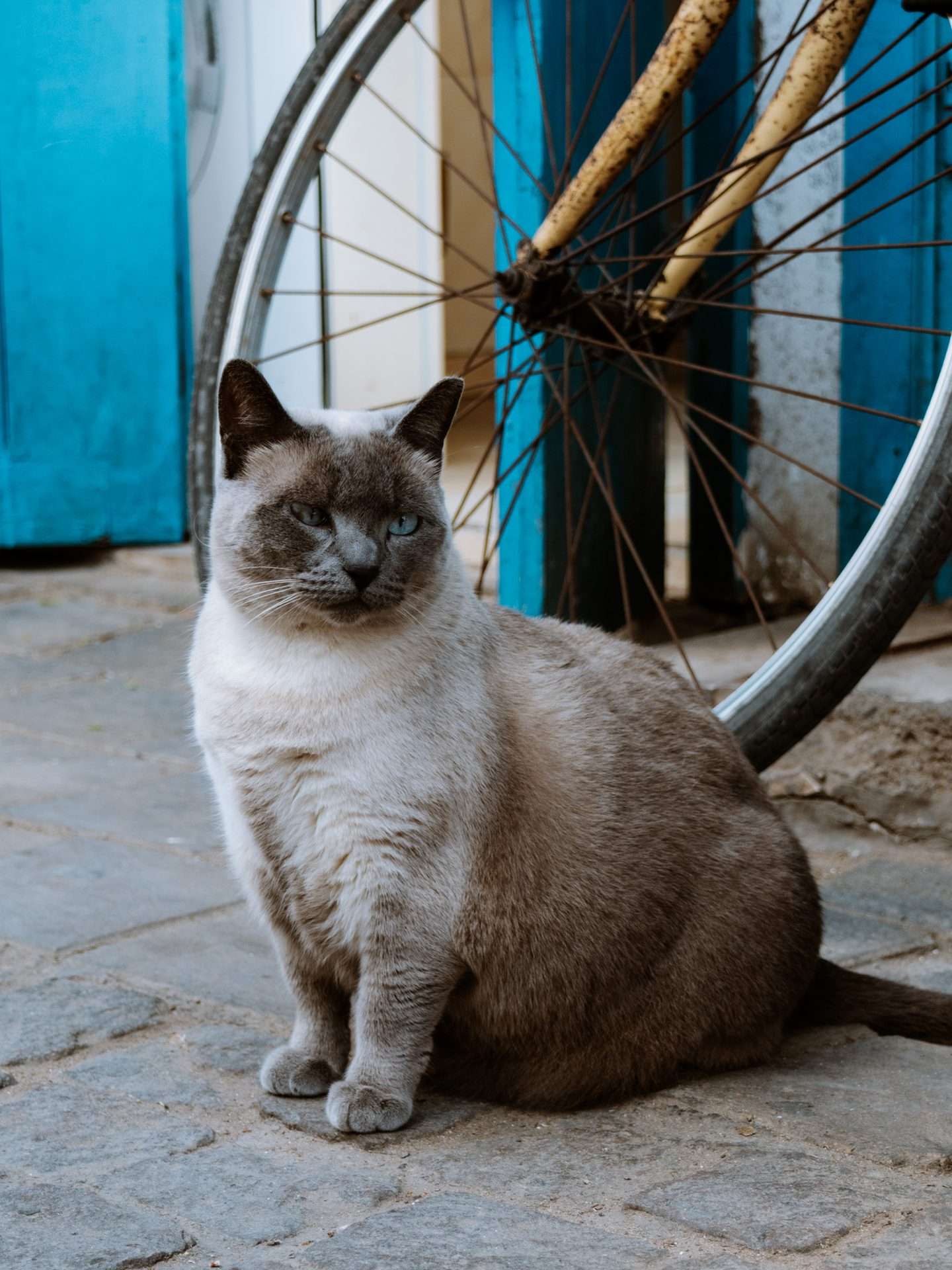
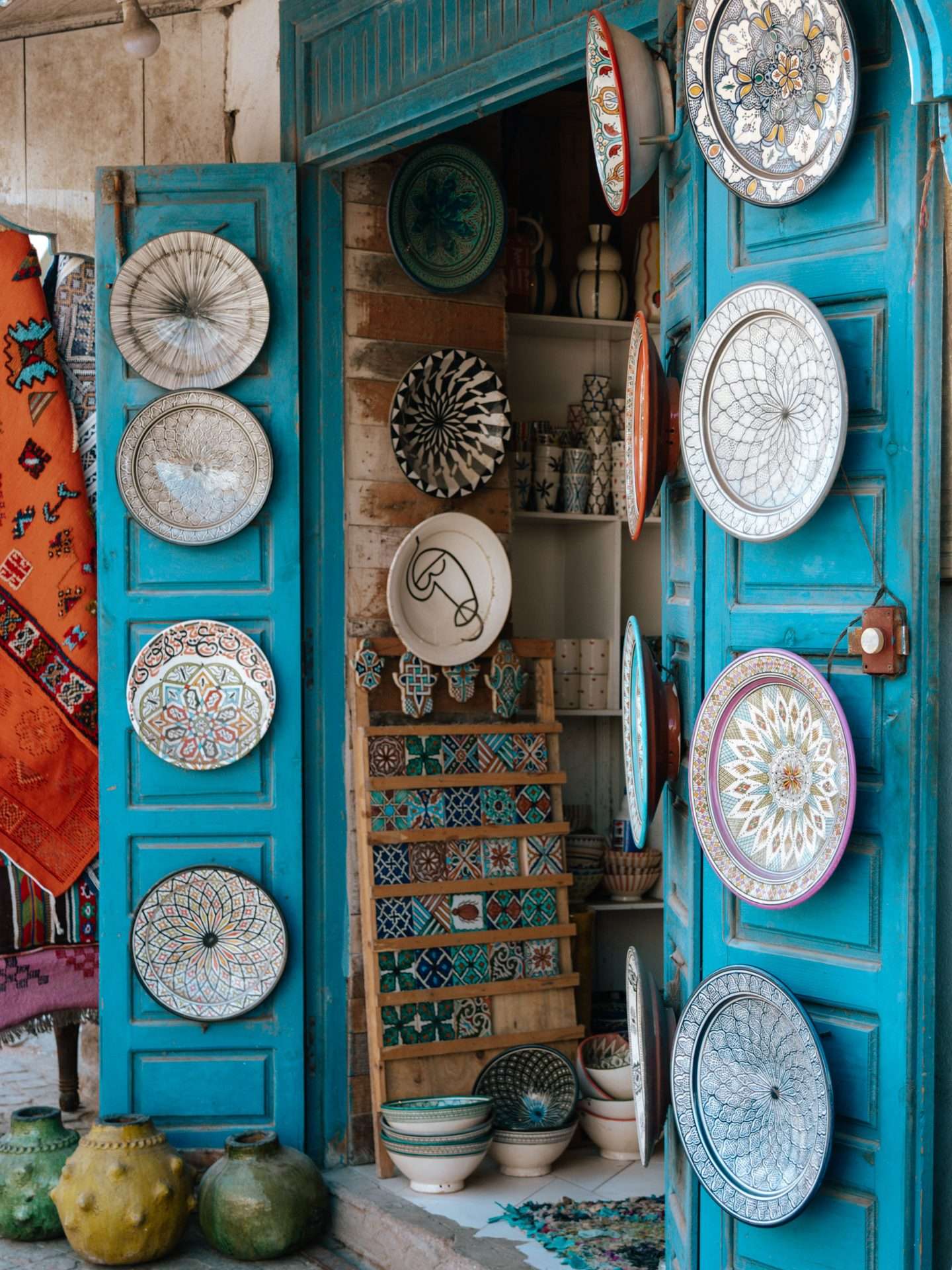
The last stop is about an hour’s drive from the ferry terminal of Tanger Med. It’s perfect for your last day in Morocco. If you’re driving the route in reverse, this makes for a great first stop. An international arts festival is held annually in Asilah (International Cultural Festival of Asilah). The town is small but has a wonderfully laid-back vibe thanks to its picturesque medina and the many beach activities.
Where to stay?
If you enjoy wild camping, this is your last chance to find a spot along the coastline and enjoy a beautiful sunset. North and south of Asilah, there are plenty of parking lots where you can stay overnight. If you’d like to enjoy a real campground one last time before heading home, then Camping Hotel Briech north of Asilah is highly recommended. It’s a beautiful campground within walking distance of the sea.
Day 30: Return from Tangier Med to Algeciras
+/- 90 km ● 1h10′ drive
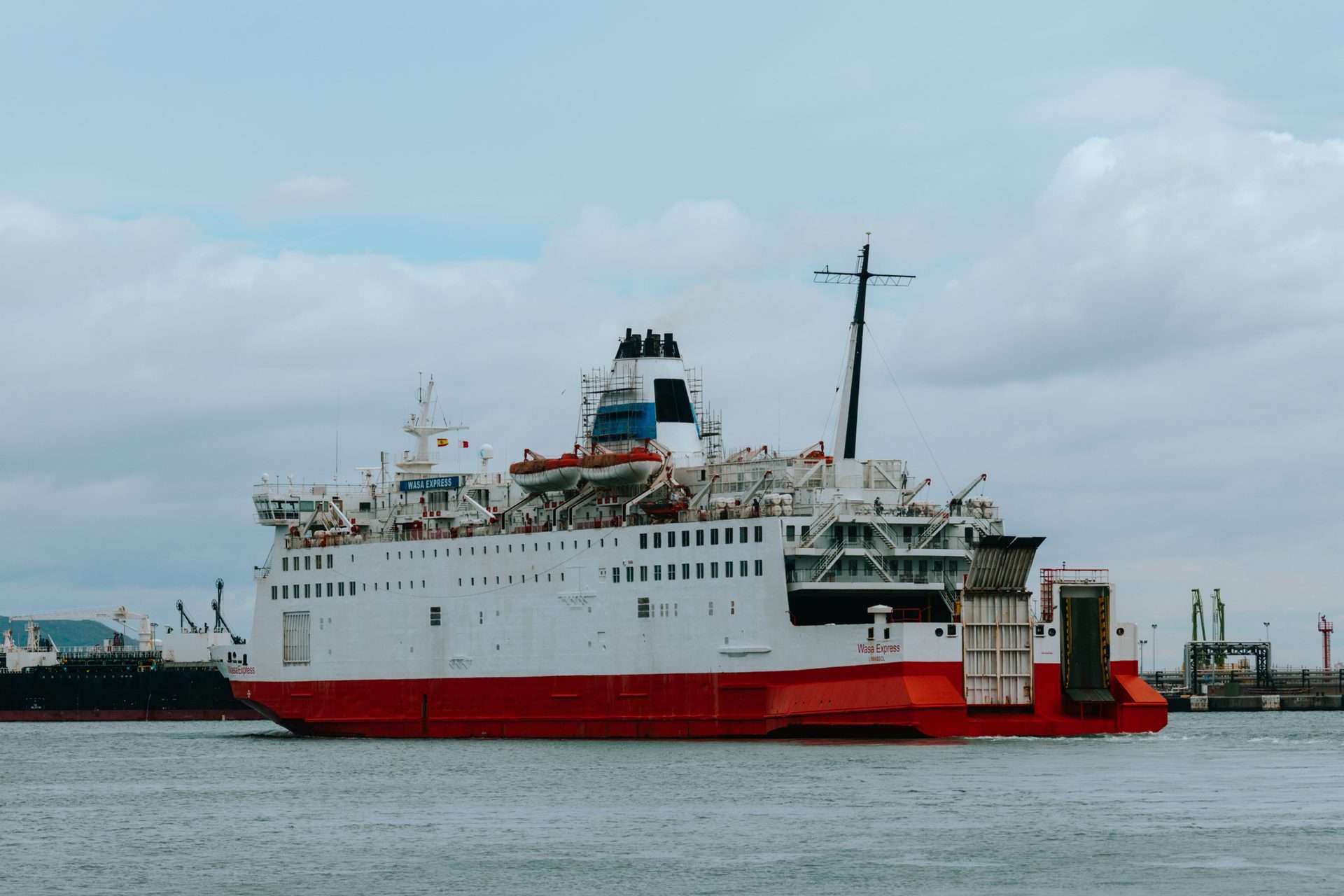
And just like that, your Moroccan adventure is coming to an end. Make sure you arrive at the port 1.5 to 2 hours before departure to board on time. It’s also worth filling up your fuel tank before you leave as petrol is significantly cheaper in Morocco than in Europe. Once you’re on the boat and the Moroccan coastline slowly disappears behind you, there’s nothing left to do but look back on everything you’ve experienced over the past few weeks. And if you’re anything like us, you’ll find yourself already starting to plan your return trip.
Where to stay?
If you arrive in Spain very late, or if you have to board the ferry very early on the outbound trip, then this location in Spain is a convenient parking lot just a few minutes’ drive from the port. The parking lot is also right next to several large supermarkets and Viajes Normandie, the travel agency where you can easily book your ferry crossing.
Best time to Visit Morocco
Morocco has a diverse climate that varies greatly from region to region. In general, spring (March–May) and fall (September–November) are the best times to visit Morocco. Temperatures are pleasant during these months, with little precipitation. It’s ideal for a Moroccan road trip that combines visits to the cities, the Atlas Mountains, and the desert.
But a campervan trip through Morocco is certainly possible even in winter. It can be cooler in the north and in the mountains, but those who continue south can enjoy pleasant temperatures. That’s why Morocco is a perfect destination to escape the cold and grey European winters.
Do you have any questions about this Morocco campervan itinerary? Let us know in the comments below! Looking for more information about your next trip? Don’t hesitate to contact us or send an email to info@snoezelsontheroad.com