The Dolomites in Italy are undoubtedly one of the most beautiful natural areas in Europe. Razor-sharp ridges stand out against fairytale alpine meadows with wooden rifugios. One impressive view alternates with another, with the soothing sound of cowbells in the background. The best way to discover this mountain range in northern Italy for yourself is to take a road trip. Because in the Dolomites, the journey is as beautiful as the destination. Read the ultimate itinerary in 9 days for the Dolomites in Italy, the best things to do and more handy tips here!
How to visit the Dolomites in Italy
The Dolomites form a mountain range of more than 140,000 hectares in northern Italy, spread across regions such as South Tyrol, Trentino and Veneto. The stunning views, hundreds of kilometers of hiking trails and cozy mountain huts make it a popular year-round destination. Not for nothing have the Dolomites been on the UNESCO World Heritage List since 2009 and are one of the most beautiful places in Europe. Typical of the Dolomites are the rugged mountain peaks composed of dolomite, a type of limestone and from which the mountain range gets its name.
DID YOU KNOW: Many place names in the Dolomites are written in both German and Italian. You’ll also notice this on road signs, in restaurants and local websites.

The best way to visit the Dolomites in Italy is from the cities of Bolzano or Venice. Both cities have an international airport from where you can easily a car or motorhome rental. Bolzano (or Bozen) is the capital of South Tyrol and is located in the heart of the Dolomites. From Venice, it’s about a 3-hour drive until you reach the Dolomites.
How to get around in the Dolomites
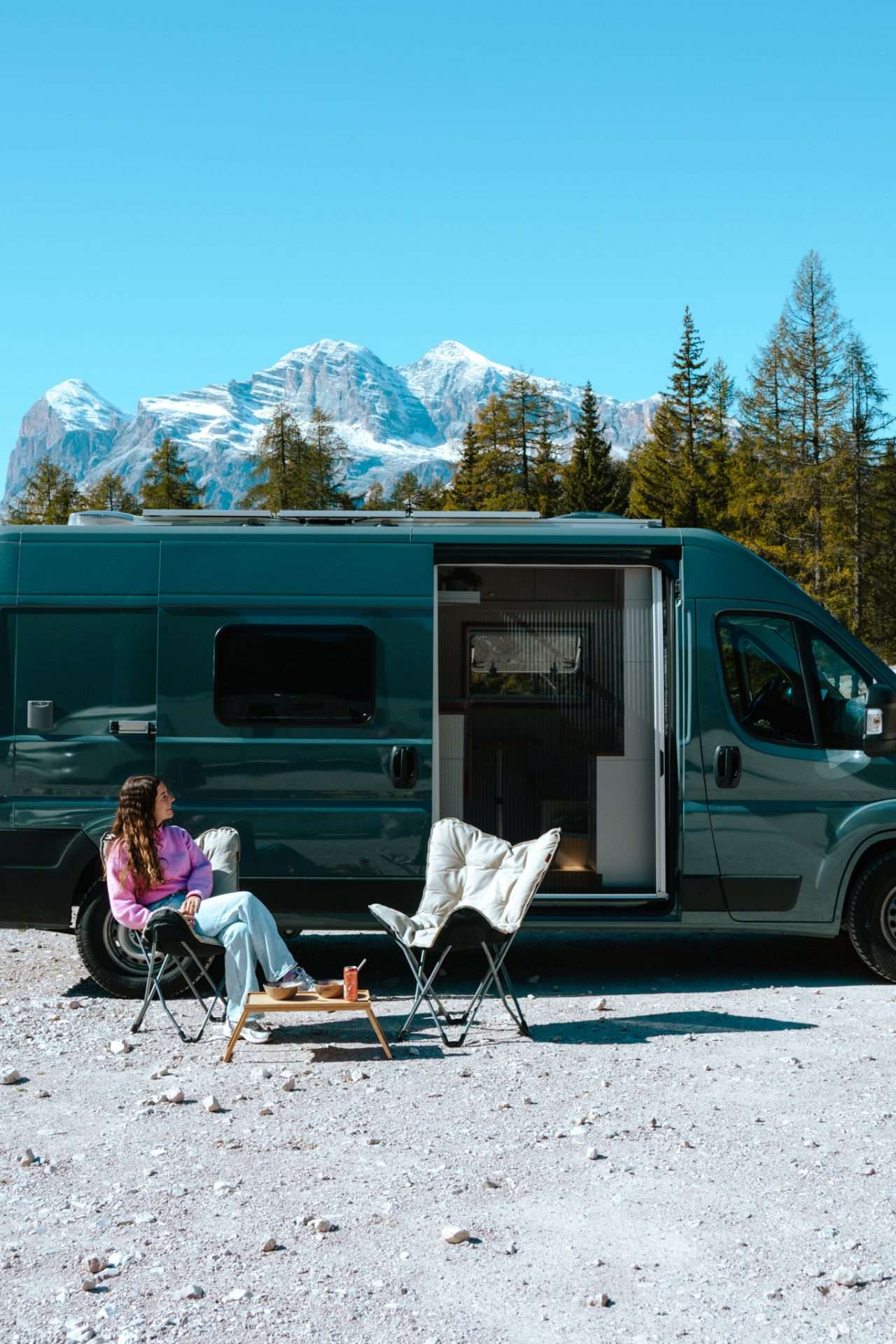
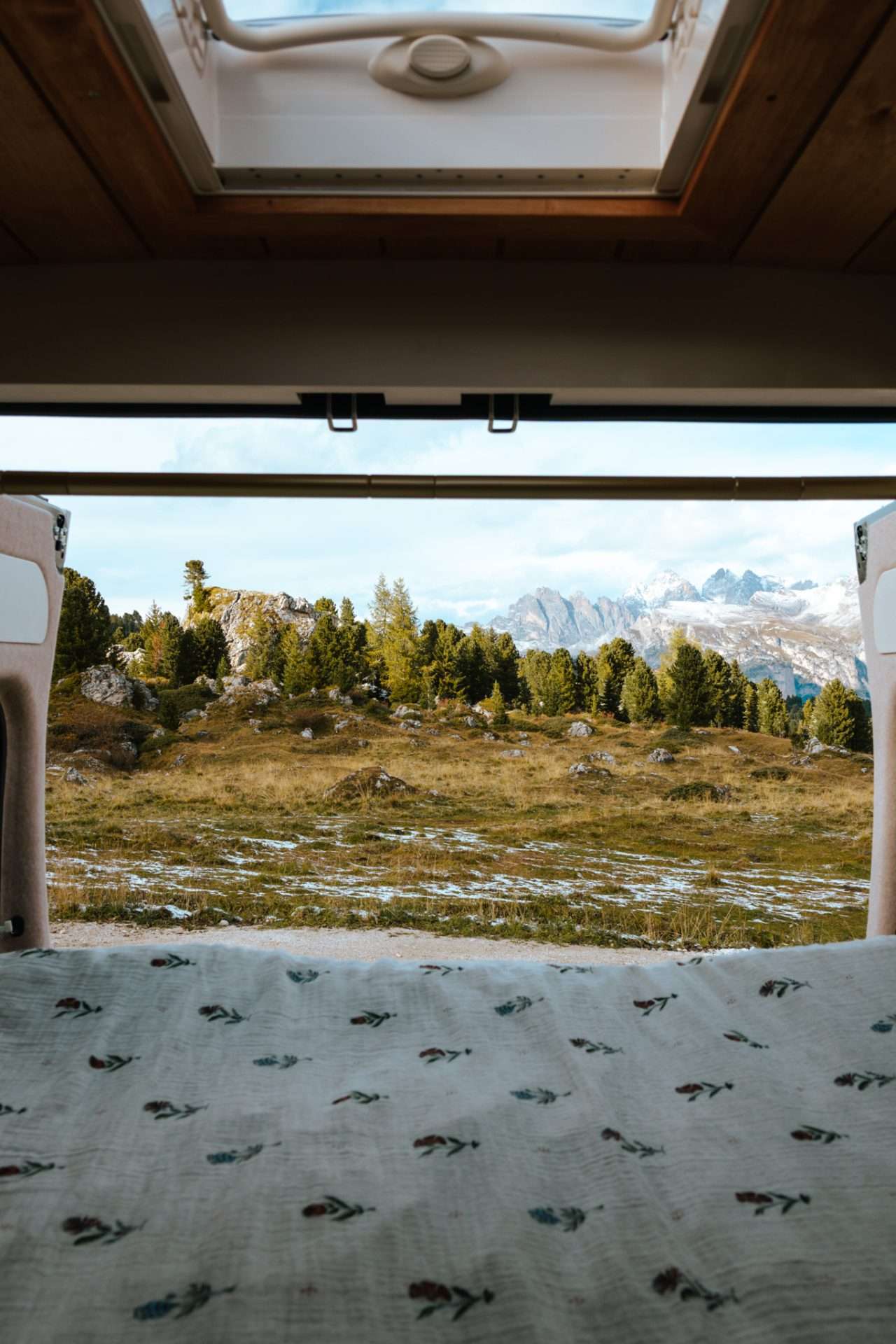
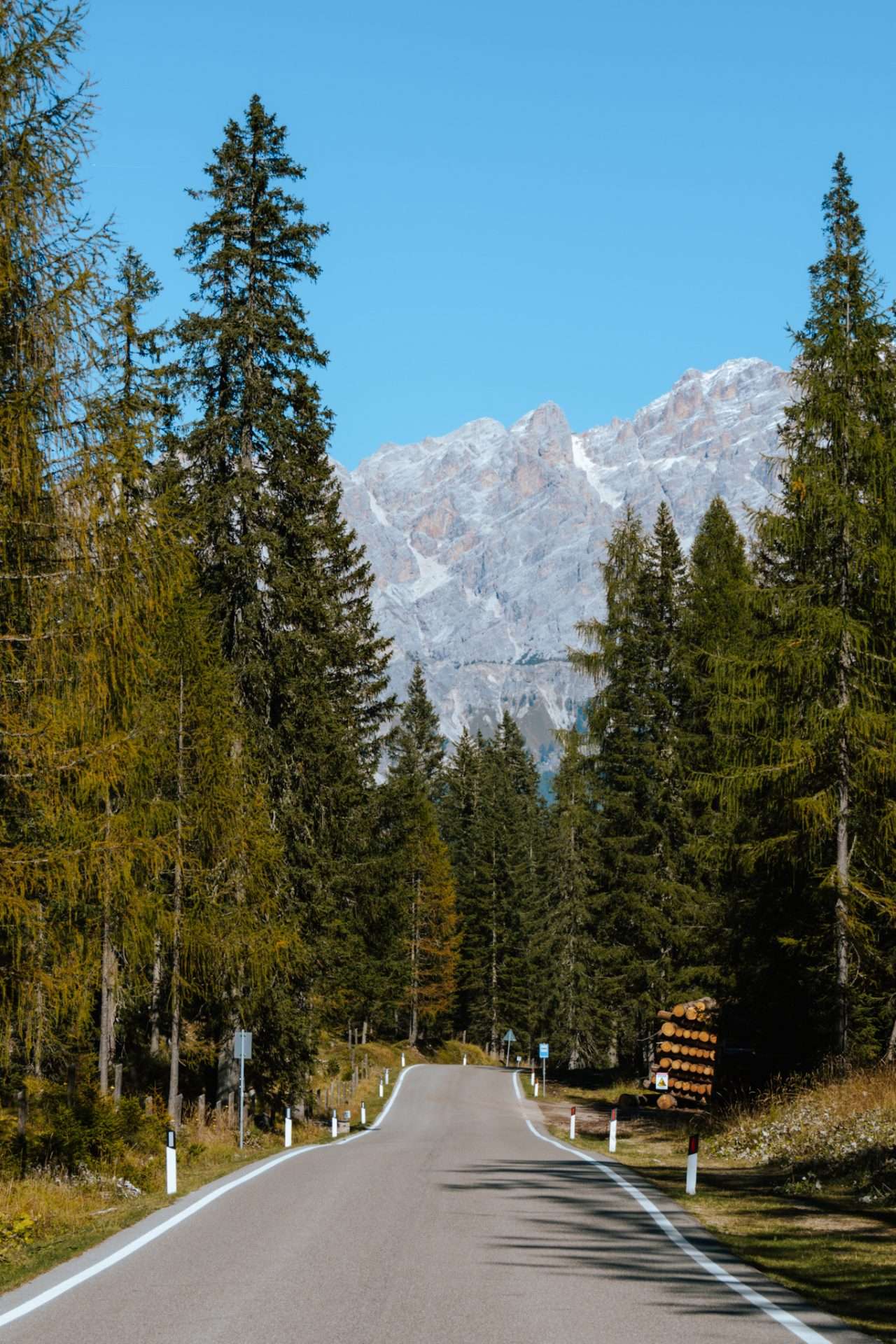
Just driving through the Dolomites is an experience in itself! The winding mountain roads take you through green alpine meadows, colorful towns and rugged mountain peaks that rise perpendicularly. So the best way to discover the Dolomites is with your own rental car or motorhome. We were there ourselves with our motorhome and found it magical to wake up to the rugged nature of the Dolomites right next to our bed!
Would you rather not drive yourself? During peak season, regional buses also run daily between the major towns in the Dolomites, such as Bolzano, Ortisei, and Cortina d’Ampezzo. In addition, cable cars depart from these towns, taking you to the starting points of popular hikes, such as Seceda or Alpe di Siusi. For more information, visit this website.
Dolomites road trip: itinerary in 9 days
The Dolomites in Italy can actually be divided into two parts: the western part around Ortisei with highlights such as Geisler Alm, Alpe di Siusi and Sassolungo. Then in the eastern part you will find sights like Tre Cime di Lavaredo, Lago di Braies and Lago di Sorapis. In this Dolomites itinerary, we start and end in Bolzano in the west, but you can customize this itinerary as you wish.
Day 1: arrival in Bolzano
This 9-day itinerary Dolomites starts in Bolzano (also called Bozen), the capital of South Tyrol. This puts you right in the heart of the Dolomites. Depending on what time you arrive, you can stroll around this city before continuing to Ortisei (Urtijëi). We found Ortisei a very picturesque town and it is the ideal base for the first days of this Dolomites road trip.

Where to stay in Ortisei (Urtijëi)
If you are with a rental car then it is best to stay in the center of Ortisei. You will find plenty of nice accommodations such as Hotel Hell and Hotel Cosmea. If you travel around with an RV, you can check the app Park4Night for campsites nearby, depending on your itinerary. If you visit the Dolomites in high season, we do recommend booking your accommodation or campsite early. A nice campsite near Ortisei is Camping Seiser Alm.
Day 2: Geisler Alm – Val di Funes
Your first full day in the Dolomites is immediately one full of highlights. In the morning, drive to the parking lot near Geisler Alm, also known as Rifugio delle Odle. This is one of the most popular sights in the Dolomites so we recommend going early so you can be sure of a parking spot (this is the exact location: Parcheggio Malga Zannes). Several hikes depart from here, one of the most famous being the Adolf Munkel trail.

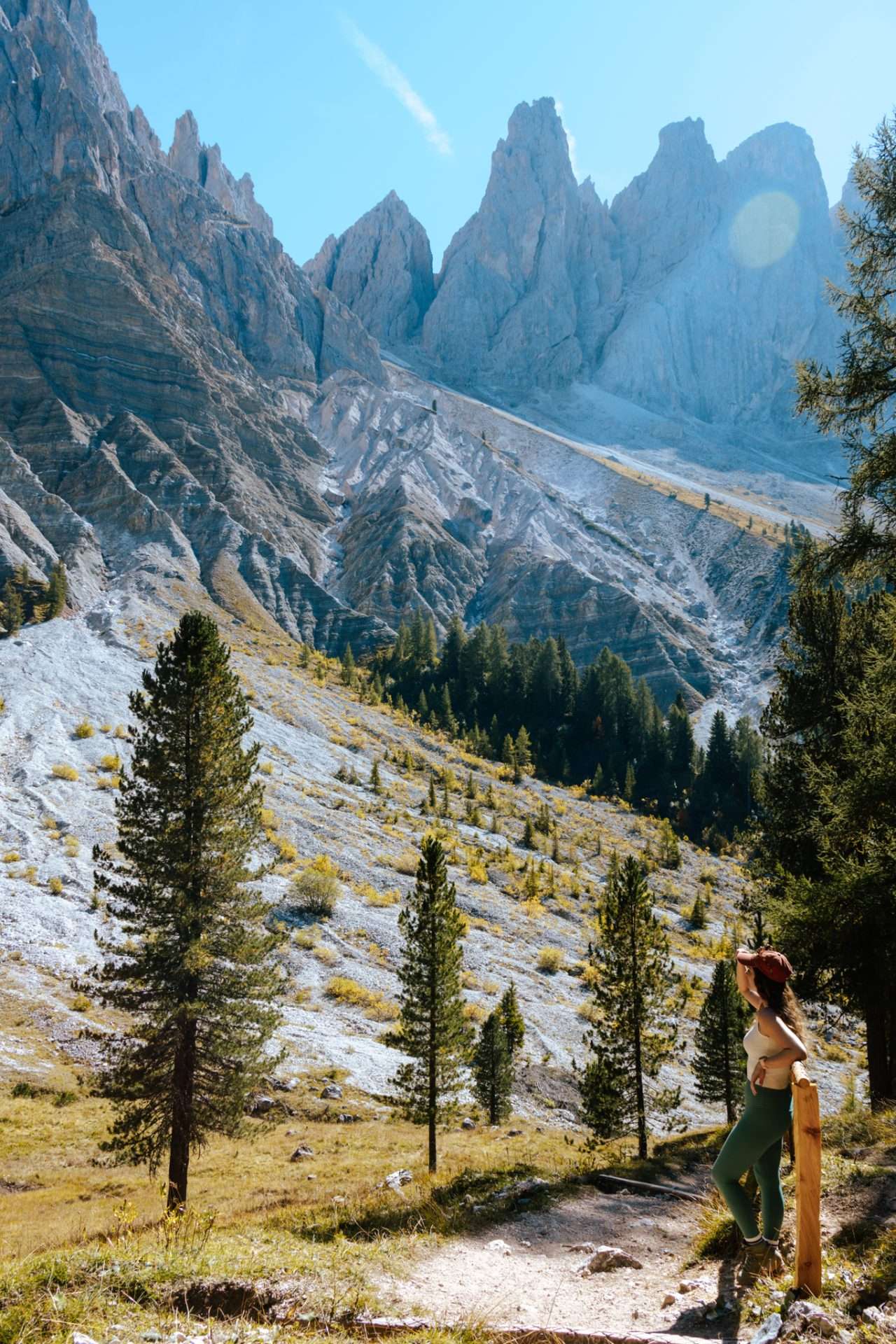
The Adolf Munkel trail (route No. 35) is an accessible 10-km hike that takes you past vast alpine meadows, pine forests and the imposing Odle mountain group. The highlight is the photogenic Geisler Alm mountain hut, one of the most popular mountain huts in the Dolomites. And we have to admit, it’s totally worth the hype! While enjoying a delicious kaiserschmarren you look out on the dramatic Geisler peaks in the background. Here you’ll also find the famous wooden loungers, as far as we’re concerned the best place to catch your breath while hiking.
TRAVEL TIP: On Mondays, the mountain hut Rifugio delle Odle is closed in summer. You will find nearby, however, another cozy hut called Malga Casnago.


Sunset in Val di Funes
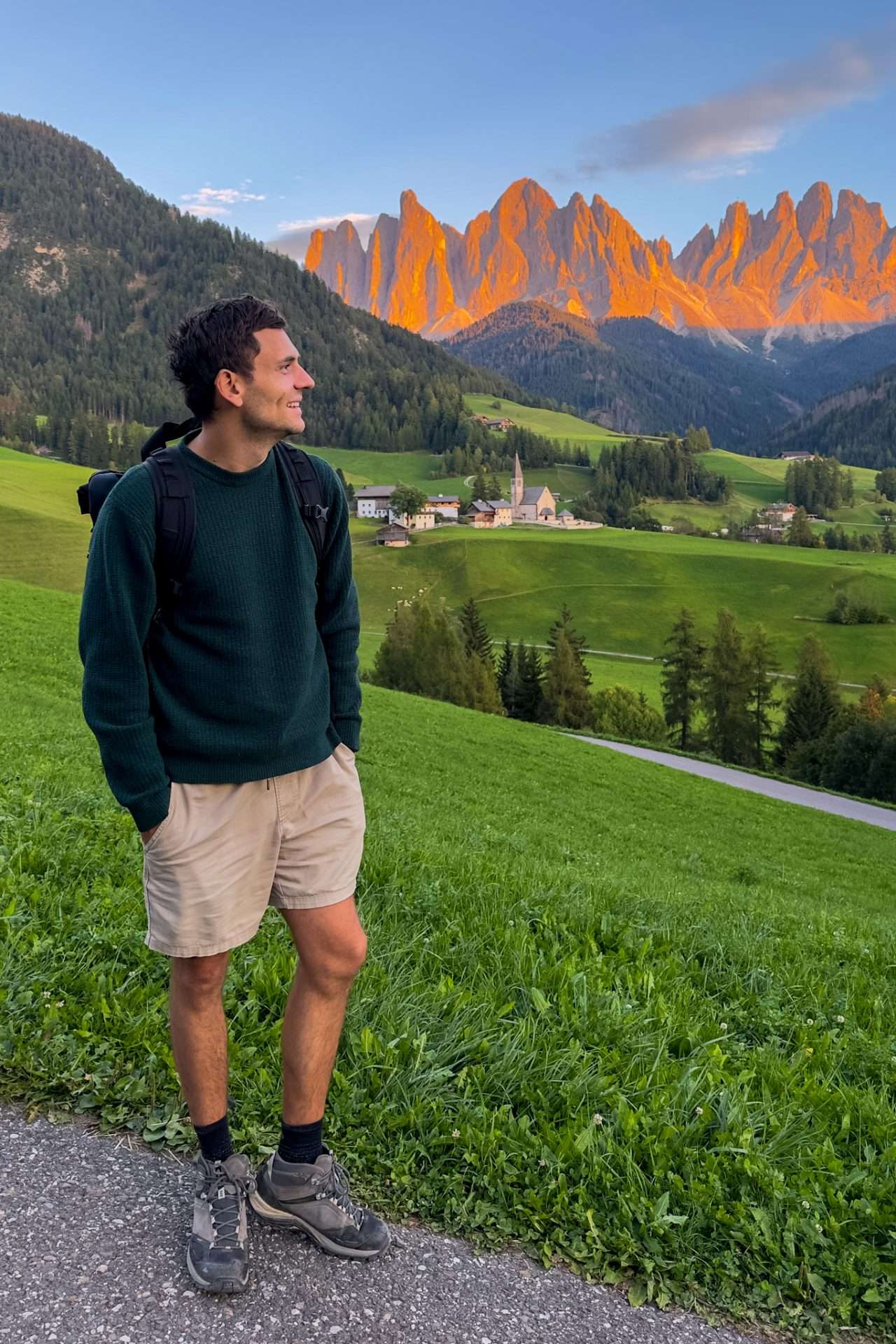
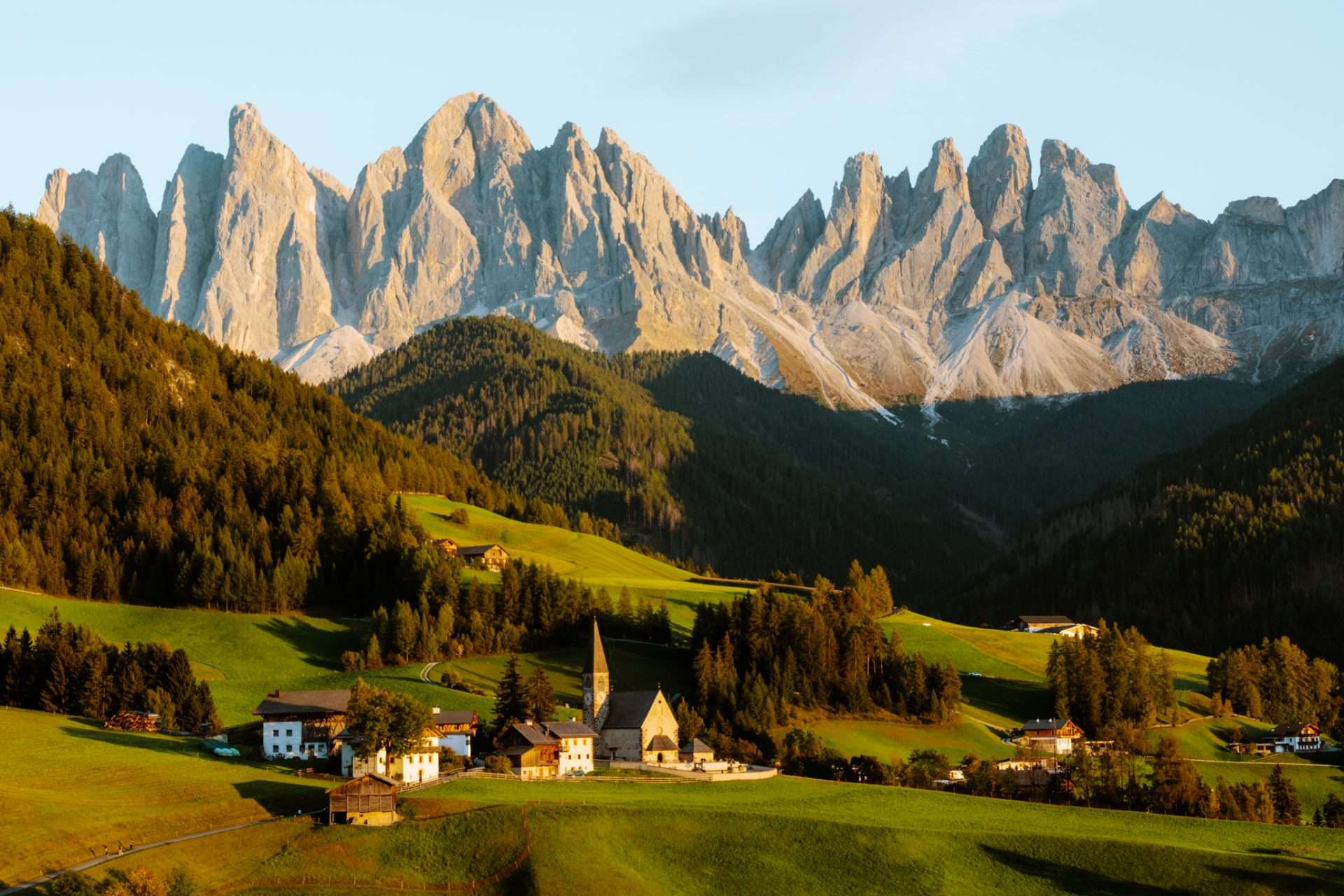
After a full day of hiking you drive back where you pass Val di Funes. Here you will find the picturesque church of St. Johann (San Giovanni), a popular photo spot in the Dolomites. You will see that there is a wooden platform from where you can take the best photos. Despite being very beautiful, we found it did feel very crowded to take that one photo. What we found much more impressive afterwards was watching the sunset over Val di Funes and the Santa Magdalena Church.

To do so, park your car in the village of Santa Magdalena of the same name and then walk to this exact location called “Panorama Sitzbank”. Expect to walk for about 30 to 45 minutes and it is slightly uphill. For the best photos, it is best to arrive at this place an hour before the sun sets. Here we watched the mountain peaks bathed in the orange glow of the sunset which was one of our favorite moments during our Dolomite trip! After the sunset, drive back towards Ortisei.

Day 3: Alpe di Siusi – Seceda
Today you will visit Alpe di Siusi (also known as Seiser Alm) and Seceda. If you are staying in Ortisei you can simply take the cable car from the town to both places. This is a bit pricier but the easiest way to get around.
Morning: Alpe di Siusi / Seiser Alm
Alpe di Siusi is the largest alpine pasture in Europe and one of the best things to do in the Dolomites. With hiking trails for young and old, this is a true hiking paradise. Along the way you’ll pass picturesque wooden huts, alpine meadows full of wildflowers and cows and horses grazing peacefully. Pick a nice hike and reward yourself afterwards with a tasty meal such as spätzle or kaiserschmarren.

During the high season (late May to early November) it is not allowed to drive up to Alpe di Siusi between 09:00 and 17:00. We ourselves went to Alpe di Siusi during sunrise and can only recommend it. Park your car or camper at this free parking lot from where it is about a 45-minute walk to the alpine meadow. We took our thermos of coffee, plopped down in the grass and watched the mystical morning fog give way to the sun. Another option is to park at P2 in Compatsch (€26.50) or take the red cable car from Ortisei. This goes to the mountain plateau daily between 08:00 and 17:00 or 18:00 and costs €35 round trip.


Afternoon: Seceda
After your morning mission to Alpe di Siusi you will return to Ortisei. In the afternoon, take the cable car towards Seceda. The razor-sharp ridge of Seceda lies at 2,500 meters in the Puez-Odle Mountains and is one of the most breathtaking views in the Dolomites. The cable car from Ortisei takes you all the way to this vantage point. At the terminus, you’ll be at the iconic photo spot in about 10 minutes. This cable car also runs daily between 8 a.m. and 5 p.m. or 5:30 p.m. and costs €52 round trip.
Day 4: Sassolungo – Passo Gardena
Today we leave Ortisei and Val Gardena behind and drive toward the town of Cortina d’Ampezzo in the Dolomites.
Morning: Coffin elevator to Forcella del Sassolungo
Your first stop today is the Sella Pass, about a 30-minute drive from Ortisei. Here you’ll find the viral “coffin elevator,” a gondola reminiscent of a coffin due to its upright shape. As you are literally pushed into the “coffin,” this gondola takes you up to Forcella del Sassolungo, a mountain pass at 2685 meters. Once at the top, the staff helps you get off. On the mountain pass you can again do numerous hikes such as the popular Sassolungo circuit. The gondola runs daily from mid-June to mid-October between 08:15 and 17:00 and costs €35 round trip.


Afternoon: Passo Gardena (Grödner Joch)
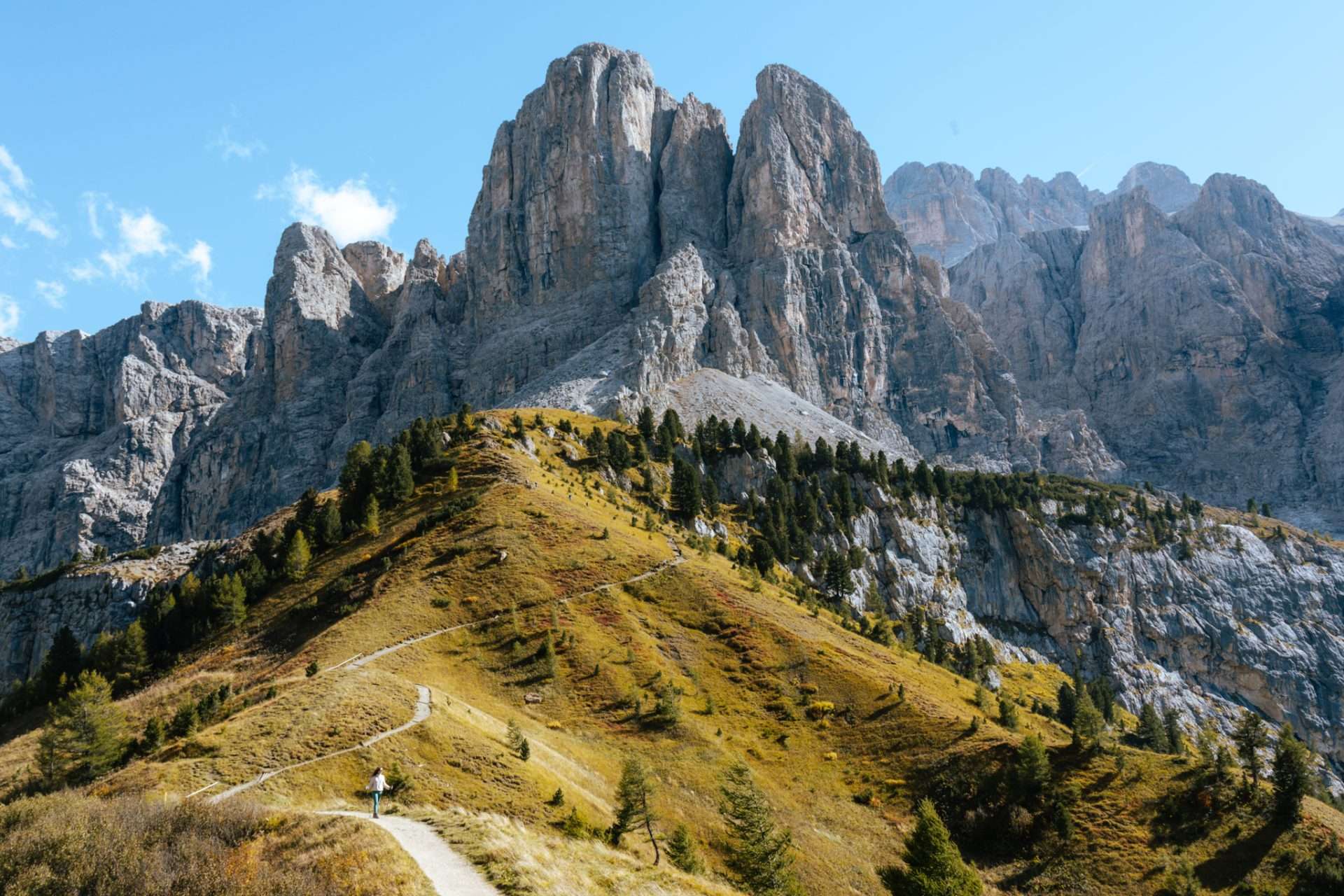
The second part of day 4 on this Dolomites round trip you drive over the Passo Gardena mountain pass. This mountain pass connects Val Gardena with Val Badia and we found a very nice route to drive. At the top you will find Hotel Cir where you have several parking lots. At Passo Gardena you will also find the Sella Ronda Loop, one of the best cycling routes in the Dolomites. From the Gardena Pass it is another hour’s drive to the town of Cortina d’Ampezzo.
Where to stay in Cortina d’Ampezzo
Cortina d’Ampezzo is your next base for exploring the eastern part of the Dolomites. Here, too, you will find wonderful hotels in the town or in the nearby valleys such as Hotel Corona or Faloria Mountain Spa Resort. If you are traveling by motorhome, Camping Olympia near Cortina d’Ampezzo is a good option. We also spent a few nights at Caravan Park Sexten, our favorite campsite in the Dolomites!
Road trip Dolomites day 5: Passo Giau – Lago delle Baste
From Cortina d’Ampezzo it is about a 30-minute drive to the summit of Passo Giau at 2236 meters altitude. On the way you will pass the famous “snake road,” a stretch of track where four hairpin turns follow each other in short succession. Seen from the air, therefore, this track looks like a snake and it is not for nothing that it is a popular place where drone enthusiasts take pictures.


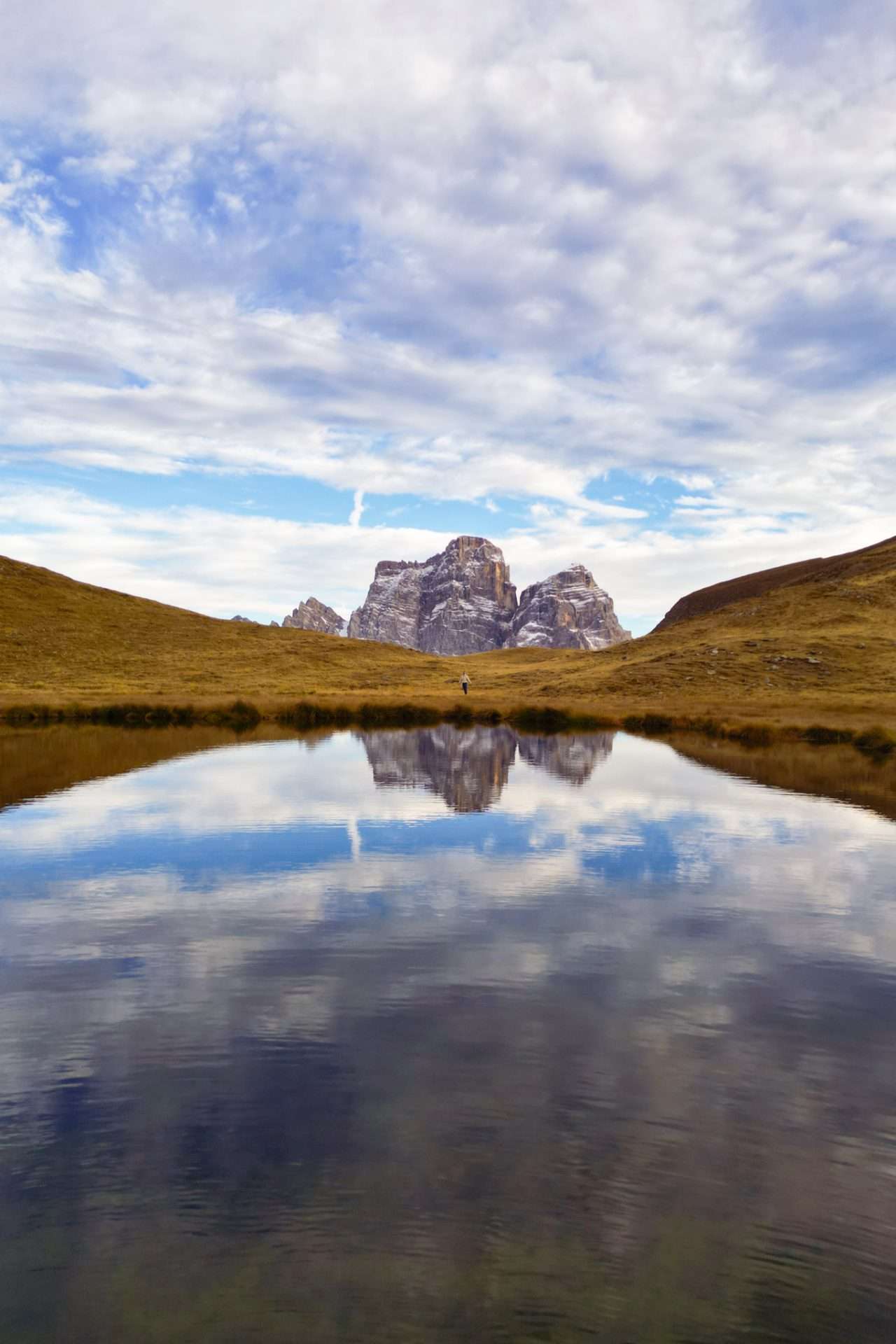
Once at the top of Passo Giau, you can park your car for free. You will find a mountain hut where you can eat and drink something and from here you can see the famous view of Passo Giau. We decided to hike from the summit to the lesser known Lago delle Baste. This short but challenging hike takes you to a small mountain lake in a beautiful setting. We went around sunset and were the only ones here except for two photographers. The pictures speak for themselves!

Alternative: wellness in the Dolomites
Tired of hiking for a while? Then you can also just stop at the top of Passo Giau and spend the rest of this day in the wellness. Indeed, in the Dolomites you will find numerous wellness complexes that you can visit. Swimming and relaxing in the sauna with a view of the mountains will put you in a vacation mood! These are already some wonderful wellness complexes that you can visit with a day pass or where you can stay overnight:
- Bad Moos Aqua Spa Resort: with a 2500m² wellness area with indoor and outdoor pools, saunas and steam baths, you will find complete relaxation here. You can stay overnight or visit the wellness area with a day pass.
- Hotel Quelle Nature Spa Resort.: luxurious 5-star wellness hotel with as many as 12 saunas and a rooftop pool with mountain views.
- QC Terme Dolomiti: wellness center in the middle of nature for a unique alpine spa experience. QC Spa can only be visited with a day pass and has panoramic pools, multiple saunas, Jacuzzis and offers treatments.
Day 6: Lago di Sorapis
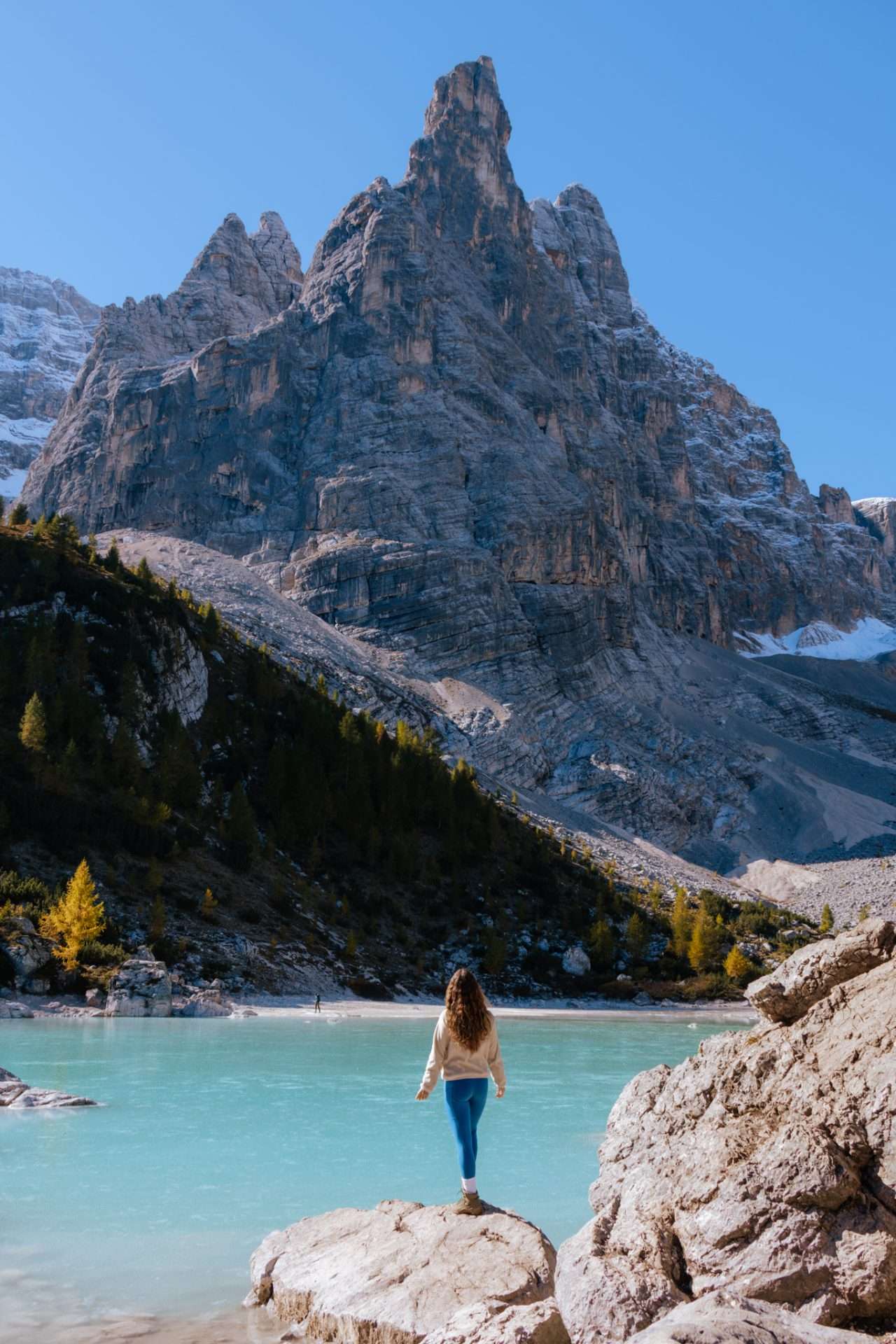
A new day, a new hike! And that to the bluest lake in the Dolomites: Lago di Sorapis. Lake Sorapis is an intense, turquoise mountain lake that you can only reach by hiking to it. The hike is about 13 kilometers round trip and very challenging in some parts. But that just makes the reward greater when you get to this phenomenal lake. We recommend starting early in the morning to get ahead of the crowds. With a break at the lake by, you will soon be on the road for 5 to 6 hours. Here you can read more about the route, distance and intensity of the most beautiful hikes in the Dolomites.
TIP: On some sections you will hike along narrow mountain passes and have to hold on to chains. Therefore, this hike is not recommended for people with vertigo.

Day 7: Lago di Landro – Lago di Dobbiaco – Lago di Braies
Today is all about mountain lakes. From Cortina d’Ampezzo you will drive in half an hour to Lago di Landro (Dürrensee). This lake has rather a green color, almost like an emerald, where you can see the mountains behind reflected in the lake. Then drive on to Lago di Dobbiaco (Toblacher See). Along the shore take a short walk or cross the bridge to the other side of the lake. We saw white swans there which made the picture even more idyllic.
Right on Toblacher See you have an eco-camping where you wake up with a view of the lake: Camping Toblacher See. This is also a good location to visit Lago di Braies and Tre Cime from here.


Lake Braies / Pragser Wildsee
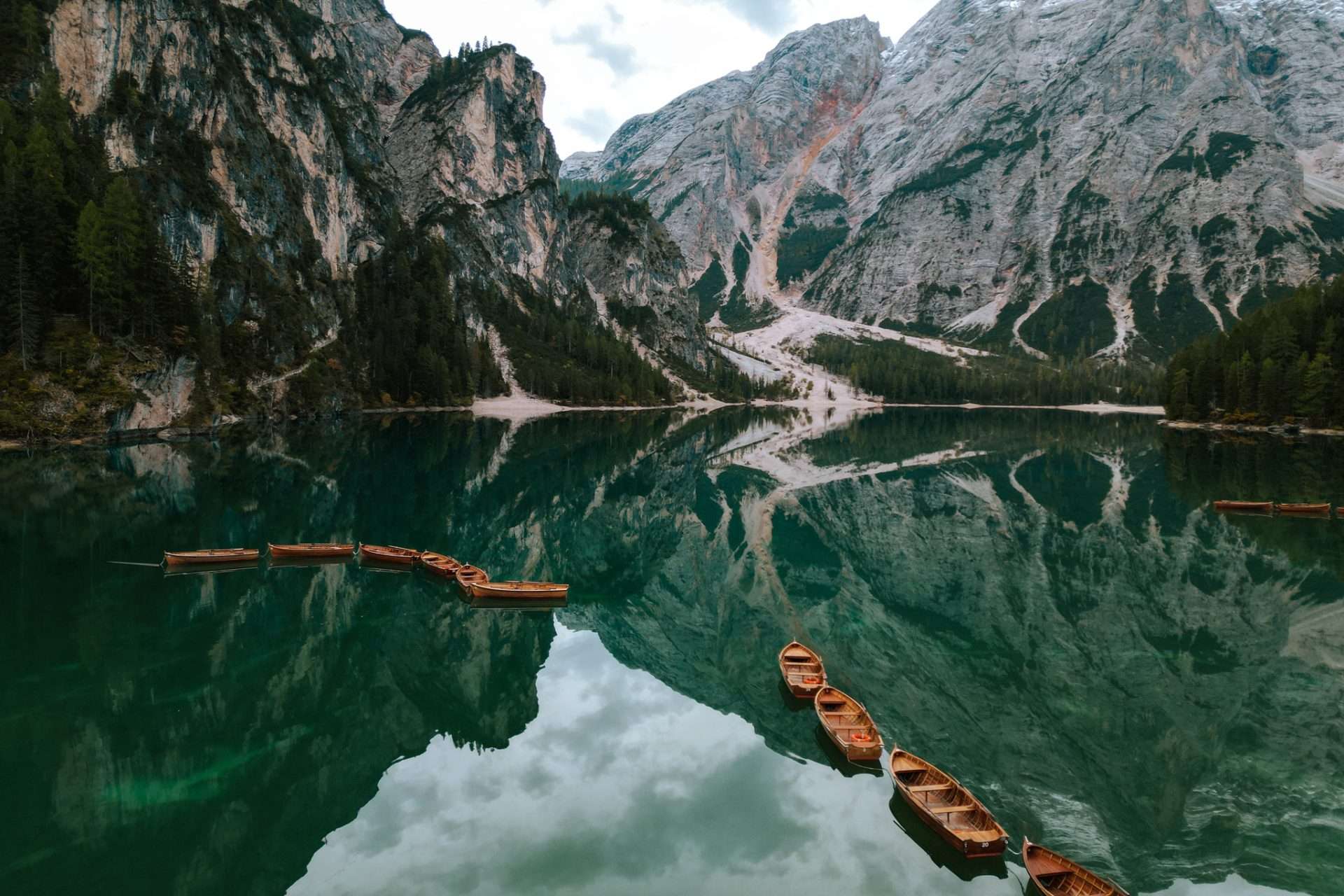
You can’t travel to the Dolomites without visiting the famous Lago di Braies visit. Also known as Pragser Wildsee, this is the most popular mountain lake in the Dolomites and for good reason. Its iconic wooden pier, green forests and dramatic mountains in the background make it one of the most photographed places in the Dolomites. From July to mid-September, you may only drive to the lake between 9 a.m. and 4 p.m. if you have a reservation . Therefore, we recommend you to go after 16:00, then it is also less crowded and you can take beautiful photos at sunset.


Many people arrive at the pier and also stay here to take pictures so it can feel very crowded. However, you can walk all the way around the lake, and once away from the pier it becomes much quieter. The walk takes about an hour and is quite manageable. Another popular activity is to rent your own wooden rowboat and explore the lake from the water. Renting a boat costs €55 for one hour.

Day 8: Tre Cime di Lavaredo & Cadini di Misurina
On Day 8, one of the most beautiful places in the Dolomites is scheduled: Tre Cime di Lavaredo or Drei Zinnen. The 10 km hike around these three iconic peaks is one of the best things to do in the Dolomites. For 3 to 4 hours you’ll hike past perpendicular limestone cliffs, past cozy rifugios and the most beautiful alpine meadows. Be sure to stop at Rifugio Locatelli for the best views of the three peaks. This mountain hut is located halfway through the hike.


The hike starts at Rifugio Auronzo where you have a large parking lot. Since 2025, however, it is mandatory to book your parking space in advance through this official website. For a car you pay €40 for 12 hours, for a camper it is €60. So if you want, you can also spend the night here with your RV, but you have to book a 24-hour slot. Alternatively, you can catch a shuttle bus for €10 from this parking lot.
Viewpoint Cadini di Misurina
No doubt you have already seen this famous viewpoint passing by on Instagram. You can reach Cadini di Misurina after a half hour hike from Rifugio Auronzo and can thus combine it with your visit to Tre Cime di Lavaredo. This viewpoint has become a very popular photo spot so do expect a line. However, we found that there were plenty of nice spots close to this spot to take some nice photos.


Day 9: Lago di Carezza & back to Bolzano
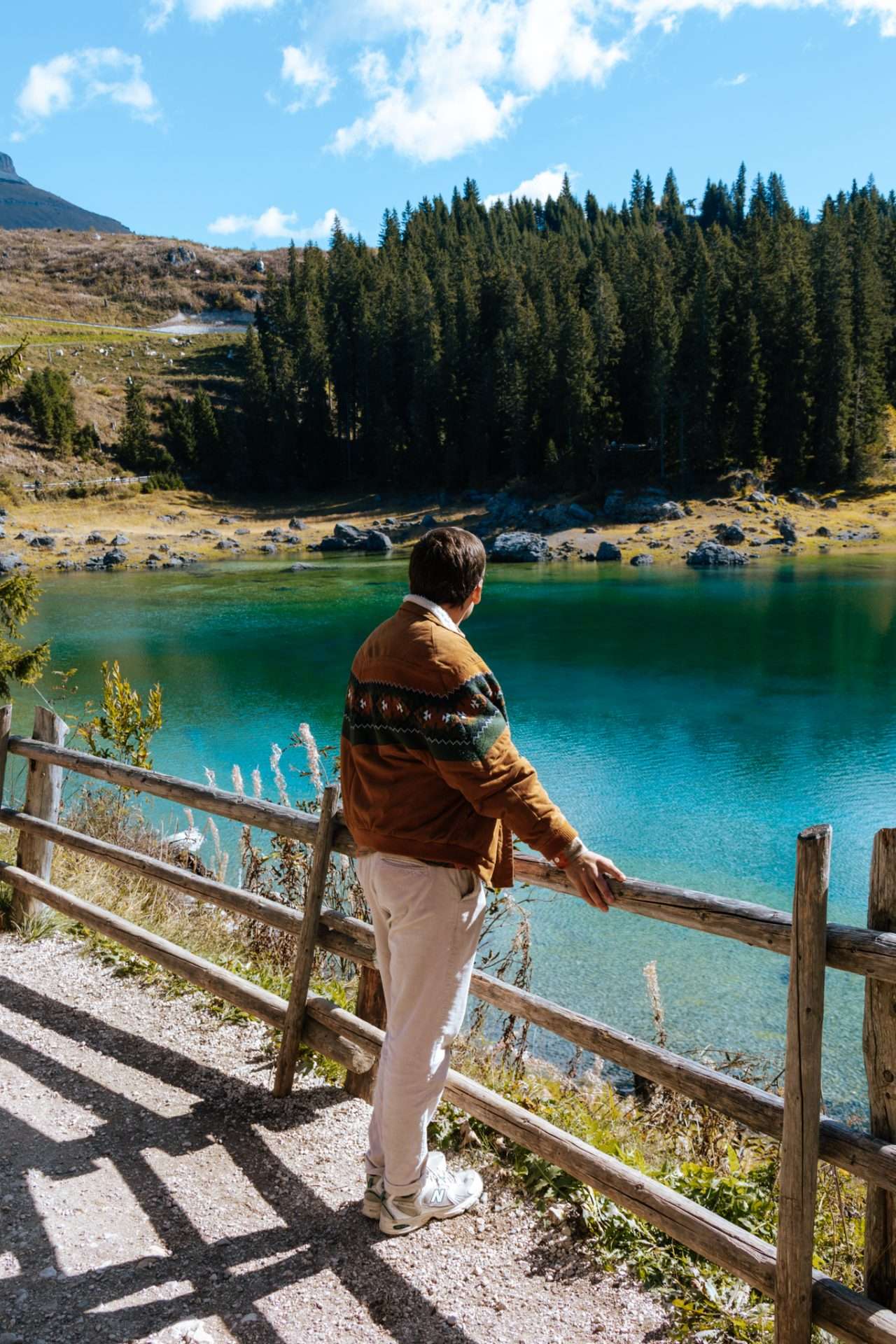
On the last day of this Dolomites road trip you will drive back towards Bolzano in about 3 hours. On the way you will make one last stop at the beautiful Lago di Carezza (Karersee). This clear blue lake is surrounded by green pine trees and rugged mountain peaks. You can follow a one-kilometer wooden path around the lake, a fun ending to this fantastic trip!
Where to stay in the Dolomites, Italy
If you travel by rental car, the best places to base yourself are in the beautiful town of Ortisei in Val Gardena for the western part of the Dolomites and Cortina d’Ampezza or Sexten or for the eastern part. But all over the Dolomites you will find wonderful B&Bs and hotels.
- Ortisei: Hotel Hell or Hotel Cosmea
- Cortina d’Ampezza: Hotel Corona or Faloria Mountain Spa Resort
- Sexten: B&B Grüne Lanterne or Residence Bad Moos
How many days in the Dolomites
We have written this itinerary so that you can really see all the highlights of the Dolomites at a pleasant travel pace. But you can easily shorten this road trip to 5 days in the Dolomites or combine it with a round trip to Venice or Florence. Keep in mind that in 5 days you cannot do all the hiking and you have to skip some places.

Best travel time Dolomites, Italy
The Dolomites in Italy is a year-round destination, depending on what you want to do. May through September is the ideal time to explore the Dolomites by car or RV. Then you have a better chance of good weather (although you never know in the mountains), you can do endless hiking and biking, and the mountain huts are open. However, we do recommend avoiding the months of July and August because it can get really too crowded. If you want to do a multi-day hut tour and stay overnight in a mountain hut, be sure to book a few months in advance as they fill up quickly!
From December to April, the Dolomites transform into a winter wonderland and are the ideal destination for skiing. Just keep in mind that some hiking trails and roads are not accessible due to snow.
Do you have any questions about this 9-day itinerary Dolomites? Let us know in a comment below! Looking for more information about your next trip? Please do not hesitate to contact us or send an email to info@snoezelsontheroad.com